Clear Sky Science · en
Spatial and temporal variability and distribution of emerging contaminants in South African freshwater and wastewater
Hidden chemicals in everyday water
When you pour a glass of tap water or look out over a dam or river, it is easy to imagine the water as naturally clean. Yet modern life leaves a chemical fingerprint that our eyes cannot see. This study looks at those barely visible traces—left by medicines, cosmetics, farm sprays, and even street drugs—in freshwater and wastewater in and around Pretoria, South Africa. The findings reveal not only pollution, but also clues about public health, drug use, and the gaps in water treatment that matter for communities across the Global South.
Everyday products that linger in water
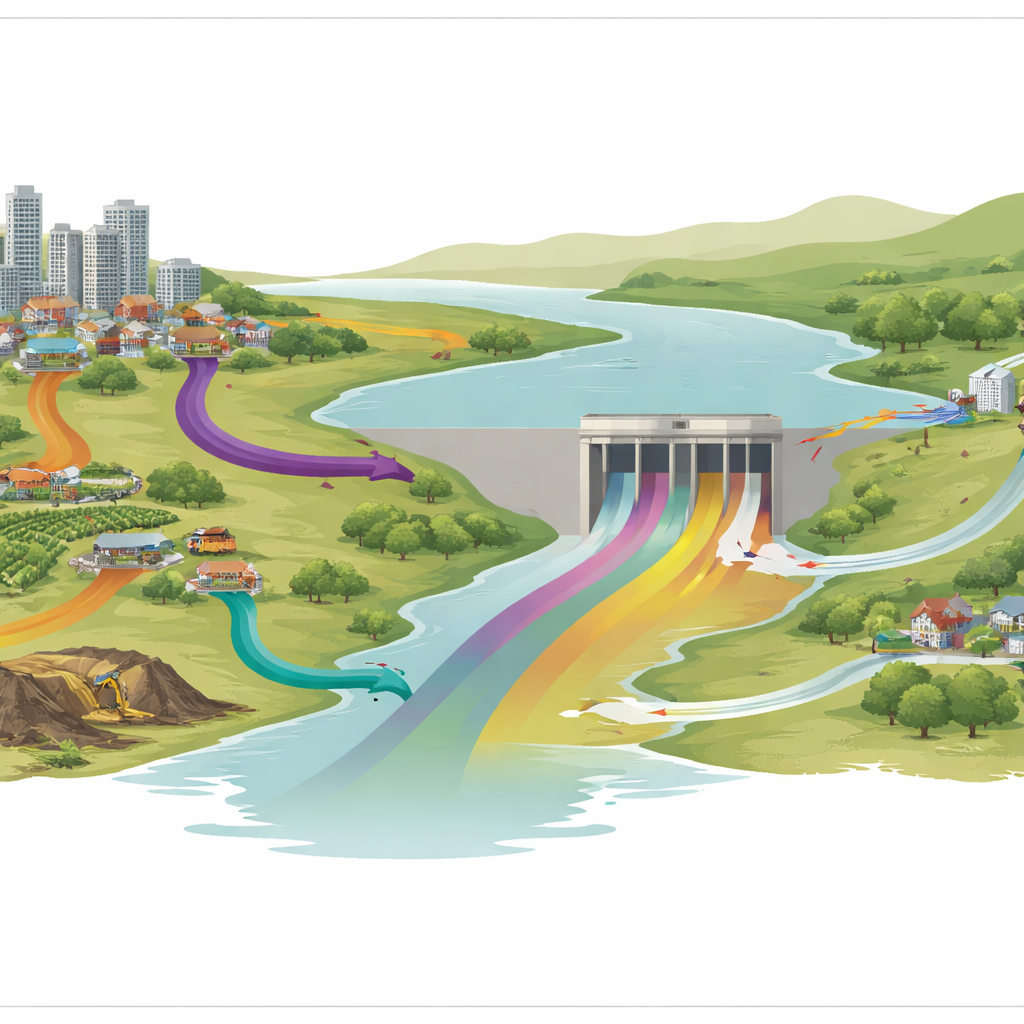
The researchers focused on a group of substances known as "contaminants of emerging concern"—chemicals that have only recently come under scrutiny because they show up in the environment at very low levels, yet may still harm wildlife or people. They include painkillers, antibiotics, caffeine from coffee and tea, antiretroviral drugs used to treat HIV, pesticides, and ingredients from personal care products. Many of these chemicals pass through our bodies and household drains, or wash off farms and streets, and slip through conventional water treatment systems that were never designed to catch them.
Following the trail from toilets to taps
To understand where and when these contaminants appear, the team sampled three kinds of water in a single river basin: dam water that feeds a drinking water plant, river water downstream of the dam, and treated effluent from two municipal wastewater treatment plants. They tracked 21 different chemicals month by month in the dam over almost a full year, and took snapshot measurements in the river and wastewater plants during one field survey. Sensitive laboratory instruments allowed them to detect the chemicals at billionths of a gram per litre—equivalent to a pinch of salt in an Olympic swimming pool—while also checking that the measurements were accurate and repeatable.
What they found in rivers, dams, and pipes
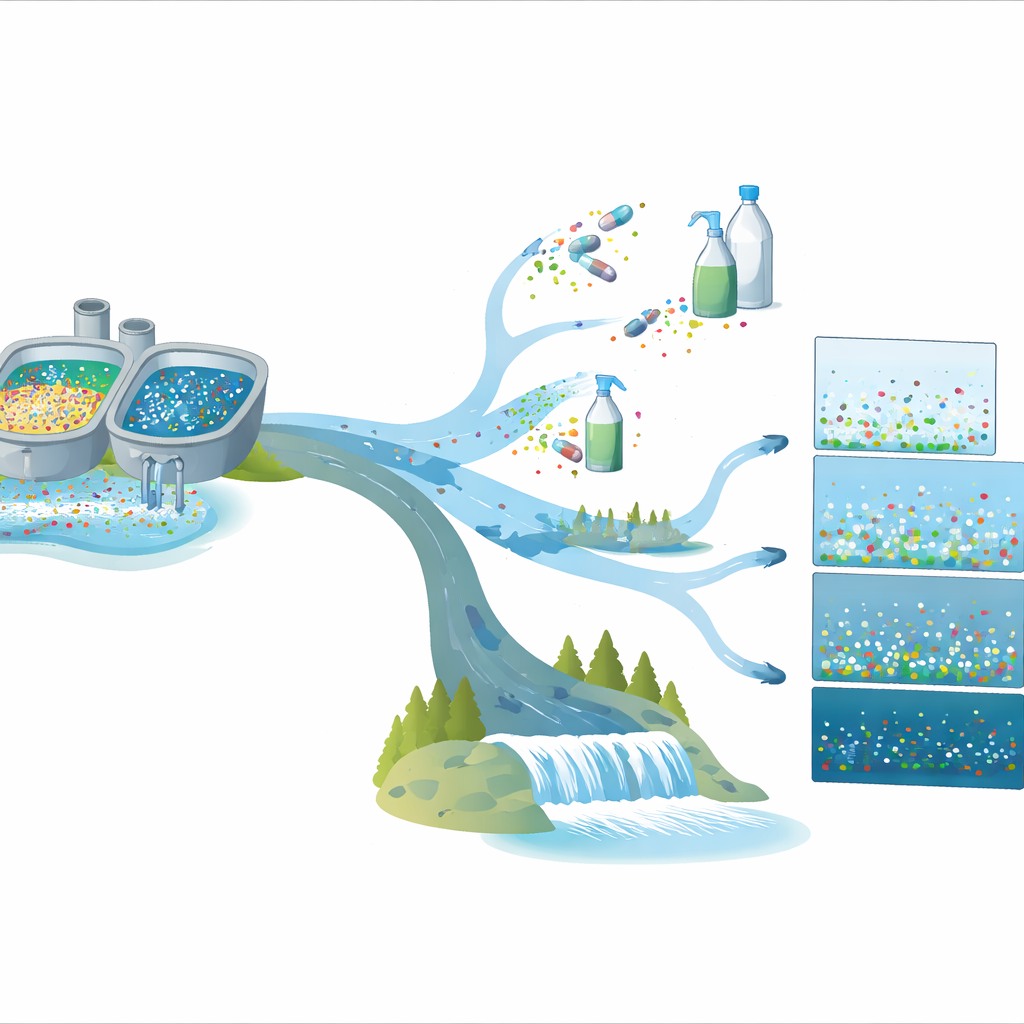
The picture that emerged is sobering. Nineteen of the 21 chemicals turned up in the dam, and concentrations often shifted sharply from month to month and season to season. The strongest signal came from antiretroviral drugs, especially efavirenz and emtricitabine, used in HIV treatment. These drugs reached hundreds to thousands of nanograms per litre in dam water and were even higher in the river and wastewater effluent. Painkillers such as acetaminophen and common stimulants like caffeine also appeared in large amounts, particularly in river water, where acetaminophen levels peaked above three thousand nanograms per litre and caffeine soared well above dam levels. Such patterns point to untreated or poorly treated sewage and runoff carrying medicines, farm chemicals, and everyday products directly into surface waters.
Chemicals as a mirror of community health
The very high levels of HIV drugs in both wastewater and natural waters do more than flag pollution; they mirror South Africa’s ongoing HIV/AIDS crisis. Wastewater from the two treatment plants, which serve nearby communities and use similar processes, contained thousands of nanograms per litre of efavirenz and emtricitabine, but with striking differences between plants. This suggests local differences in treatment performance, prescription patterns, and possibly misuse of HIV medication in the preparation of street drugs such as whoonga or nyaope. By reading these chemical signals, scientists can infer patterns in medicine use, drug abuse, and agricultural practices without asking a single survey question—turning water into a quiet but powerful reporter of community life.
Risks for wildlife and why timing matters
Finding chemicals is only part of the story; the team also examined what they might mean for fish, insects, and other aquatic life. Using established toxicity benchmarks, they calculated "risk quotients" that compare measured concentrations with levels expected to be harmless. Several substances—efavirenz, caffeine, the herbicide atrazine, and the painkiller diclofenac—reached values suggesting medium to high risk for organisms in some locations, especially in wastewater effluent and the river. Equally important, the concentrations were highly variable over time: some chemicals spiked between the dry and wet seasons, likely when the first rains wash built-up residues from land into waterways. This means that a single test per year could easily miss the most dangerous episodes.
What this means for people and policy
In plain terms, the study shows that a cocktail of modern chemicals is present and fluctuating in South Africa’s freshwater, even after wastewater has supposedly been treated. While trace levels do not make tap water instantly unsafe, they signal long-term pressure on rivers, dams, and the creatures that live in them, and highlight blind spots in current treatment systems and regulations. The authors argue that regular, more frequent monitoring and upgraded treatment—paired with better policies on medicine use, farm chemicals, and illicit drugs—are needed to keep these invisible pollutants in check, in South Africa and in many similar regions across the Global South.
Citation: Dikobe, P.I., Tekere, M., Masindi, V. et al. Spatial and temporal variability and distribution of emerging contaminants in South African freshwater and wastewater. Sci Rep 16, 8988 (2026). https://doi.org/10.1038/s41598-025-33703-2
Keywords: emerging contaminants, South Africa water, pharmaceutical pollution, wastewater treatment, HIV antiretrovirals