Clear Sky Science · en
Transmitter-assisted joint data-aided channel estimation and PAPR reduction scheme in wireless fading channels
Why your phone’s signal still works in tricky places
From streaming video on a train to getting a map update in a busy city, our devices depend on radio signals that bounce, fade, and distort as they travel. Modern 4G and 5G networks use clever tricks to cope with this, but two stubborn problems remain: keeping track of how signals are distorted by the environment, and handling sharp power spikes that waste energy and upset electronics. This paper introduces a way to turn those power spikes from a nuisance into a helpful tool, making wireless links both cleaner and simpler to run.
Two hidden headaches in modern radios
Today’s networks often rely on OFDM, a method that splits data across many narrow frequencies, and MIMO, which uses several antennas to send and receive at once. Together, they boost speed and reliability, but they also create challenges. First, engineers need to know how the radio channel changes from moment to moment — for example, whether buildings or cars are blocking the path. They estimate this by sprinkling known “pilot” signals among the data, but sending many pilots eats into capacity and processing time. Second, when many OFDM tones add up in phase, they can create very tall power peaks compared with the average signal level. These peaks force power amplifiers to run inefficiently and can distort the signal, a problem known as high peak‑to‑average power ratio. 
Turning a flaw into a feature
The authors propose a transmitter‑side method that tackles both problems at once. Instead of treating tall power peaks as something to be shaved off and forgotten, the system identifies the strongest subcarriers — the parts of the OFDM signal where these peaks appear — and reuses them at the receiver as extra reference points for channel tracking. Because these peaks are selected directly from the signal that is being sent, the transmitter can mark them in advance without needing any feedback from the receiver. In effect, the method recycles what used to be a liability and converts it into free extra guidance about how the radio path is behaving, all without adding more dedicated pilot tones.
Smoothing the signal without losing the clues
To keep power spikes under control without erasing them completely, the scheme uses a form of controlled volume adjustment called modified gamma correction companding. Before transmission, strong parts of the waveform are gently pushed down while weaker parts are boosted, narrowing the gap between peaks and average power. This protects the power amplifier and reduces distortion. At the receiver, an inverse operation restores the original shape closely enough that the high‑power subcarriers can still be recognized and trusted as extra pilots. The method introduces two tuning knobs that let engineers adapt how aggressively they compress the signal for different kinds of radio environments, such as city streets with no clear line of sight or open areas with a strong direct path.
Proving it works in realistic radio conditions
The study tests the approach on both simple single‑antenna links and more advanced multi‑antenna setups under two common fading types. In Rayleigh fading, where there is no clear direct path and signals scatter chaotically, and in Rician fading, where a strong direct path coexists with reflections, the method is evaluated with several channel lengths and modulation formats. The authors compare their transmitter‑assisted approach with more traditional least‑squares and minimum‑error channel estimators, as well as with earlier data‑aided schemes that run complex searches at the receiver. Across a wide range of signal‑to‑noise ratios, the new method closely matches the accuracy of the best existing data‑aided techniques while requiring far fewer computations — an advantage for battery‑powered devices and low‑cost hardware. 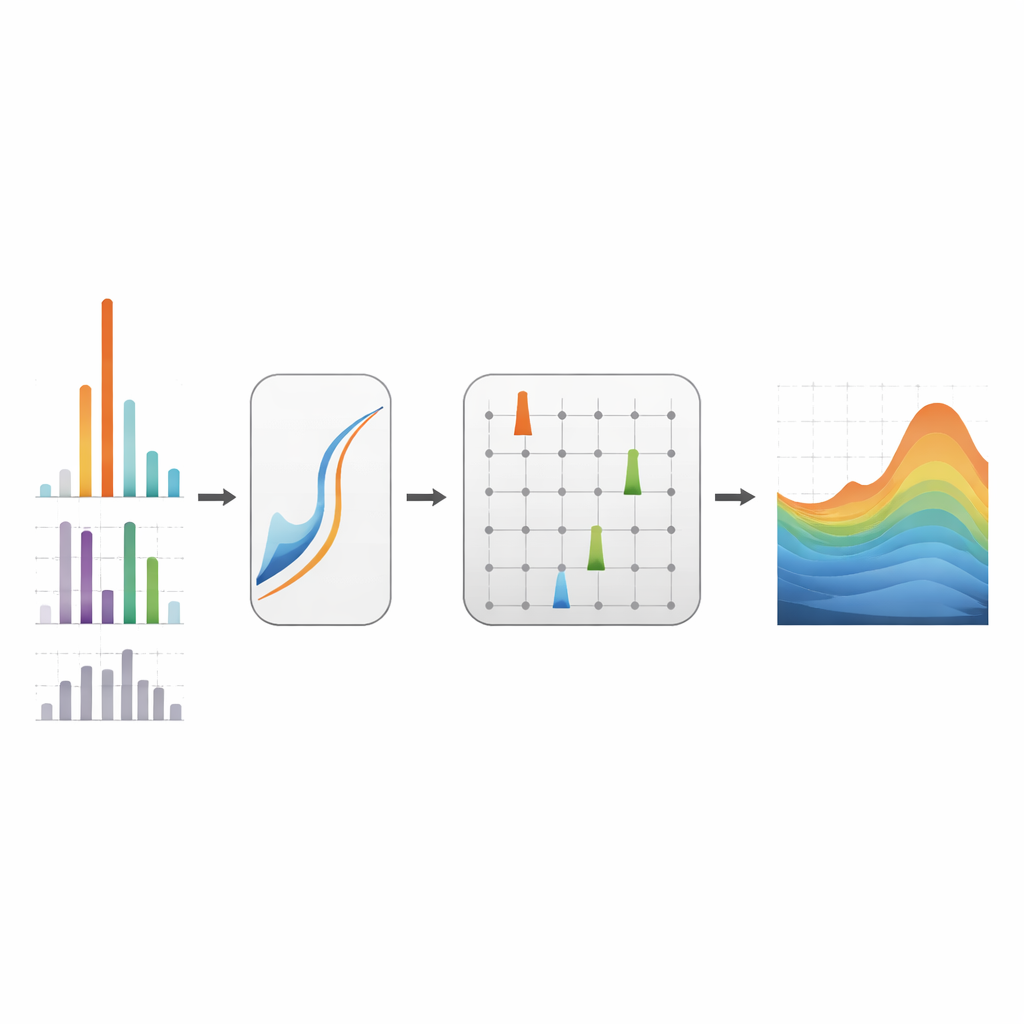
What this means for future wireless devices
For a non‑specialist, the key message is that the same signal features that used to cause trouble in radios can be harnessed to make them smarter and more efficient. By carefully reshaping the waveform and reusing its natural peaks as extra guideposts, this transmitter‑assisted scheme improves error rates and channel insight without extra signaling overhead or heavy processing. It adapts well to different fading conditions and antenna setups, and only breaks down when the radio channel becomes too simple — for example, when there are too few distinct paths to learn from. Overall, the work points toward future phones, cars, and sensors that can communicate more reliably in crowded and changing environments while consuming less power and using simpler electronics.
Citation: Khan, I., Hasan, M.M. & Cheffena, M. Transmitter-assisted joint data-aided channel estimation and PAPR reduction scheme in wireless fading channels. Sci Rep 16, 8015 (2026). https://doi.org/10.1038/s41598-025-33617-z
Keywords: wireless channel estimation, PAPR reduction, MIMO OFDM, data-aided pilots, fading channels