Clear Sky Science · en
Plant cuttings of invasive alien Impatiens glandulifera Royle develop flowers and produce viable seeds
A garden beauty that refuses to go away
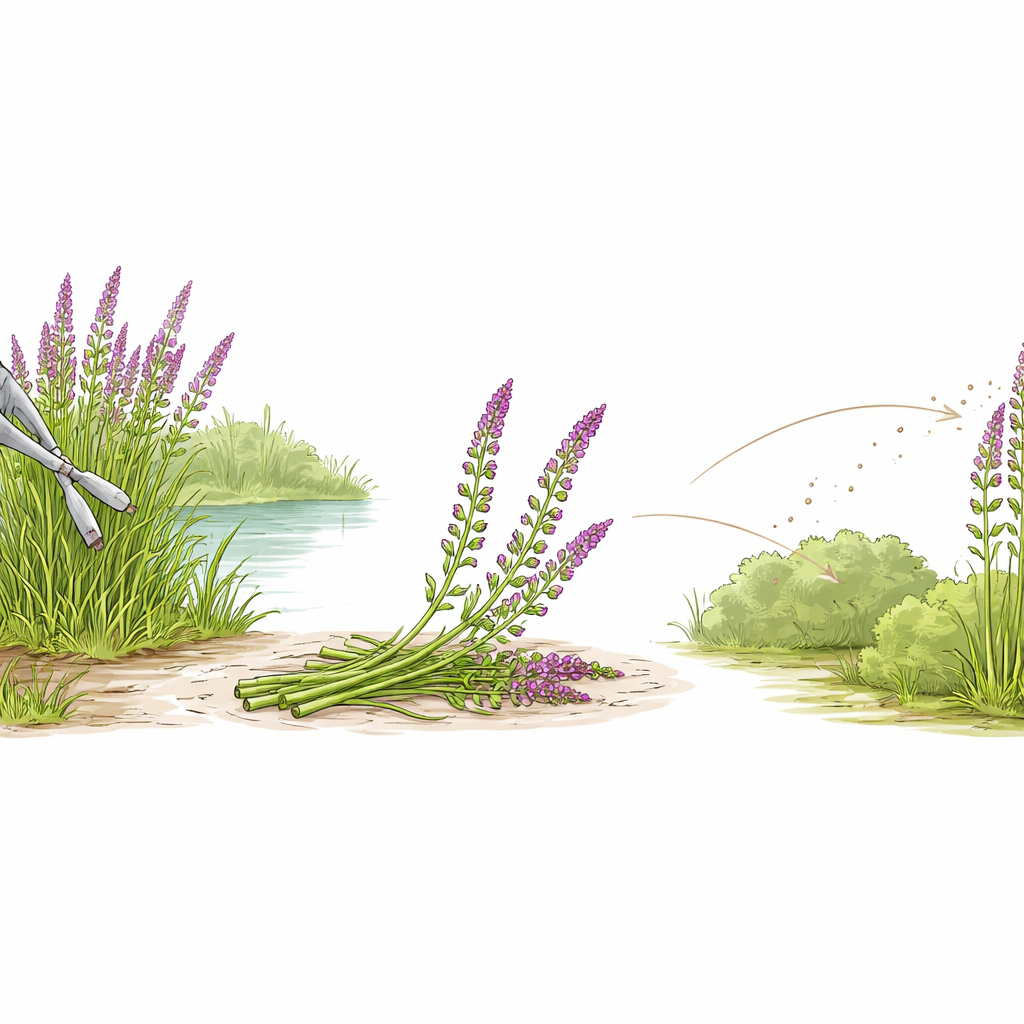
Himalayan balsam may look like a pretty riverside flower, but in Europe and beyond it behaves more like a slow-moving ecological spill. This tall pink plant takes over stream banks, crowds out native species, and even helps spread crop diseases. Local authorities spend large sums mowing or pulling it up by hand, yet the plant often returns as if nothing happened. This study asks a simple but troubling question: could the very piles of cut stems left on the ground be quietly rebuilding the invasion?
Why this plant is such a problem
Himalayan balsam, originally from the western Himalayas, has spread across most of Europe and into parts of Asia and the Americas. Gardeners and beekeepers helped it along because its flowers produce a great deal of nectar that pollinating insects love. Once established, the plant forms dense walls of stems that shade out other vegetation, alter local conditions for animals, and draw pollinators away from native wildflowers and crops. Efforts to control it focus on cutting or pulling plants before they set seed, but even years of hard work can leave stubborn pockets that refuse to disappear.
A simple test with big implications
The researchers set up a controlled outdoor experiment in southern Poland using 40 Himalayan balsam plants grown in pots. Half of the plants were cut off near the ground and their stems were laid on the soil surface, mimicking standard mowing or hand-pulling followed by leaving material in place. The other half stayed rooted and watered as a reference group. All plants already had some open flowers and flower buds, and early seed capsules were present, just as they might during real-world control work that begins around the start of flowering. Over the next 17 days, the team counted flowers, watched insect visitors, measured weather conditions such as temperature, sunlight, and wind, and collected any seeds that matured.
Cut stems that keep on living
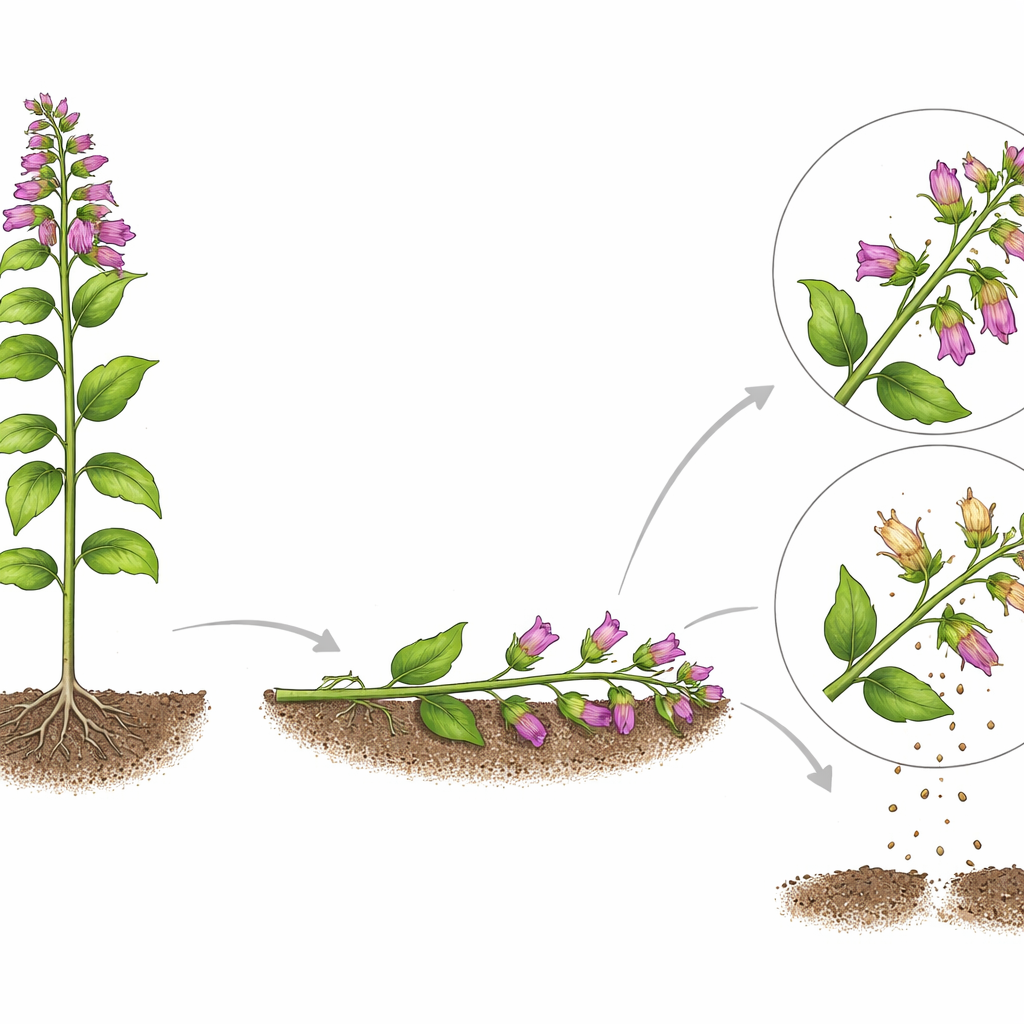
Surprisingly, the severed stems remained alive for about three weeks. They did not just hold onto their existing flowers: they produced new ones, though only about half as many as the intact plants. Insects—especially bumblebees—strongly preferred the rooted plants, visiting them many more times. Even so, they still visited flowers on the cut stems. The detailed analysis showed that for intact plants, more flowers and sunnier conditions brought more insect visits, up to a point. For the cut stems, these relationships were much weaker, probably because plants lying close to the ground were less visible and experienced different microclimates. Yet even with fewer visits and fewer flowers, the cut stems continued to function as reproductive plants rather than dead debris.
Seeds that can still start new invasions
By the end of the experiment, both groups had produced hundreds of seeds. Cut stems generated almost as many viable seeds as the intact plants, even though their seeds were slightly lighter. Laboratory testing showed that roughly a quarter of the seeds from cut stems and about a fifth from intact plants were alive and capable of germinating—a difference too small to be statistically meaningful. In practical terms, this means that a pile of freshly cut Himalayan balsam stems can still mature seeds that are ready to launch the next wave of invasion, whether by bursting from their pods, washing downstream, or hitching a ride on animals.
Changing how and when we fight this invader
These results suggest that standard mowing and hand-pulling guidelines are not strict enough. If plants are removed only shortly before or just as they begin to flower, detached stems may survive long enough—about 17 days in this study—to finish developing flowers and seeds. The authors argue that control work should happen at least three weeks before the expected start of flowering, and that cut material should not simply be left on the ground. Instead, it should be contained—such as in sealed bags for several weeks or burned where regulations allow—so that stems cannot keep quietly producing viable seeds. For land managers and volunteers, the message is clear: with Himalayan balsam, timing and disposal matter as much as effort.
Citation: Najberek, K., Myśliwy, M., Rewicz, A. et al. Plant cuttings of invasive alien Impatiens glandulifera Royle develop flowers and produce viable seeds. Sci Rep 16, 9371 (2026). https://doi.org/10.1038/s41598-025-33573-8
Keywords: Himalayan balsam, invasive plants, seed production, ecological management, pollinators