Clear Sky Science · en
Postoperative pain after endodontic treatment with glycolic acid as final irrigant using reciprocating and rotary instrumentation in a noninferiority trial
Why this matters for your next dental visit
Root canal treatment has a reputation for being painful, but modern techniques have greatly reduced discomfort. Even so, many people still worry about how much pain they will feel after the procedure, and dentists are looking for gentler materials that work just as well as the traditional ones. This study asks a simple, patient-centered question: can a newer, more environmentally friendly cleaning liquid used during root canals keep pain after treatment just as low as the long-standing standard solution?
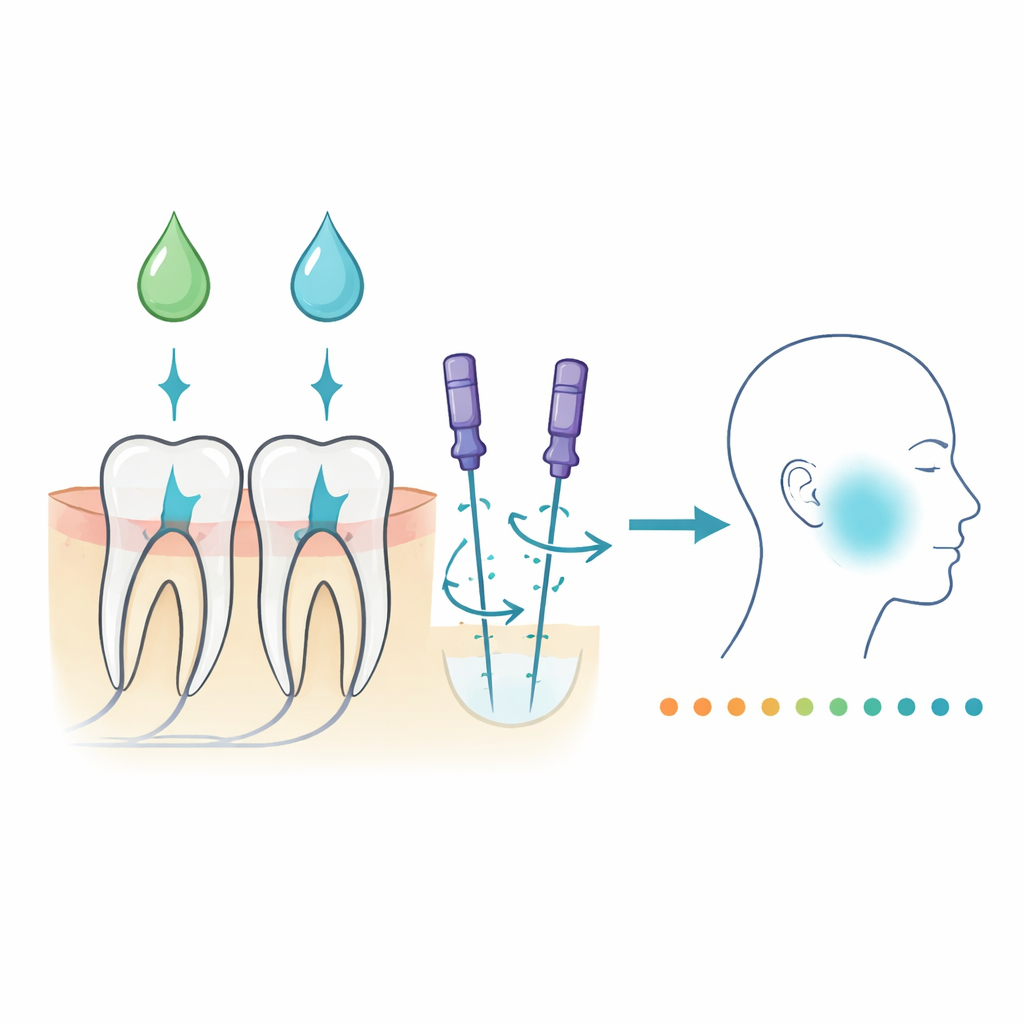
Two cleaning liquids under the spotlight
During a root canal, dentists use special liquids to flush out tiny debris from inside the tooth and open up microscopic channels in the hard tissue so that disinfectants and sealers can work better. For decades, a chemical called EDTA has been the go-to choice for this final rinse, but it can be harsh on tissues and does not break down easily in the environment. A newer option, glycolic acid, is a biodegradable compound that laboratory tests suggest may be friendlier to cells while still cleaning the tooth effectively. However, until now, there has been little real-world evidence on whether patients feel more, less, or the same amount of pain after treatment when glycolic acid is used instead of EDTA.
A large real-world trial of routine care
To answer this, researchers in Brazil conducted a randomized clinical trial with 240 adult patients who needed root canal treatment on teeth that had already been opened in a public clinic and sent for completion at a university. The patients were randomly assigned to receive one of two final rinses inside their tooth: either the standard EDTA or glycolic acid. At the same time, the mechanical cleaning was done using one of two widely used machine-driven techniques: a continuous rotating motion or a back-and-forth reciprocating motion. This created four groups combining the two liquids and the two instrument motions, reflecting options a typical dentist might use in everyday practice.
Tracking pain over the first week
After treatment, patients rated their pain on a simple 0–10 numeric scale at 24 hours, 48 hours, and seven days. The main goal was not to show that glycolic acid was better, but that it was not meaningfully worse than EDTA in terms of average pain scores. Before the trial began, the team defined how big a difference would matter to patients: if glycolic acid caused less than one extra point of pain on the 0–10 scale compared with EDTA, it would be considered “non-inferior,” or clinically just as good for comfort. The study also recorded whether patients actually needed to take painkillers, and it examined whether the type of mechanical motion used affected how much pain people felt.
What the patients actually felt
Across all groups, pain was generally low. It tended to peak in the first 24 hours and then dropped sharply by day seven, when almost everyone reported no pain at all. Most patients—about four out of five—never took the recommended ibuprofen, and only a small fraction reported moderate or severe pain at any time. When the researchers compared the two rinses, the differences in pain scores were small, and the upper limits of the statistical ranges stayed below the pre-set “one extra point” threshold at every time point. That means glycolic acid met the bar for being no worse than EDTA. The type of mechanical motion—rotary or reciprocating—also did not produce meaningful differences in pain, and factors such as age, gender, jaw location, or whether treatment was done in one or multiple visits did not change the pattern.
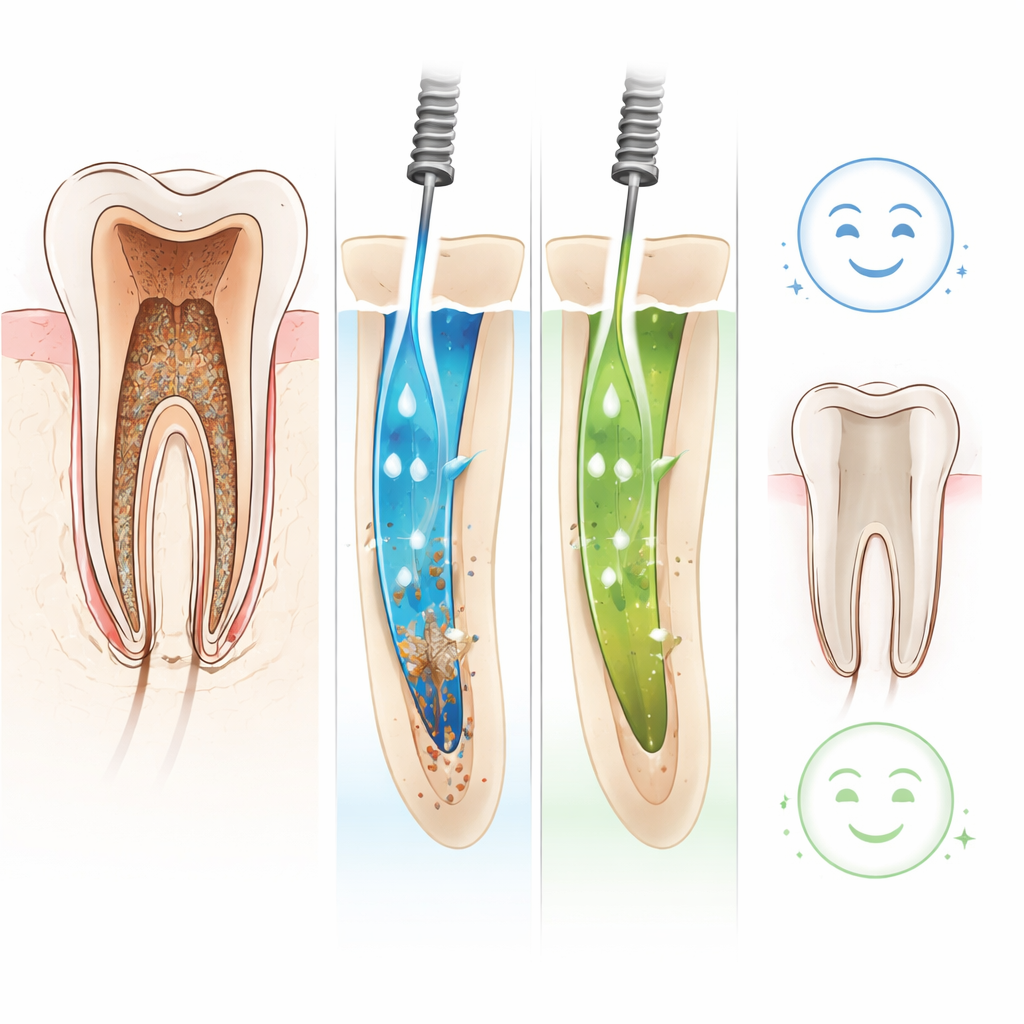
What this means for patients and dentists
The study’s message is reassuring: when it comes to how much pain people feel after a root canal, the newer glycolic acid rinse performed just as comfortably as the traditional EDTA solution, and both worked well regardless of the cleaning motion used. For patients, this suggests that root canal treatment can be carried out with a solution that may be gentler on tissues and the environment without sacrificing comfort. For dentists, it opens the door to considering glycolic acid as a practical alternative in routine care, while future studies continue to explore its long-term safety and healing benefits.
Citation: Figueiredo, P.S., Dal Bello, Y., De Carli, J.P. et al. Postoperative pain after endodontic treatment with glycolic acid as final irrigant using reciprocating and rotary instrumentation in a noninferiority trial. Sci Rep 16, 9620 (2026). https://doi.org/10.1038/s41598-025-33397-6
Keywords: root canal pain, glycolic acid, endodontic irrigation, EDTA alternative, postoperative discomfort