Clear Sky Science · en
Pseudomonas rhizozeae sp. nov., originated from rhizosphere soil of corn field
New Helper Microbe at the Corn Root
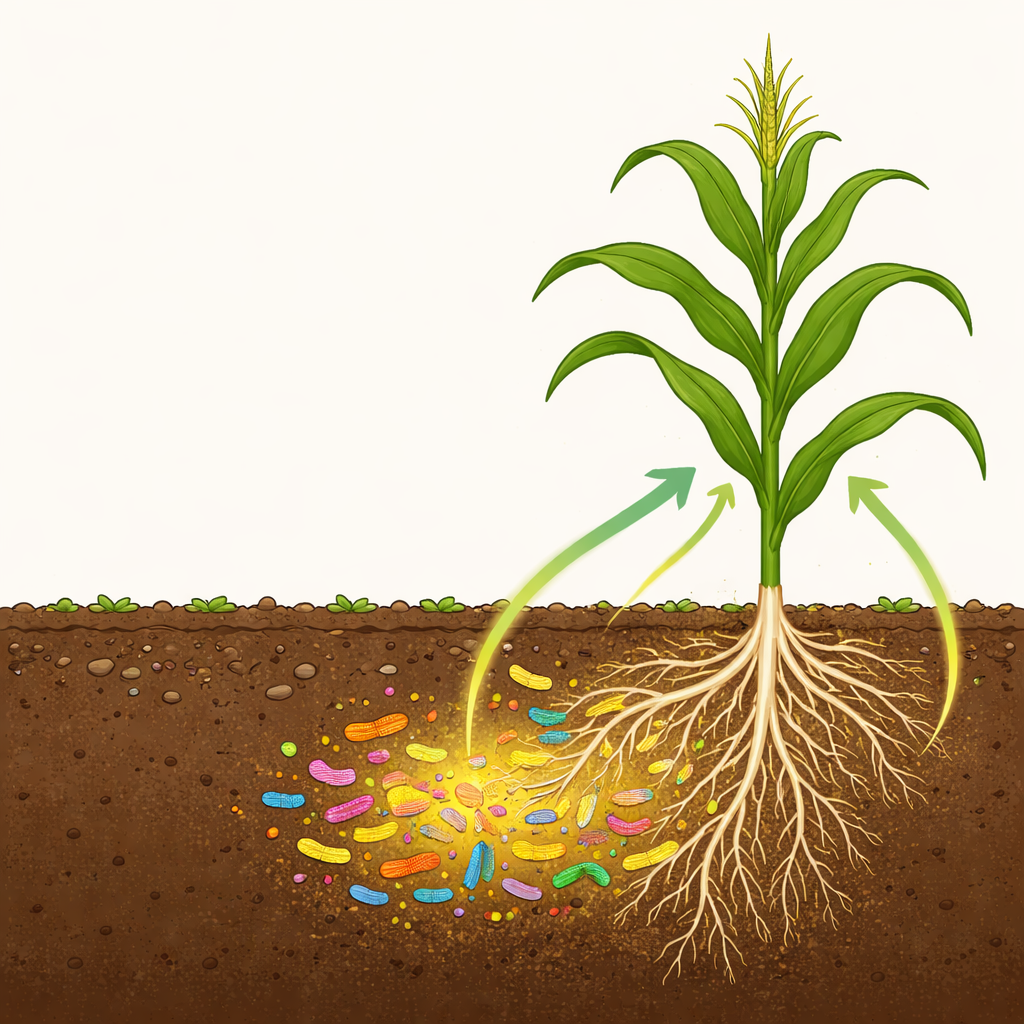
Hidden in the thin layer of soil clinging to corn roots lives a bustling community of microbes that can make crops either healthier or more vulnerable. This study introduces a newly discovered bacterial species from that underground world and shows that it may help crops cope with stress and harmful organisms, potentially offering farmers a natural tool to protect their harvests.
A New Neighbor in the Root Zone
The researchers searched the soil directly around corn roots in Hungary, a region known as the rhizosphere. From this soil they isolated several closely related bacteria belonging to the large and diverse group called Pseudomonas, which are common in soil and on plants. By comparing key stretches of DNA from hundreds of known Pseudomonas species, they found that these corn-root isolates formed their own separate branch on the family tree, distinct from all previously described species. This pointed to the presence of a genuinely new kind of bacterium living alongside corn roots.
Pinning Down Its Place in the Microbial Family Tree
To make sure this newcomer truly deserved species status, the team sequenced the entire genome of one representative strain, named SZMC 28357T. They then compared its genetic blueprint with that of many related Pseudomonas species using methods that measure how similar two genomes are overall. The similarity scores fell well below the thresholds that scientists use to define a single species, confirming that SZMC 28357T stands apart. A more detailed analysis based on over a thousand shared proteins placed it on a unique branch between two established Pseudomonas lineages, further reinforcing that it represents a distinct species, which the authors name Pseudomonas rhizozeae.
Traits That Fit Life on Corn Roots
Beyond genetics, the scientists examined how the bacterium looks and behaves. Under the microscope, P. rhizozeae cells are small rods that do not swim, in contrast to many of its relatives. The strain grows in a broad range of temperatures, salt levels, and pH conditions that match the shifting environment around plant roots. On special media, it forms slightly slimy colonies and produces faintly glowing compounds, suggesting it can make substances that interact with other microbes or with the plant. Tests of its chemical makeup showed a characteristic pattern of fatty molecules in the cell membrane and specific lipids and quinones that, taken together, distinguish it from its closest cousins.
Natural Chemicals for Defense and Stress Relief
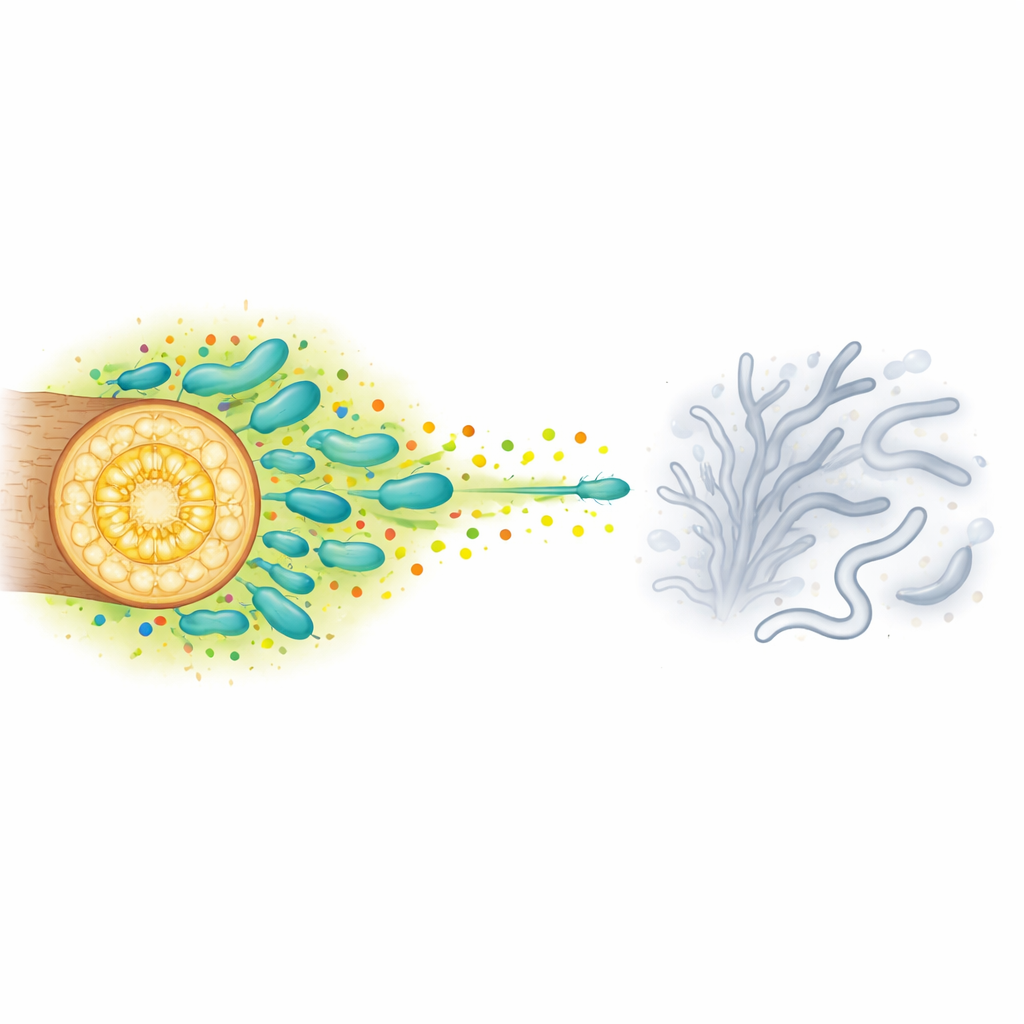
The full genome of P. rhizozeae revealed another important feature: it is packed with gene clusters for making specialized small molecules. The team found twelve such clusters, including sets linked to complex peptides, pigment-like compounds, and other protective substances. Some of these genes closely resemble known systems that produce stress-protective molecules, while others appear to be new. Laboratory tests confirmed that the bacterium produces hydrogen cyanide, a compound that can harm plant pests like nematodes and aphids, as well as ectoine and NAGGN, two molecules that help cells survive high salt and other harsh conditions. Earlier work had also shown that members of this group can sharply reduce toxin production by the fungus Aspergillus flavus in liquid cultures, hinting at a role in defending crops from dangerous molds.
What This Means for Future Farming
Taken together, the genetic, chemical, and physiological evidence clearly marks Pseudomonas rhizozeae as a new species adapted to life around corn roots. Its ability to make pest-toxic and stress-protective compounds, along with its impact on fungal toxin production, suggests it could serve as a natural ally for crops. While more field studies are needed, this newly named root-dwelling bacterium may one day be harnessed as a biological tool to help protect plants and reduce reliance on synthetic chemicals.
Citation: Kocsubé, S., Papp, D.A., Farkas, A. et al. Pseudomonas rhizozeae sp. nov., originated from rhizosphere soil of corn field. Sci Rep 16, 9424 (2026). https://doi.org/10.1038/s41598-025-33275-1
Keywords: rhizosphere bacteria, Pseudomonas, biological control, corn roots, plant microbiome