Clear Sky Science · en
Intelligent educational decision-making system driven by multimodal data fusion and knowledge graphs
Smarter Help for Every Student
Imagine a tutor that quietly watches how you study, listens to how you speak, even notices when you seem tired or focused—and then chooses the next learning step just for you. This paper introduces a blueprint for that kind of tutor: an intelligent system that reads many kinds of student data at once and uses structured maps of school subjects to make clearer, fairer, and more effective teaching decisions.
Bringing Many Clues About Learning Together
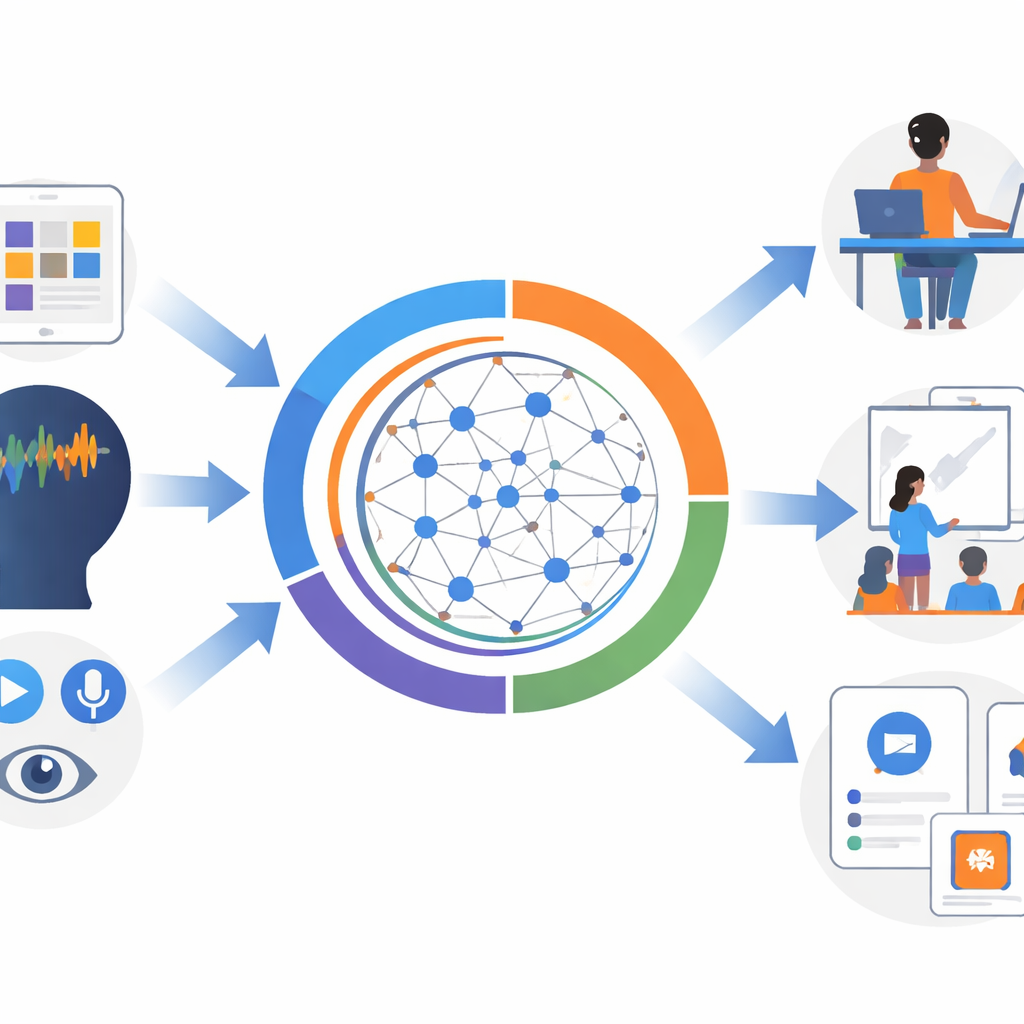
Modern learning platforms collect a surprising variety of signals: which questions you get right, how long you linger on a page, facial and voice cues from video lessons, even heart rate or eye movements in laboratory settings. Each signal offers a small clue about what a learner knows and how they feel. The challenge is that these clues look very different from one another—numbers, images, sounds, clicks—and most current systems either ignore some of them or treat them in isolation. As a result, they miss the bigger picture of what is happening with a student and struggle to explain why they make a given recommendation.
Using Knowledge Maps to Guide Decisions
The study tackles this by combining those rich signals with knowledge graphs—web-like maps of concepts, their prerequisites, and how they connect across a curriculum. Instead of simply predicting whether a student will answer the next question correctly, the system reasons about which ideas are missing, which ones should come next, and which detours might confuse the learner. This structured map acts as a compass, keeping recommendations aligned with the logic of the subject rather than just short-term score gains. It also makes the system’s decisions easier for teachers to inspect, because the paths it suggests can be traced through concrete skills and topics.
A Two-Layer Brain for Teaching Choices
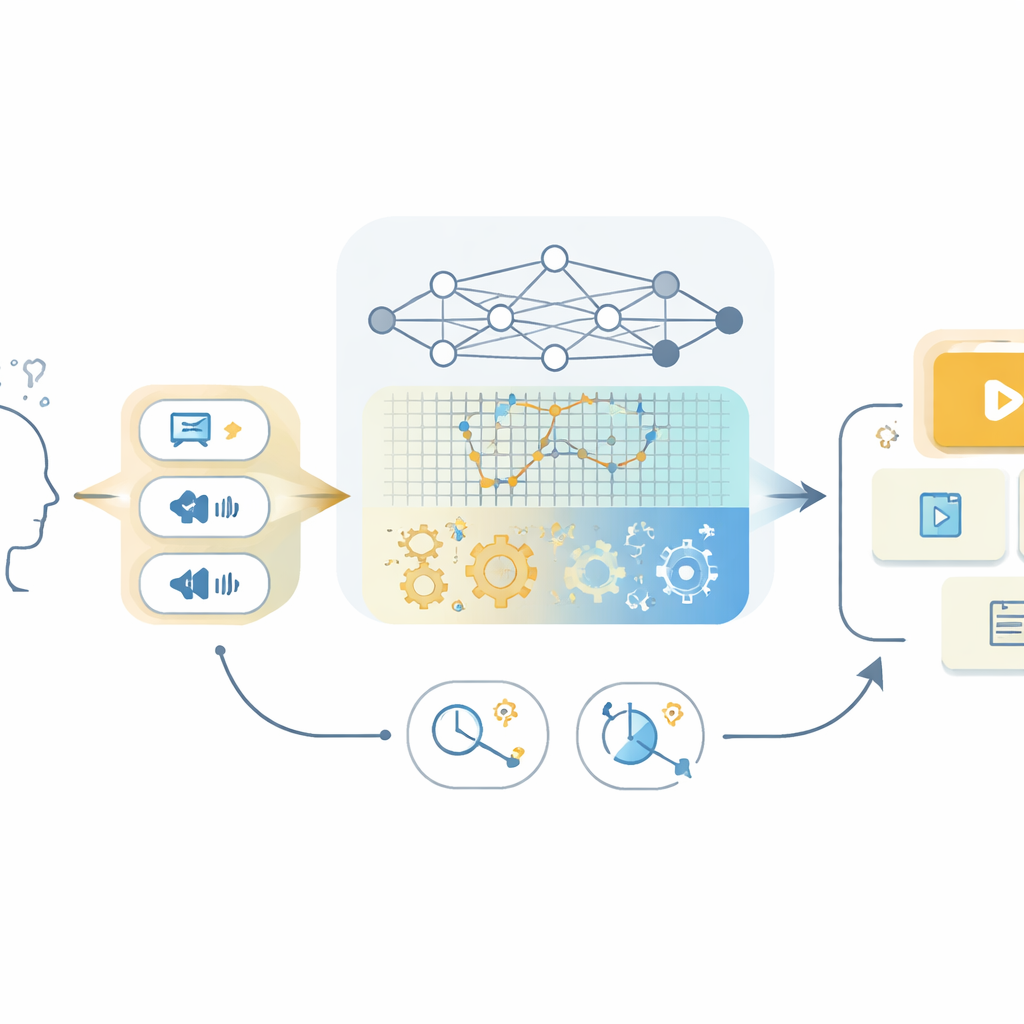
At the heart of the framework is a two-part decision engine. The first part, called the Cognizant Instructional Field Network, turns all of the scattered student data into a compact portrait of the learner’s current state. It looks not only at what has happened recently but also at patterns over time, smoothing out noisy signals while remaining sensitive to sudden changes, such as a drop in attention. Using the knowledge graph as scaffolding, it maintains a fine-grained estimate of which skills are likely mastered and which remain shaky, and proposes a set of possible next actions that obey course rules, such as not skipping key prerequisites.
A Strategic Coach on Top of the Engine
On top of this sits the Pedagogical Inference Controller, which behaves like a strategic coach. It asks: if we had tried a different teaching move earlier, would the student be better off now? By tracking this kind of “regret,” it gradually steers away from choices that have not paid off in the past. It also keeps track of how uncertain the system is about a learner: when confidence is low, it deliberately explores a wider range of activities; when it is high, it narrows in on what seems most promising. A curriculum alignment mechanism constantly nudges the system back toward sensible learning paths, so that experimentation never drifts too far from educational goals.
Evidence From Data and a Small Classroom Trial
The authors tested their framework on several large educational datasets, including logs from online practice systems, international exam records, open online courses, and reading comprehension tasks. Across these very different settings, the new approach made slightly more accurate predictions than strong existing models. While the numerical gains were modest, they were consistent, and in education even small improvements can matter when they guide early support for thousands of learners. In a small real-world classroom study with 60 high school students, those using the intelligent system learned more in two weeks, reached higher mastery rates, and needed less study time per session than those using a standard learning platform, while also reporting high satisfaction.
What This Could Mean for Future Classrooms
For everyday learners and teachers, the message is that smarter, more transparent digital tutors are within reach. By uniting many streams of data with explicit maps of what is being taught, this framework moves beyond black-box prediction toward decisions that can be explained and adjusted. The work suggests that future systems could not only recommend the next exercise, but do so in ways that respect the structure of a subject, respond to uncertainty with measured exploration, and clearly show how each step helps close a learner’s knowledge gaps. More studies in real classrooms will be needed, but this approach points to a future where educational technology behaves less like a score-keeping machine and more like a thoughtful teaching partner.
Citation: Wang, Y. Intelligent educational decision-making system driven by multimodal data fusion and knowledge graphs. Sci Rep 16, 9610 (2026). https://doi.org/10.1038/s41598-025-33066-8
Keywords: personalized learning, intelligent tutoring, knowledge graphs, multimodal education data, adaptive instruction