Clear Sky Science · en
Investigation of the administration technique and side effects of COVID-19 vaccines: a descriptive and cross-sectional study
Why this matters to everyday people
The rapid rollout of COVID-19 vaccines saved countless lives, but many people still worry about what happens after the shot. This study from a large hospital in Türkiye takes a close look at how vaccines are given, what side effects people actually report, and whether the nurse’s technique changes those reactions. Its findings help separate fact from fear and offer a clearer picture of what most people can expect after a COVID-19 jab.

Who was studied and what was checked
Researchers observed 261 adults receiving COVID-19 vaccines at a training and research hospital between late 2021 and spring 2022. Most participants were in their early forties and generally healthy. At the same time, 44 nurses who gave the injections were observed, with information collected on their age, experience, and whether they had special training in COVID-19 vaccination. The team used three structured forms: one to record people’s background and attitudes, one to score how closely nurses followed recommended injection steps, and one to track side effects right after the shot, a day later, and again a week later.
What people believed about the vaccines
The vast majority of those vaccinated already viewed COVID-19 vaccines positively. Over three quarters said they had some knowledge about the vaccines, most often learned from social media, followed by television and health workers. More than nine out of ten believed the vaccines were beneficial and received them voluntarily, and most reported no fear of being vaccinated. This suggests that in this hospital setting, hesitancy was relatively low, even though people’s main information sources were not always medical professionals.
What side effects were actually seen
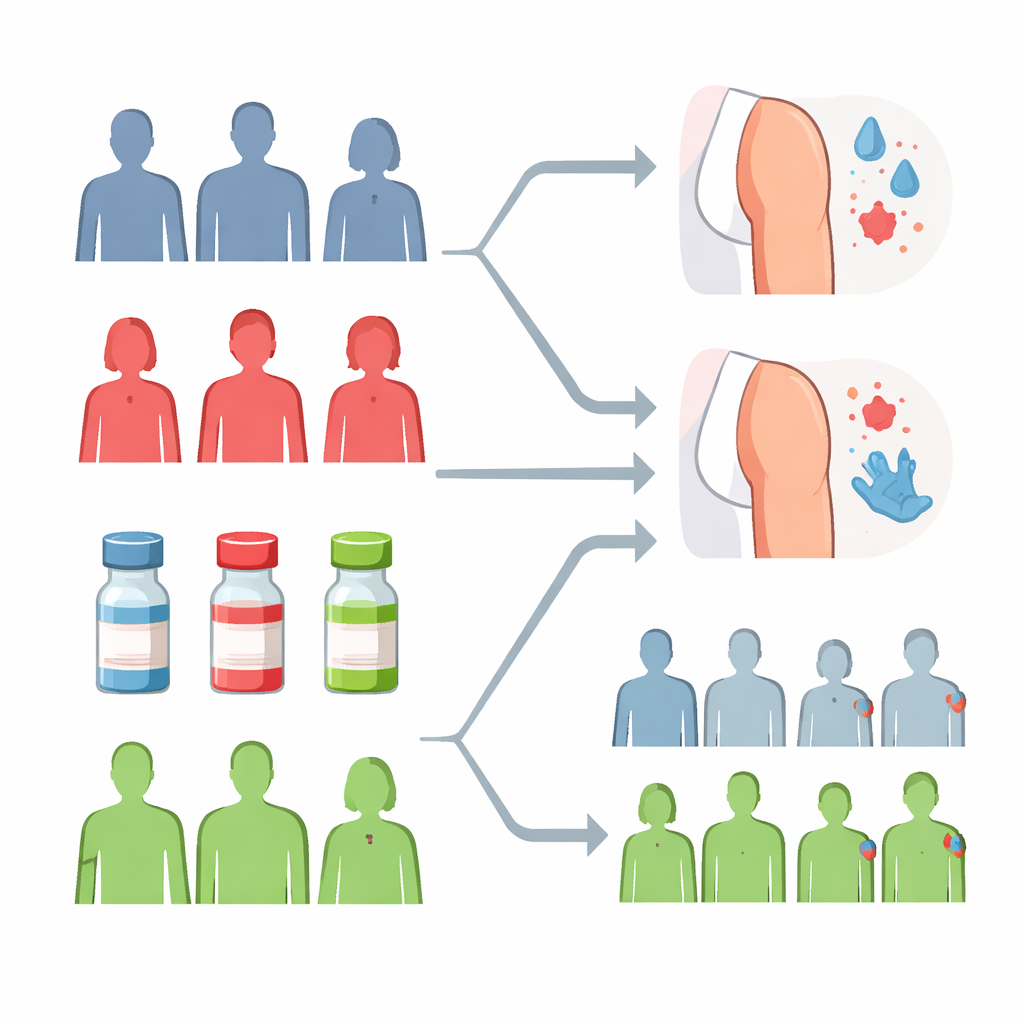
Most participants received the BioNTech mRNA vaccine, while smaller groups received the inactivated Sinovac or Turkovac vaccines. After vaccination, 87 percent of people reported at least one side effect, but these were largely mild and temporary. The most common problems were tenderness and pain in the vaccinated arm, particularly within the first 24 hours. A week later, the complaints shifted mainly to fatigue and headache, again usually mild. Only a small number of people reported less typical symptoms such as shortness of breath, chest pain, arm numbness, or swollen lymph nodes, and these occurred at very low rates.
Who had fewer side effects and what did not matter
To understand what might increase or decrease the chance of side effects, the researchers used statistical modeling. They tested age, chronic illnesses, drug allergies, which dose number people were on, and how well nurses followed the injection steps. None of these factors showed a clear link with whether people reported side effects. Two factors did stand out: gender and vaccine type. In this group, women were less likely than men to report side effects, and people who received the inactivated Sinovac or Turkovac vaccines reported fewer reactions than those who received the BioNTech vaccine. Importantly, the nurses’ average skill scores were high, and their technique did not appear to drive side effects up or down.
What this means for patients and nurses
For the general public, this study reinforces that COVID-19 vaccines are mostly associated with short-lived arm discomfort and mild general symptoms, rather than severe reactions. It also suggests that differences in side effects are more closely tied to the person and the type of vaccine than to how an experienced nurse gives the shot. For nurses and health planners, the work highlights the value of maintaining strong, standardized injection practices and of offering clear, reassuring information about what to expect after vaccination. While the study is limited to one hospital and a modest number of people, it adds to the growing evidence that COVID-19 vaccines are generally safe and that side effects, though common, are usually mild and manageable.
Citation: Eyiler, E., Terzi, B. & Koşar, İ. Investigation of the administration technique and side effects of COVID-19 vaccines: a descriptive and cross-sectional study. Sci Rep 16, 8211 (2026). https://doi.org/10.1038/s41598-025-33044-0
Keywords: COVID-19 vaccines, vaccine side effects, nursing practice, vaccine safety, Turkovac and Sinovac