Clear Sky Science · en
Pineapple peel cellulose based eco-friendly fertilizer nanocomposites for improved nutrient delivery
Turning Fruit Waste into Plant Food
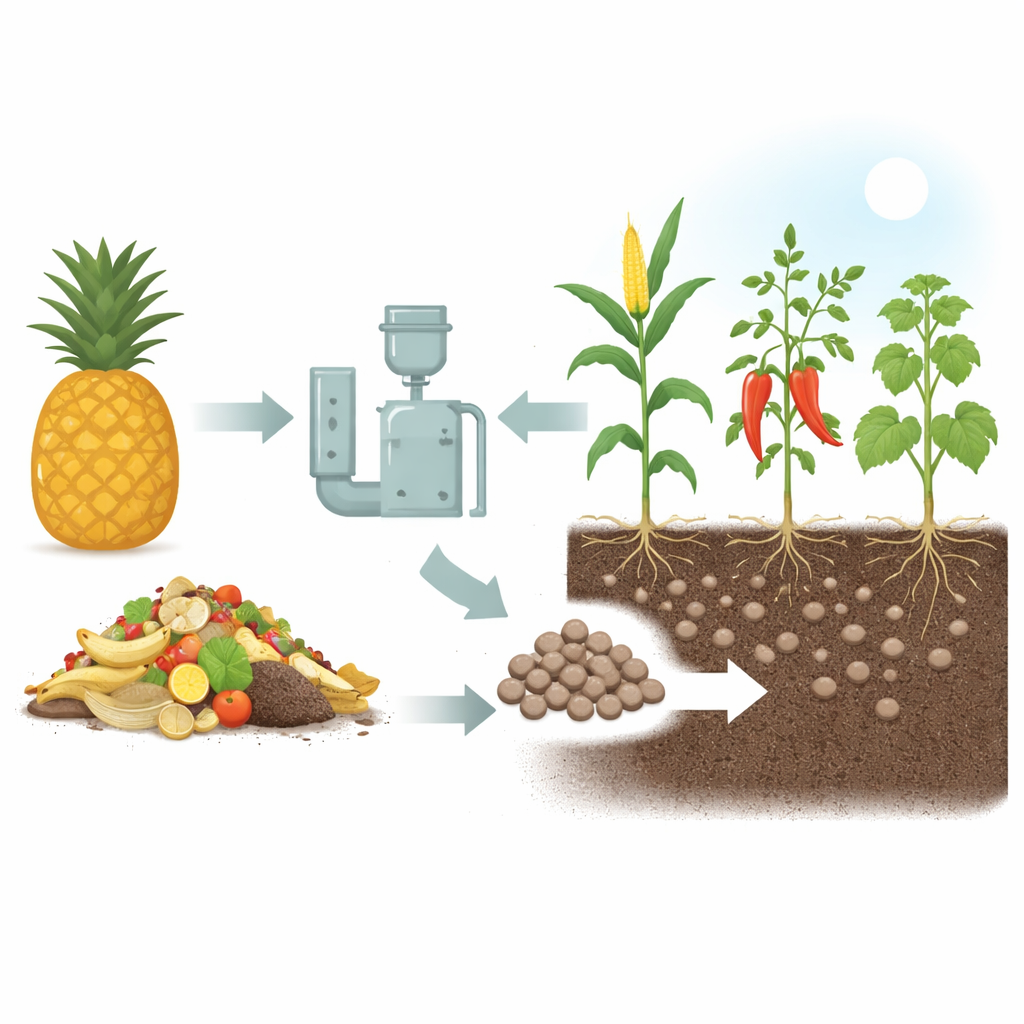
Every year, farms and kitchens generate mountains of fruit peels and leftovers that mostly go to waste, while farmers rely on chemical fertilizers that often wash away before crops can use them. This study explores a way to tackle both problems at once: transforming discarded pineapple peels and kitchen scraps into smart, eco-friendly fertilizer pellets that feed crops more efficiently and with less harm to soil and water.
Why Fertilizers Need an Upgrade
Modern agriculture depends heavily on fertilizers to keep pace with a growing global population, yet conventional products are surprisingly wasteful. Much of the nitrogen and phosphorus they contain never reaches the plants; instead, it leaches into rivers and groundwater or escapes into the air. The result is polluted waterways, greenhouse gas emissions, and wasted money. At the same time, many countries struggle with food security and import large amounts of staple foods. The researchers behind this work set out to design a new kind of fertilizer that releases nutrients slowly and predictably, matching the needs of crops while cutting losses to the environment.
Making More from Pineapple Peels
Pineapple production in Malaysia generates large volumes of peels and leaves that are usually treated as low-value waste. These peels, however, are rich in cellulose a sturdy plant fiber that can be broken down into tiny strands called nanofibers. The team compared two "green" methods to extract these nanofibers from chopped, dried pineapple peel: high-speed blending and microwave heating in a special reactor. Both methods produced useful material, but the microwave approach yielded more nanofibers with a purer and more orderly structure. Those features make the fibers especially suitable for reinforcing other materials, much like the rebar inside concrete.
Building Smart Fertilizer Pellets
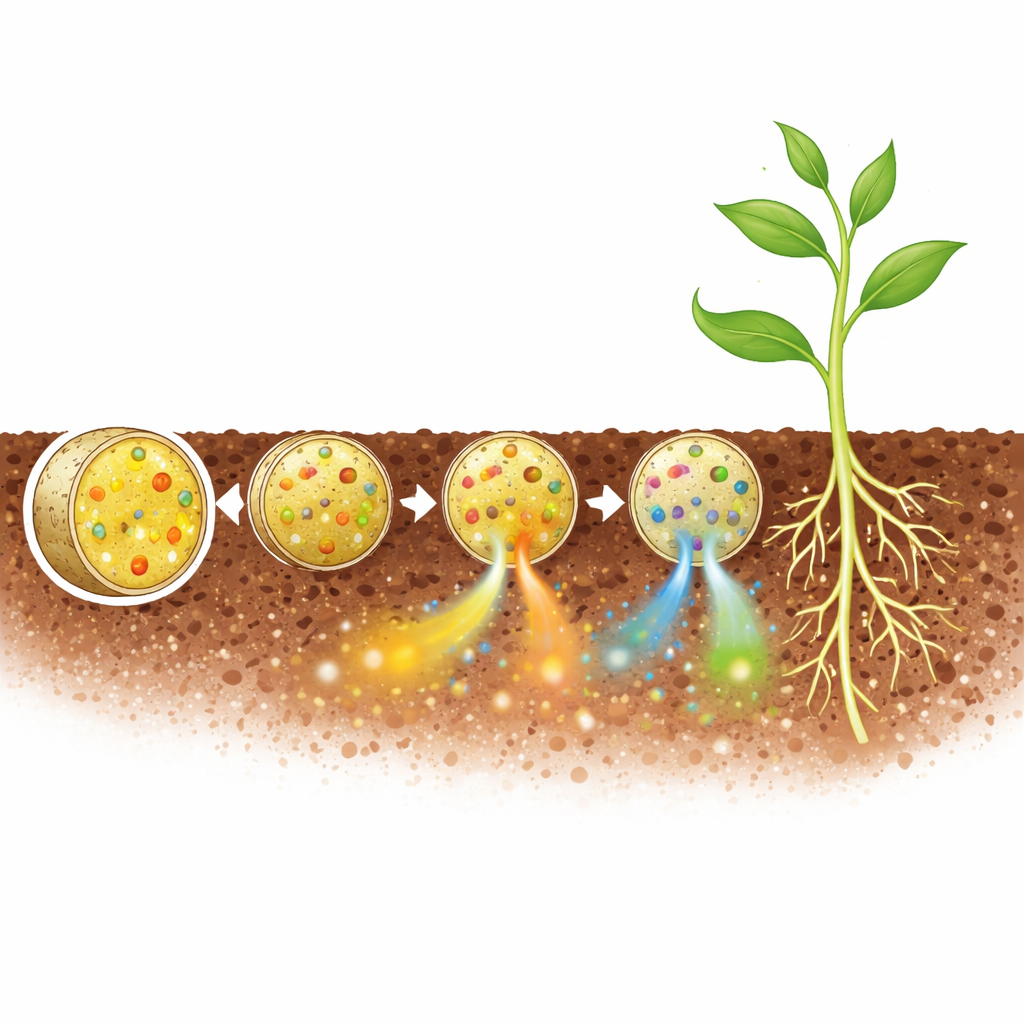
Next, the researchers combined three ingredients: the pineapple-derived cellulose nanofibers, a nutrient-rich fertilizer made from kitchen waste, and a biodegradable plastic known as PBS. By adjusting how much of each component they mixed, they created six types of small, solid pellets. The nanofibers acted like a microscopic scaffold inside the PBS, helping it form a stronger, more regular network around the fertilizer. Laboratory tests showed that one formulation, called F1, struck the best balance. It broke down more slowly in soil, soaked up and held water well, and released plant nutrients at a gentle, steady pace rather than in a single burst.
Putting the Pellets to the Test
To see whether these new pellets actually help crops, the team grew corn in pots and chili and okra in a greenhouse-based vertical system. They compared plants fed with standard fertilizers to those given the various pellet formulations. Across all three crops, the F1 pellets consistently led to taller plants, larger leaves, greener foliage, and higher yields. For example, plants grown with F1 showed increases in plant height, leaf area, and harvest weight compared with conventional treatments. Measurements of leaf greenness, which reflect chlorophyll and nitrogen status, also improved, indicating that the slow-release nutrients were being taken up efficiently instead of being washed away.
What This Means for Farms and Food
In simple terms, this research shows that pineapple peels and kitchen scraps can be turned into "smart" fertilizer granules that last longer in soil and feed crops more gently and effectively. By using biodegradable materials and waste-derived nutrients, the pellets offer a way to reduce fertilizer runoff, cut application frequency and cost, and make better use of agricultural and household residues. If scaled up, such eco-friendly controlled-release fertilizers could help farmers grow more food on limited land while easing pressure on rivers, lakes, and climate all key steps toward more sustainable and secure food systems.
Citation: Shariful Juhari, M.H., Luthfi, A.A.I., Saleh, N.M. et al. Pineapple peel cellulose based eco-friendly fertilizer nanocomposites for improved nutrient delivery. Sci Rep 16, 8971 (2026). https://doi.org/10.1038/s41598-025-32774-5
Keywords: controlled-release fertilizer, pineapple peel, nanocellulose, biofertilizer, sustainable agriculture