Clear Sky Science · en
Ex vivo effects of oclacitinib and cyclosporin A on canine immune response to Leishmania infantum
Why this matters for dogs and their owners
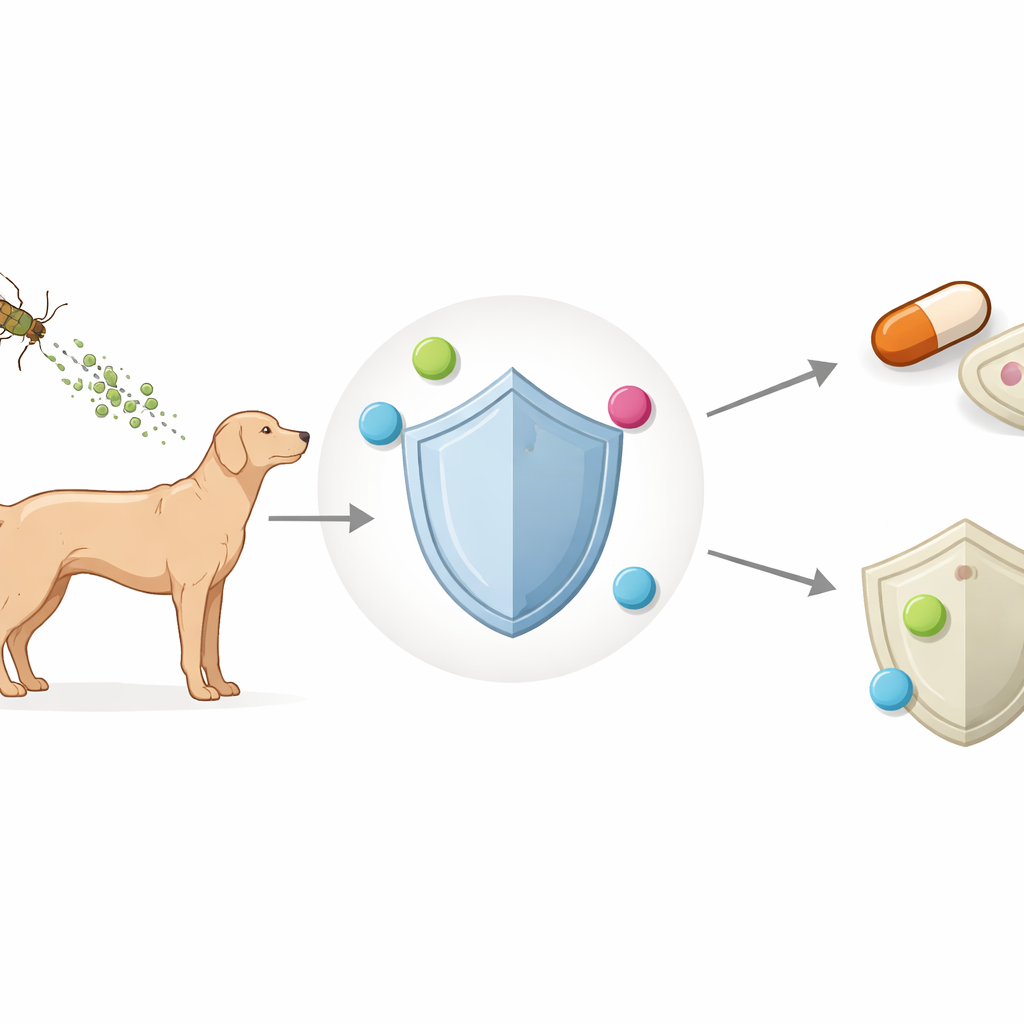
In many regions around the Mediterranean and beyond, a tiny sandfly can transmit a parasite that causes a serious disease in dogs called leishmaniosis. At the same time, more and more dogs are treated long term with powerful medicines to control allergies and immune problems. This study explores a practical question for veterinarians and dog owners: do two widely used drugs, oclacitinib and cyclosporin A, weaken a dog’s natural defenses against Leishmania infantum and potentially make leishmaniosis worse?
The disease behind the worry
Leishmaniosis is a long-lasting infection in which the parasite hides inside the dog’s immune cells. Many infected dogs never get sick because their immune system mounts a strong, targeted response that keeps the parasite in check. In these animals, certain chemical messengers in the blood act like alarm signals that activate parasite-killing cells. When this protective response is weak or unbalanced, dogs can develop anything from mild skin problems to severe, sometimes fatal illness, often with kidney damage. Because cyclosporin A and oclacitinib are designed to calm the immune system in allergic and autoimmune diseases, there is concern that they may also blunt these crucial alarm signals against the parasite.
How the researchers tested the drugs
The team worked with 30 dogs from an area of Spain where leishmaniosis is common. They grouped the dogs into three categories: healthy dogs with no sign of parasite-specific alarm signals, healthy dogs that showed a strong protective response despite little or no antibody in their blood, and sick dogs that were already affected by leishmaniosis but still able to mount a protective response. From each dog, the researchers collected blood and exposed it in the lab to parasite material that mimics infection, or to a strong general stimulator of immune cells. They then added either cyclosporin A or oclacitinib at levels comparable to those reached during treatment, and measured how much of three key alarm signals were released.
What happened to the immune alarm signals
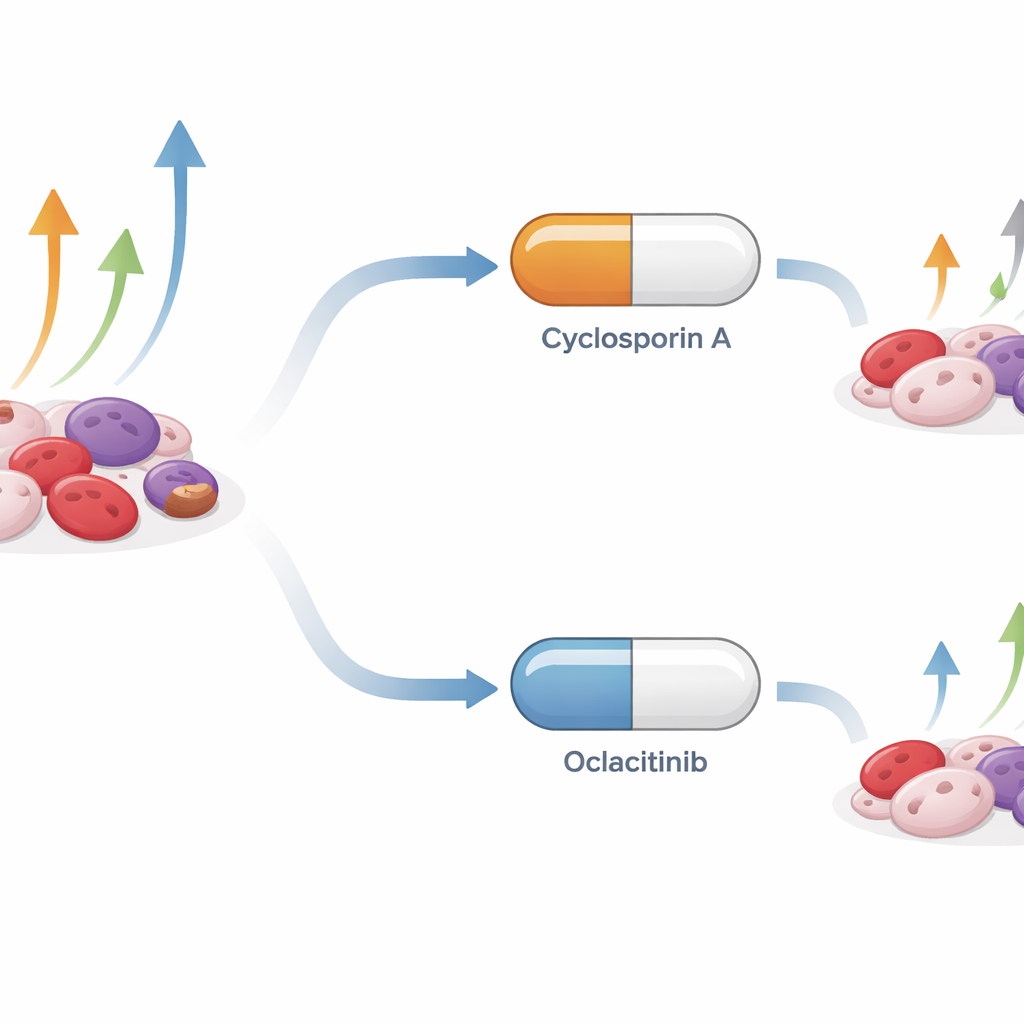
Cyclosporin A had a broad and powerful dampening effect. In blood from both infected and sick dogs, this drug sharply reduced all three measured alarm signals after exposure to the parasite material, and also after the general immune stimulation. In contrast, oclacitinib showed a much narrower effect. At the lower tested level, it did not significantly reduce the three alarm signals when cells were exposed to the parasite or to the general stimulator. Only at the higher level, and only in blood from sick dogs, did oclacitinib reduce one of the main parasite-fighting signals after exposure to the parasite material. In some test settings with the general stimulator, oclacitinib was even associated with higher amounts of certain signals in healthy dogs, suggesting more complex effects that are not yet fully understood.
What this means for dogs in high-risk areas
These findings suggest that cyclosporin A can strongly suppress the very immune pathways that help dogs control leishmaniosis, at least under controlled laboratory conditions. In regions where the disease is common, long-term cyclosporin A treatment could therefore increase the risk that a silent infection progresses to obvious illness, or that an already sick dog worsens. Oclacitinib, under typical dose conditions, appears less likely to blunt these protective responses, although higher exposure in sick dogs may still weaken one important alarm signal. The authors emphasize that real-life clinical studies are still needed to confirm how these laboratory results translate into disease outcomes, but they recommend careful screening, prevention, and follow-up for leishmaniosis in dogs receiving these drugs, especially cyclosporin A.
Take‑home message for owners
For dog owners living or traveling in areas where leishmaniosis is present, this study underscores the importance of discussing infection risks with a veterinarian before starting or continuing strong immune-calming drugs. Cyclosporin A appears to broadly silence the immune “warning bells” that help dogs keep Leishmania in check, while oclacitinib seems to have a more limited impact under usual conditions. With proper testing, parasite control measures, and thoughtful drug choice, veterinarians can better balance the need to treat skin and immune diseases with the need to protect dogs against this serious parasitic infection.
Citation: Murillo-Picco, A., Jiménez-Fortunato, C., Rivero, T. et al. Ex vivo effects of oclacitinib and cyclosporin A on canine immune response to Leishmania infantum. Sci Rep 16, 8016 (2026). https://doi.org/10.1038/s41598-025-32578-7
Keywords: canine leishmaniosis, cyclosporin A, oclacitinib, dog immune response, vector-borne parasites