Clear Sky Science · en
Ecology and demographic structure of an extinct ibex population in late Upper Palaeolithic Italian Alps
Ancient mountain neighbors
High in the Italian Alps, long before ski resorts and hiking trails, people and wild ibex shared the same steep slopes. This study explores that lost world at Riparo Dalmeri, a rock shelter where Ice Age hunter-gatherers relied heavily on Alpine ibex for food and materials. By reading clues locked inside fossil teeth, the authors reconstruct how these animals lived, moved, bred, and ultimately vanished—and why that story matters today as modern ibex again face rapid climate change.
A rock shelter full of clues
Riparo Dalmeri lies at mid-altitude in the northeastern Italian Alps and was repeatedly visited by hunter-gatherer groups around 13,500 to 11,500 years ago, during the dramatic swing from the last Ice Age into the warmer Holocene. Animal bones from the site show a striking pattern: ibex make up 80–93% of all identified remains in every phase of occupation. This suggests highly focused hunting, with whole family groups visiting the shelter seasonally. New radiocarbon dates on ibex bones and teeth confirm several main periods of use, including through the cold Younger Dryas interval, when climate briefly snapped back toward glacial conditions.
Following ibex lives through their teeth
The researchers treated ibex teeth as tiny black boxes recording an animal’s life. Chemical signatures of strontium in the enamel showed that nearly all of the ibex were local, indicating that herds stayed within a relatively small home range around the shelter rather than migrating long distances. Carbon and oxygen isotopes, which reflect diet and drinking water, revealed a landscape dominated by cool-climate plants and a climate marked by strong seasons. In the latest occupation phase, the ups and downs in oxygen values became more pronounced, pointing to sharper swings between warm summers and cold winters as the region entered the Younger Dryas and then warmed into the Holocene.
Different habits for males and females
To understand which ibex were being hunted, the team combined two cutting-edge approaches to determine sex: protein “fingerprints” in tooth enamel and fragments of ancient DNA. Together, these showed that both males and females of various ages ended up in the archaeological record. Carbon isotope differences between male and female teeth suggest that the sexes fed in slightly different parts of the landscape or on somewhat different plants, echoing patterns seen in modern ibex where large-horned males often use broader, riskier ranges than females. Strontium results hint that occasional males strayed a bit farther afield, but overall the fossil herds appear to have lived much like today’s ibex, making seasonal vertical movements over modest distances rather than sweeping migrations. 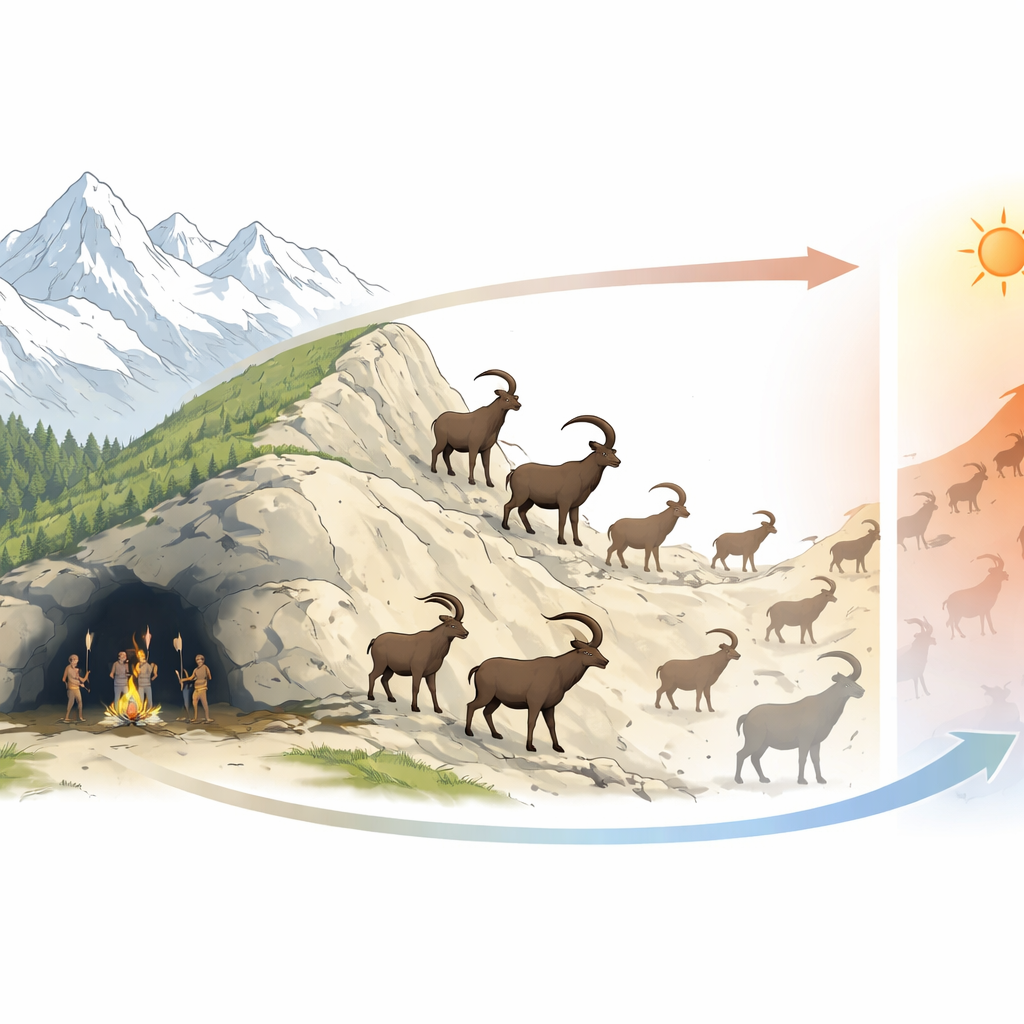
A lost branch of the ibex family tree
Ancient DNA extracted from the teeth allowed the authors to place the Riparo Dalmeri ibex on a genetic family tree alongside ancient, historic, and modern wild goats from across Europe. The results show that these animals formed a distinct, now-extinct branch within the wider Alpine ibex lineage. During the Late Pleistocene, ibex populations across the Alps appear to have maintained relatively high genetic diversity, even under steady hunting pressure from humans and amidst shifting climates. Only much later, in historic times, does the genetic record reveal a steep decline—matching historical accounts of intense hunting that nearly wiped the species out before its rescue from a tiny surviving population in the Gran Paradiso area.
Lessons for today’s changing Alps
Taken together, the archaeological, chemical, and genetic evidence paints a vivid picture: a local ibex population that coexisted closely with human hunters through a period of increasing climate instability, yet was also geographically and genetically isolated. As seasons became more extreme and habitats shifted, the ibex likely adjusted their ranges and behavior. This may have changed when and how often people could hunt them, and it may have left the Dalmeri population vulnerable when rapid environmental change and human pressure coincided. In the end, this branch of the ibex family tree disappeared. 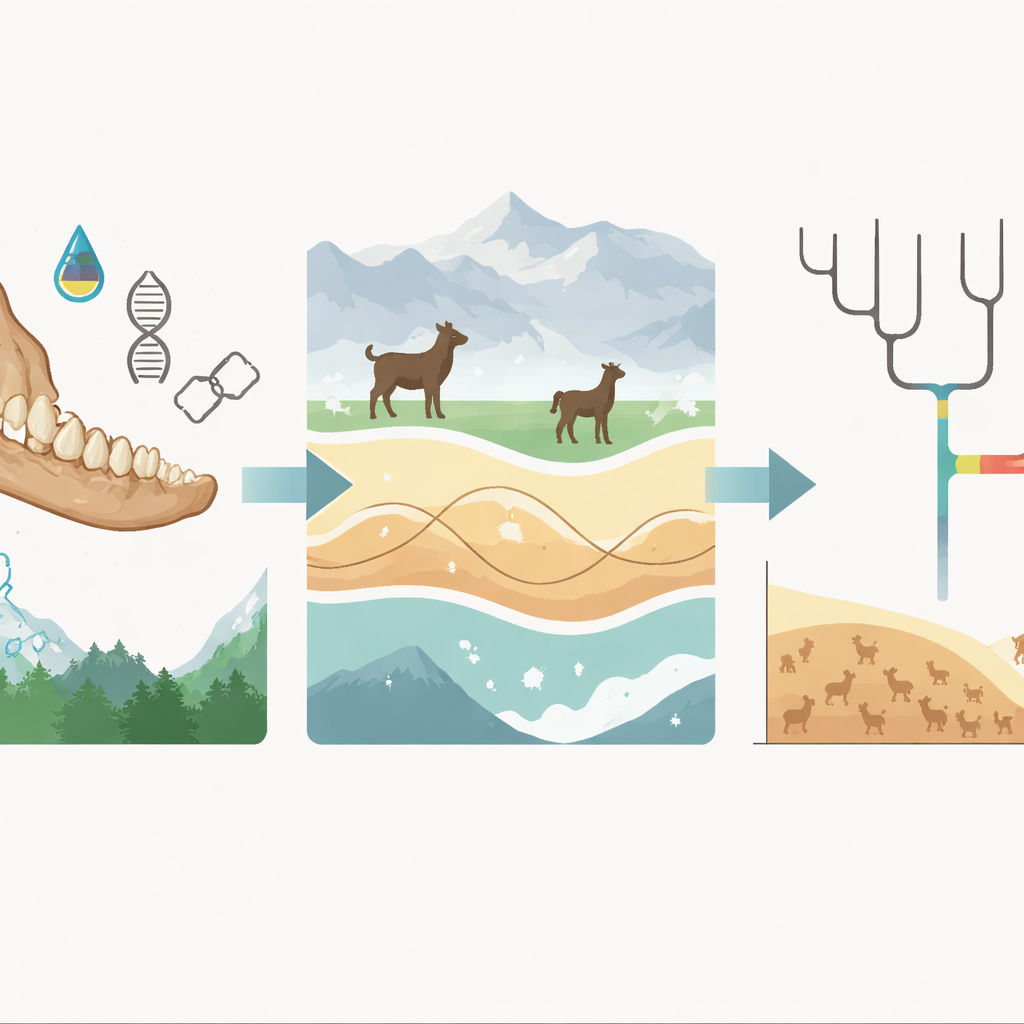
What this Ice Age story means now
For a lay reader, the key message is that ancient bones can reveal not just who lived in the past, but how animals and people responded to sudden climate swings. The ibex of Riparo Dalmeri show that even resilient mountain species can be pushed to the edge when warming, habitat change, and human pressure line up. Today’s Alpine ibex are recovering from a near-extinction but face rising temperatures and shrinking cool refuges. By understanding how an earlier population adapted—and ultimately failed to survive—scientists gain a powerful reference point for protecting these emblematic animals in a rapidly changing world.
Citation: Armaroli, E., Fontani, F., Iacovera, R. et al. Ecology and demographic structure of an extinct ibex population in late Upper Palaeolithic Italian Alps. Sci Rep 16, 9601 (2026). https://doi.org/10.1038/s41598-025-32389-w
Keywords: Alpine ibex, ancient DNA, paleoclimate, Ice Age hunting, species conservation