Clear Sky Science · en
An individual patient data meta-analysis on vagal nerve stimulation for recovery from disorders of consciousness
Why sending gentle signals to a nerve might help the injured brain wake up
When someone survives a severe brain injury but does not fully wake up, families often find themselves in a long, uncertain wait. Treatments that can truly nudge the brain toward recovery are scarce. This study asks a hopeful question: can gentle electrical pulses delivered to a single nerve in the neck – the vagus nerve – help people with long‑lasting disorders of consciousness take meaningful steps toward awareness?
Understanding long-lasting unconscious states
After major brain damage from trauma, stroke, or lack of oxygen, some people remain in states where their eyes may be closed, open without clear awareness, or show only brief, inconsistent signs of connection with the world. These conditions, grouped as disorders of consciousness, range from coma to vegetative or unresponsive wakefulness states, and then to minimally conscious states, where small but real signs of awareness appear. Doctors track progress with a structured bedside test called the Coma Recovery Scale-Revised, which scores behaviors such as eye movements, responses to sound, and ability to follow simple commands. Even small changes on this scale can signal a shift into a better state of consciousness.
A nerve that links body and brain
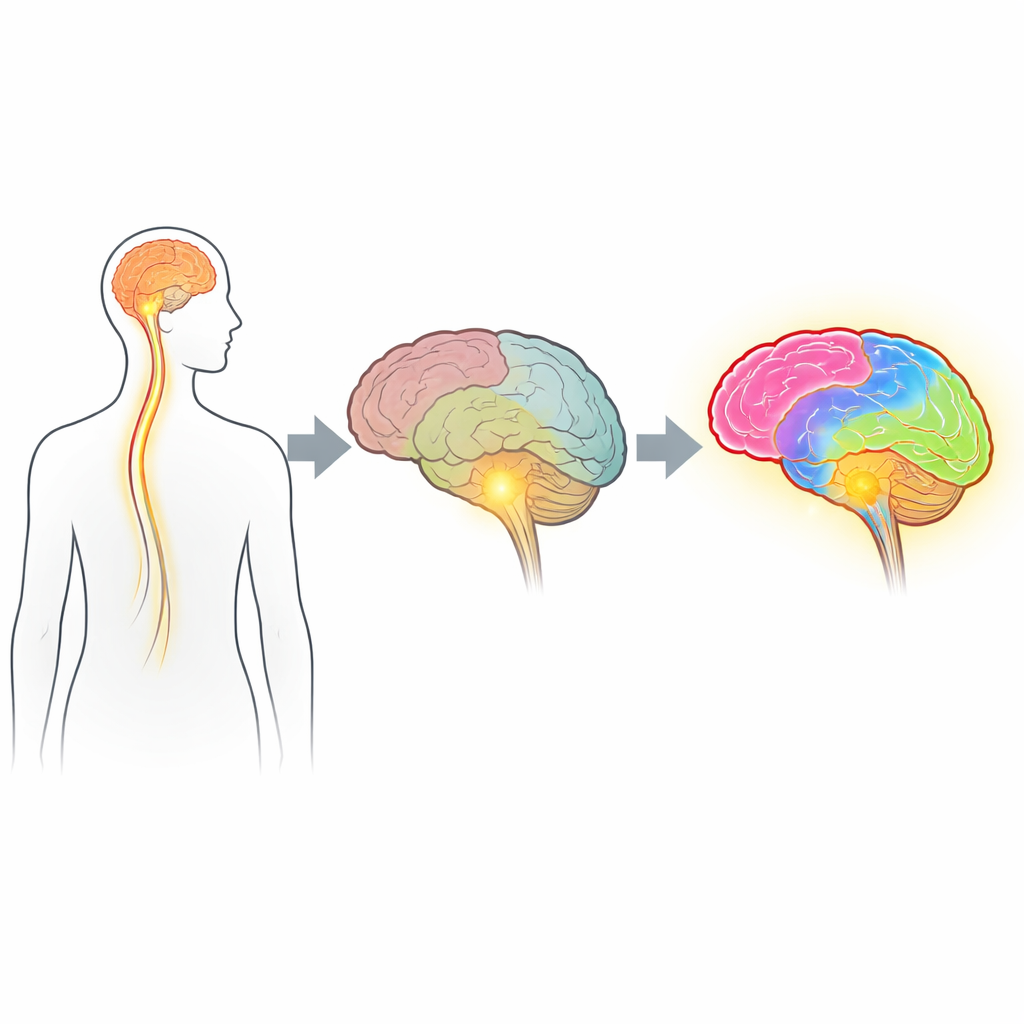
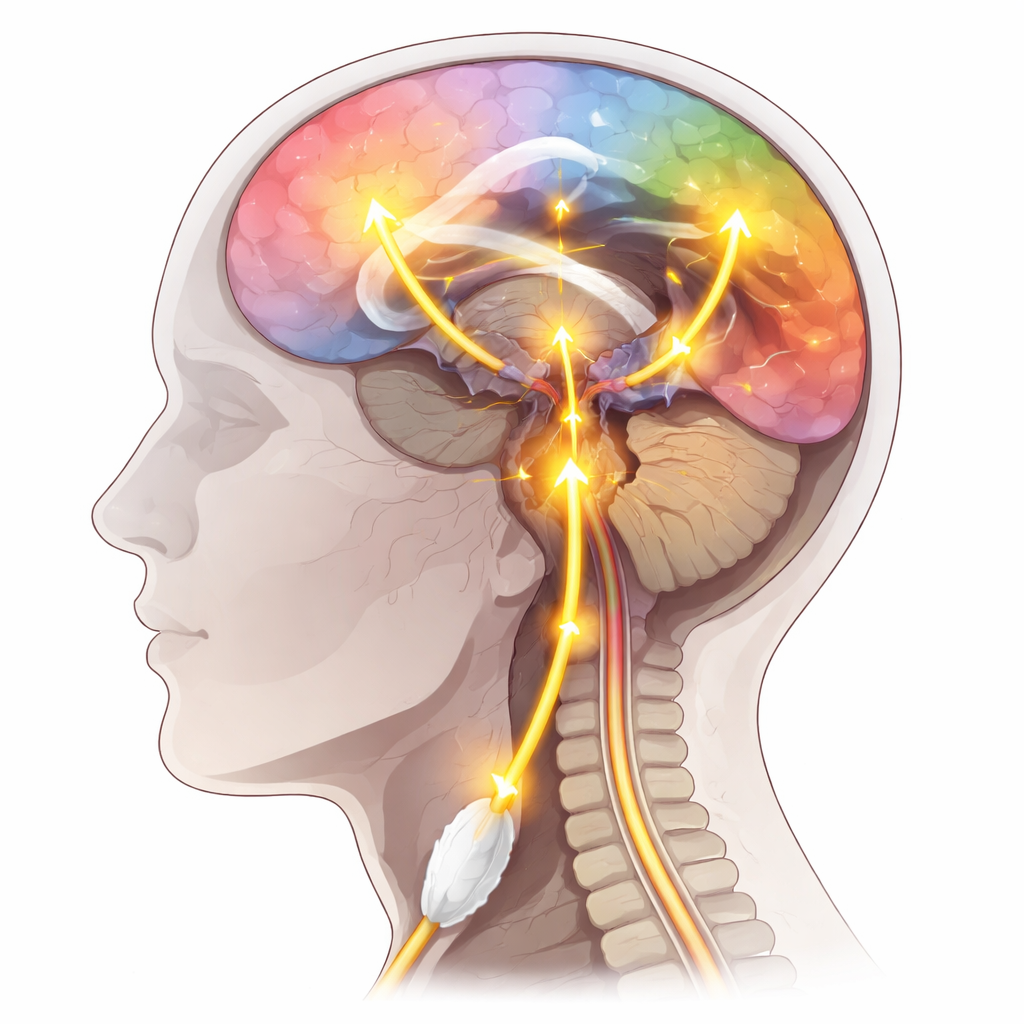
The vagus nerve travels from deep in the brainstem through the neck into the chest and abdomen, carrying signals between the brain and many organs. For years, doctors have used surgically implanted vagus nerve stimulators to treat epilepsy and depression, and newer, non-surgical devices can stimulate the nerve through the skin of the outer ear or with magnetic pulses. Animal and imaging studies suggest that stimulating this nerve can activate brainstem hubs that release key brain chemicals, such as norepinephrine and serotonin, and strengthen communication within large-scale brain networks involved in attention and awareness. These clues raised the possibility that vagus nerve stimulation might help reconnect or reawaken damaged but not dead networks in patients who have remained unresponsive for weeks or months.
Pooling clues from many small studies
Because individual clinical reports have been small and varied, the authors performed an individual patient data meta-analysis, a method that collects and reanalyzes raw data from multiple studies as if they formed one larger cohort. They searched medical databases up to mid‑2024 and found 10 human studies of vagus nerve stimulation for disorders of consciousness, covering 112 patients; detailed person-by-person data were available for 87 of them. Patients differed in age, cause of brain injury, and how long they had been in a disordered state. Some received implanted stimulators in the neck, while most were treated non-invasively via the ear or with magnetic stimulation sessions lasting several weeks.
Small but meaningful steps toward awareness
Across seven studies large enough for pooled analysis, vagus nerve stimulation was associated with an average increase of about three points on the Coma Recovery Scale-Revised. When the researchers examined each person’s data, 40 percent of patients improved by at least three points—a change considered more than minimally clinically important. About one in six moved from coma or vegetative states into minimally conscious states, and another one in six advanced from minimally conscious states to clearer, more consistent awareness. People who were already minimally conscious tended to benefit more than those in deeper states, suggesting that some remaining network function may be needed for stimulation to help. Surprisingly, age and the type or cause of brain injury did not clearly predict who improved, and both implanted and non-invasive approaches showed potential benefits.
Cautious hope, not a miracle cure
Despite these encouraging patterns, the authors emphasize major caveats. Only two of the ten studies used rigorous randomized, sham-controlled designs; many were small case series without comparison groups, making it hard to separate the effects of stimulation from natural recovery over time. Treatment protocols varied widely in intensity and duration, follow-up periods were short, and detailed reporting of side effects and specific behavioral gains was often incomplete. Overall, the evidence suggests that vagus nerve stimulation can sometimes produce meaningful, if modest, advances in consciousness for a subset of patients, especially those not in the deepest states. For families and clinicians, this points to a promising, relatively safe tool that deserves thorough testing, rather than a guaranteed path to recovery. Larger, high-quality trials are now needed to confirm how well it works, which patients are most likely to benefit, and how best to balance medical gains with the ethical questions of treating people who cannot speak for themselves.
Citation: Zhang, J.J., Lo, Y., Wee, A. et al. An individual patient data meta-analysis on vagal nerve stimulation for recovery from disorders of consciousness. Sci Rep 16, 8766 (2026). https://doi.org/10.1038/s41598-025-32369-0
Keywords: vagus nerve stimulation, disorders of consciousness, coma recovery, brain injury, neuromodulation