Clear Sky Science · en
Systematic review and meta-analysis of the spatio-temporal changes in apparent tsetse fly density in Uganda from 1980 to 2022
Why these tiny flies matter to farmers and families
Tsetse flies may look like ordinary insects, but they transmit a parasitic disease called trypanosomiasis that sickens cattle and can infect people. In Uganda, this threat hangs over millions of animals and rural communities that depend on livestock for milk, meat, income, and ploughing fields. This study pulls together more than four decades of scattered research to answer a basic yet crucial question: where, and how densely, are tsetse flies found across the country?
Taking stock of decades of scattered fieldwork
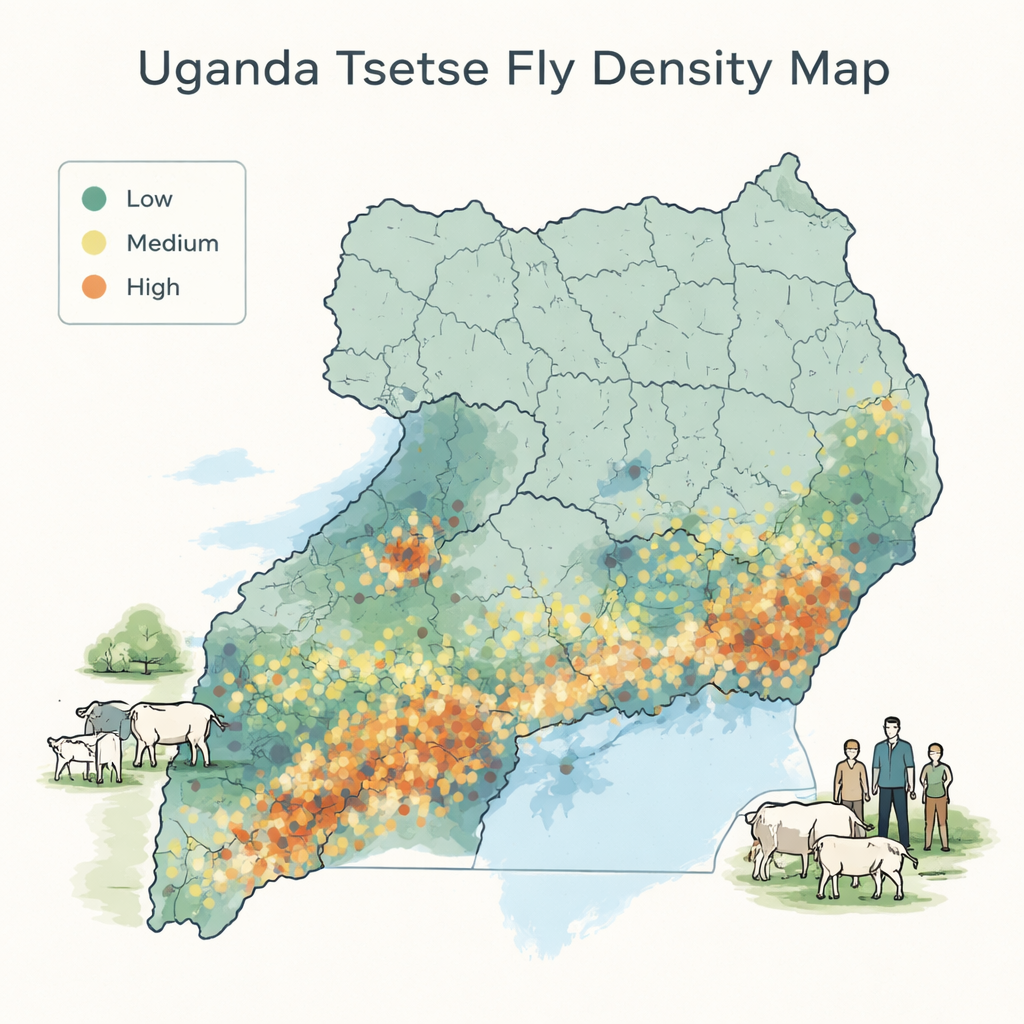
The authors searched five major scientific databases and government sources for every study, report, or survey that recorded tsetse flies in Uganda between 1980 and 2022. Out of 3,462 initial records, 42 studies passed strict checks for data quality and relevance. From these they extracted over 4,000 individual records describing when and where flies were trapped, how many were caught, which species were present, and in some cases, how many flies were captured per trap per day—a standard measure of fly density. Using modern mapping and statistical tools, they turned this scattered information into a single, nationwide picture of tsetse presence.
Building a national picture of risky areas
By combining results from 20 studies that reported clear fly-per-trap-per-day figures, the team carried out a formal meta-analysis, essentially averaging across studies while accounting for their differences. They then linked each trapping location to its district and sub-county, using geocoding tools when exact coordinates were missing. This allowed them to create detailed maps showing how apparent tsetse density varies from place to place. They also grouped records by time period and by tsetse species to see how patterns may have shifted over the years and between different ecological types of flies.
Uneven data and hidden hotspots
The resulting maps show that tsetse flies are not evenly spread across Uganda. Many records come from the eastern region, especially around the Lake Victoria basin and districts that have long battled human sleeping sickness. In contrast, the western region—where commercial farmers often use insecticides that also kill tsetse—was severely under-sampled, leaving major gaps in knowledge. Where data were available, no sampled district or sub-county had a density estimate of zero, suggesting that tsetse populations persist wherever they have been looked for. Statistical models point to small, distinct clusters of higher fly density, especially along riverine habitats and in the national "cattle corridor," where livestock are concentrated.
What drives changes in fly numbers over time
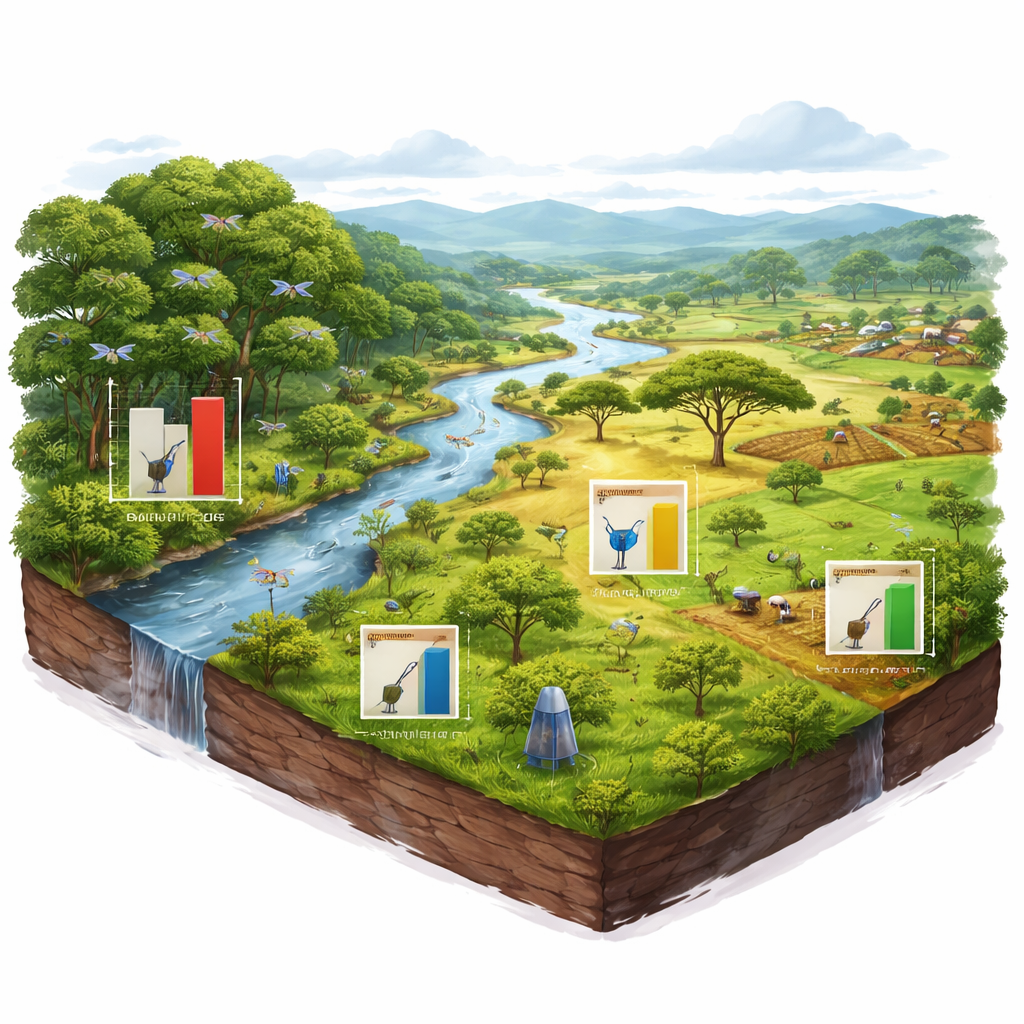
The study went further to ask why fly density estimates differed so much between studies. A meta-regression analysis showed that most of this variation could be explained by three factors working together: the specific sub-county, the time period when flies were collected, and which tsetse species were present. This pattern hints that local environment, land use, and seasonal or long-term climate changes strongly shape where tsetse thrive. However, the authors also uncovered major weaknesses in the underlying evidence: many studies never identified flies to species, reported densities only as broad averages, or omitted basic details like trapping duration.
What this means for disease control on the ground
In plain terms, this work confirms that tsetse flies remain widespread in Uganda and tend to cluster in particular pockets of the landscape. For farmers and public health planners, this means control efforts—such as insecticide-treated cattle, traps, or small targets—will work best when they are focused on these high-risk sub-counties rather than spread thinly across entire regions. The study also lays the groundwork for a national “atlas” of tsetse flies and animal trypanosomiasis, a living information system that can guide smarter, risk-based control programs and help Uganda move toward the long-term goal of reducing both animal disease and the lingering threat of human sleeping sickness.
Citation: Rascón-García, K., Wasswa, A.T., Martínez-López, B. et al. Systematic review and meta-analysis of the spatio-temporal changes in apparent tsetse fly density in Uganda from 1980 to 2022. Sci Rep 16, 7638 (2026). https://doi.org/10.1038/s41598-025-32160-1
Keywords: tsetse flies, trypanosomiasis, Uganda livestock, vector mapping, disease control