Clear Sky Science · en
Bioinspired APTES-coated copper oxide nanoparticles with antioxidant, antibacterial, and optoelectronic potential
Turning Leaves into Tiny Helpers
Imagine using tree leaves, not harsh factory chemicals, to make tiny particles that can kill dangerous bacteria, mop up harmful molecules in the body, and even help clean up pollution. This study shows how scientists used leaves from a common medicinal tree to create specially coated copper oxide nanoparticles—ultra-small bits of copper-based material—with promising uses in medicine, environmental cleanup, and future electronic devices.
From Forest Tree to Lab Bench
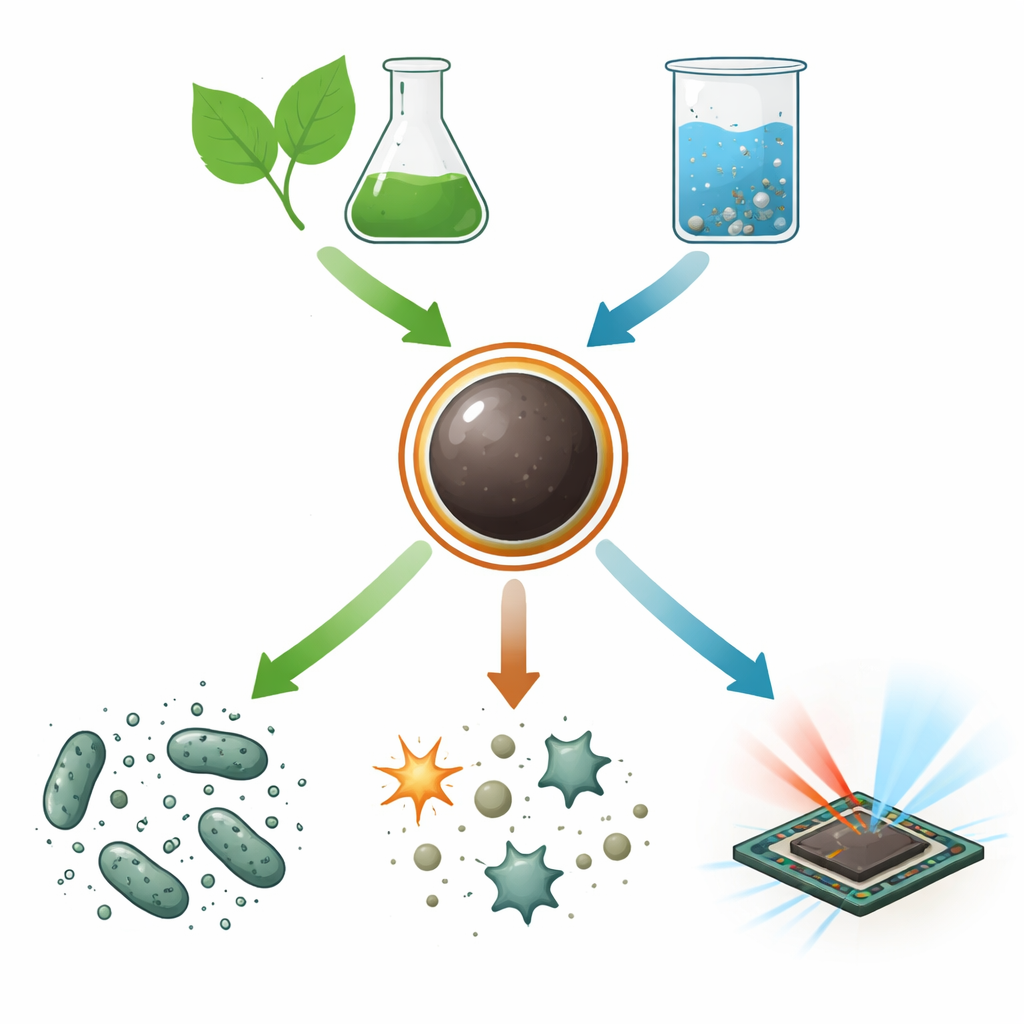
The researchers started with leaves from Neolamarckia cadamba, a tree long used in traditional medicine to treat infections, fever, and digestive problems. They soaked powdered leaves in water to pull out natural plant compounds. This green extract was then mixed with a copper salt solution and gently heated and processed, forming copper oxide nanoparticles. To improve their stability and make them easier to blend into other materials, the team coated the particles with an organic molecule called APTES, using either pure water or ethanol as the mixing liquid.
Peeking Inside the Nanoparticles
To understand what they had made, the scientists used a suite of high-precision tools. X-ray measurements confirmed that the particles had the expected crystal structure of copper oxide, while also showing that the APTES coating slightly changed their size and internal order. Light-based tests revealed how the particles absorb and emit light, including their band gap—an energy property important for optoelectronic devices such as sensors or light-driven electronics. Coated particles had somewhat different light behavior and more internal “disorder,” which can affect how they conduct charge and interact with their surroundings.
Cleaning Chemicals and Soaking Up Free Radicals
The team then tested whether these nanoparticles could speed up a useful chemical reaction: the conversion of 4-nitrophenol, a toxic industrial pollutant, into a less harmful compound. All three types of particles—uncoated, coated in water, and coated in ethanol—acted as catalysts, helping the reaction proceed much faster when combined with a common reducing agent. Bare copper oxide worked fastest, but the coated versions still performed well, suggesting that surface design can balance reactivity with stability depending on the intended use. The nanoparticles also showed antioxidant activity in a standard lab test, meaning they could neutralize reactive free radicals, though this ability decreased somewhat after coating.
Fighting Hard-to-Kill Germs
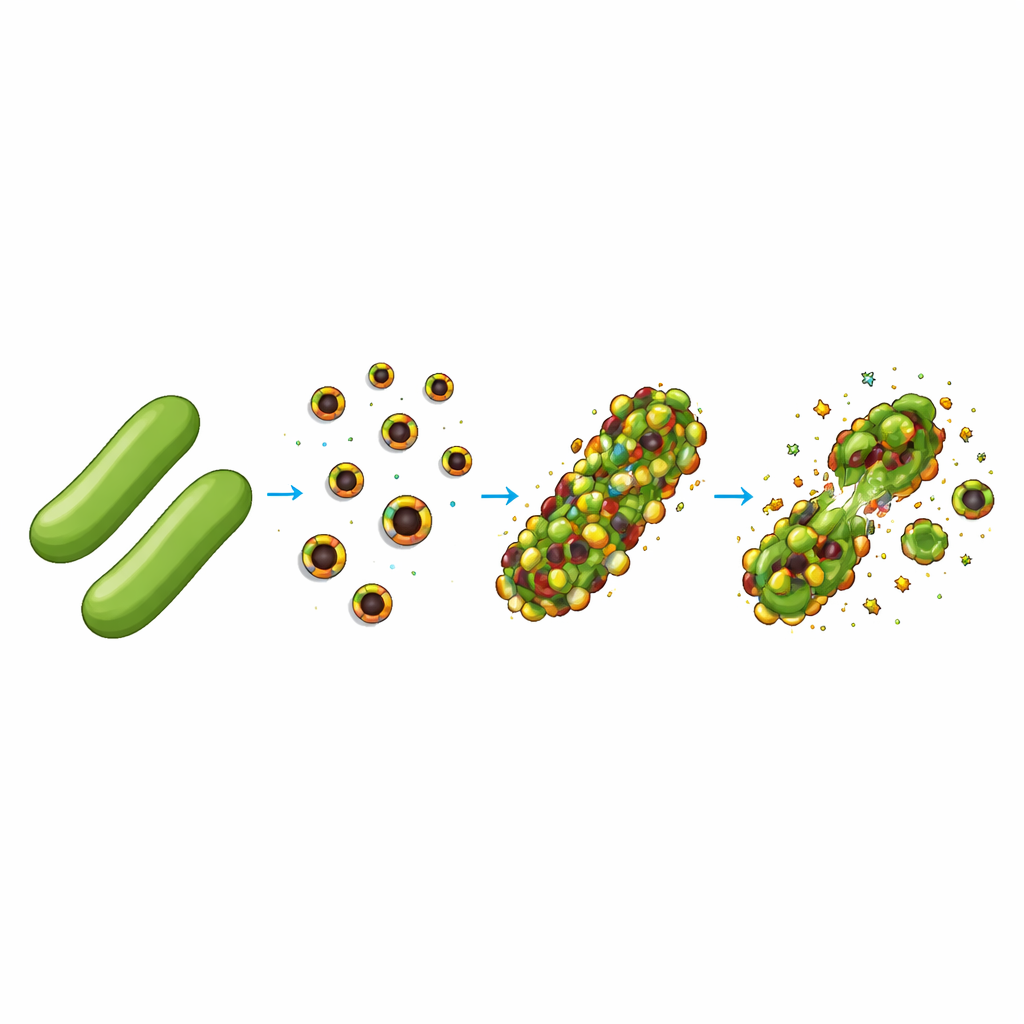
One of the most striking findings was how well the coated nanoparticles fought bacteria. The researchers tested them against fourteen different disease-causing strains. The APTES-coated particles, especially those prepared in water or ethanol, strongly inhibited Vibrio cholerae—the bacterium that causes cholera—with very low amounts needed to stop growth. They also acted against Bacillus cereus and Listeria monocytogenes, which can cause foodborne illness. The coating carries positively charged groups that are attracted to the negatively charged surfaces of bacterial cells, helping the particles cling to the microbes. Once attached, they appear to damage the cell membrane, disrupt vital molecules inside, and generate reactive oxygen species that further stress and kill the bacteria.
How the Coating May Work in the Body
To probe how these particles might interact with bacterial targets at the molecular level, the team used computer docking simulations. They modeled how an APTES-modified copper oxide cluster could fit into key bacterial enzymes that build cell walls or defend against antibiotics. The simulations suggested that the coated nanoparticles can bind strongly to these proteins, potentially blocking their function. Automated toxicity predictions also hinted that the coated particles are unlikely to damage major human organ systems or cause cancer or genetic mutations, though the authors stress that real biological tests are still needed.
Small Particles with Big Possibilities
In everyday terms, this work shows that it is possible to turn a medicinal tree leaf into a tiny, multi-talented tool: one that can help break down pollutants, fight stubborn bacteria like the cholera germ, and absorb harmful reactive molecules. By adding a thin, carefully chosen coating, the scientists tuned how the particles behave in water and how they interact with living cells. While more testing is required before medical or environmental products can be developed, these bioinspired, surface-modified copper oxide nanoparticles point toward cleaner ways to make advanced materials that protect both human health and the environment.
Citation: Upadhyay, K.K., Modanwal, S., Singh, S. et al. Bioinspired APTES-coated copper oxide nanoparticles with antioxidant, antibacterial, and optoelectronic potential. Sci Rep 16, 7874 (2026). https://doi.org/10.1038/s41598-025-32133-4
Keywords: copper oxide nanoparticles, green synthesis, antibacterial, antioxidant, nanotechnology