Clear Sky Science · en
Empathy for pain in humans and animals differs based on species, psychosocial and cultural factors
Why We Care About Who Hurts
Pain tugs at our conscience, whether it’s a child scraping a knee, a dog limping, or a cow in a cramped stall. Yet we don’t respond to all suffering in the same way. This study asks a simple but unsettling question: when humans and animals are in pain, who do we think hurts more, and who do we feel most moved to help? By probing these choices, the researchers reveal how our values, culture, and everyday habits quietly shape compassion across species.
Looking Across Species
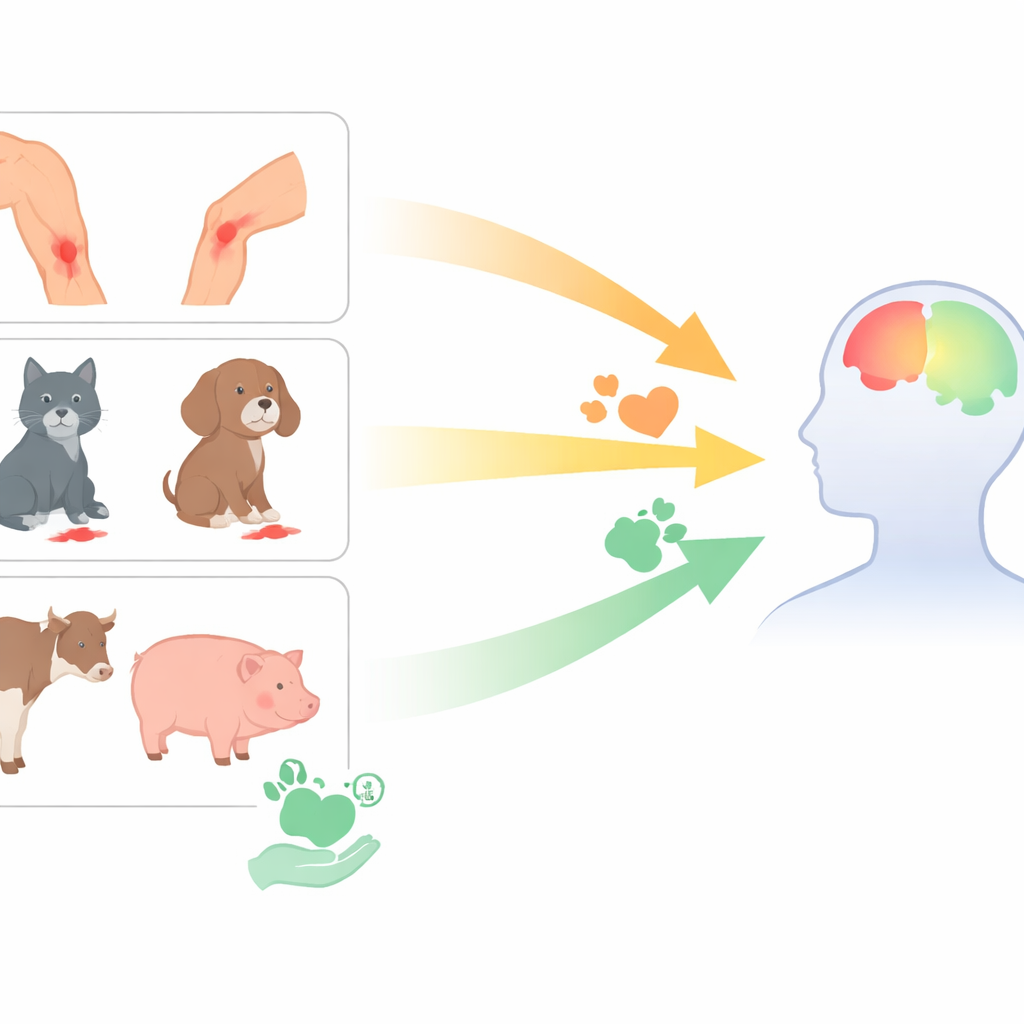
To explore these questions, the authors created a new picture-based test called the Cross-Species Pain Empathy Task. Hundreds of university students viewed images of wounded and unwounded arms and legs belonging to four groups: people, pets (cats and dogs), and farm animals (cows and pigs). The images never showed faces, so that judgments would rest on the injury itself rather than on expressive eyes or facial emotion. After each picture, participants rated how much physical pain they thought the being was in and how much of their weekly free time they would be willing to spend helping it recover. Alongside this task, they completed detailed surveys about their personality, beliefs about animals, political views, diet, and previous experiences with pain.
Who Seems to Suffer More
Not surprisingly, visible wounds led people to infer more pain and to say they would help more, regardless of whether the subject was human or animal. But an important twist emerged when no injury was visible. In those cases, participants assumed that animals were in more pain than humans and were more willing to help them. This pattern suggests that animals may be seen as more vulnerable or harder to read, prompting people to "err on the side of caution" and imagine hidden suffering. When injuries were obvious, humans and animals were rated as similarly pained, yet animals still attracted more offers of help overall.
Pets, Farm Animals, and Moral Tension
Differences within the animal category were even more revealing. When there were no visible wounds, farm animals were judged to be suffering more than pets and received more promised help. Participants may have drawn on their knowledge of crowded barns and harsh farming conditions to infer a higher baseline of distress. However, when pain was clearly shown, this pattern flipped: now pets were seen as suffering more and were prioritized for support. The authors suggest that graphic suffering in farm animals may trigger moral tension for meat-eaters. To ease this discomfort, people may downplay how badly these animals feel, while at the same time responding warmly to the familiar, emotionally close figure of a pet.
How Personality and Culture Steer Compassion
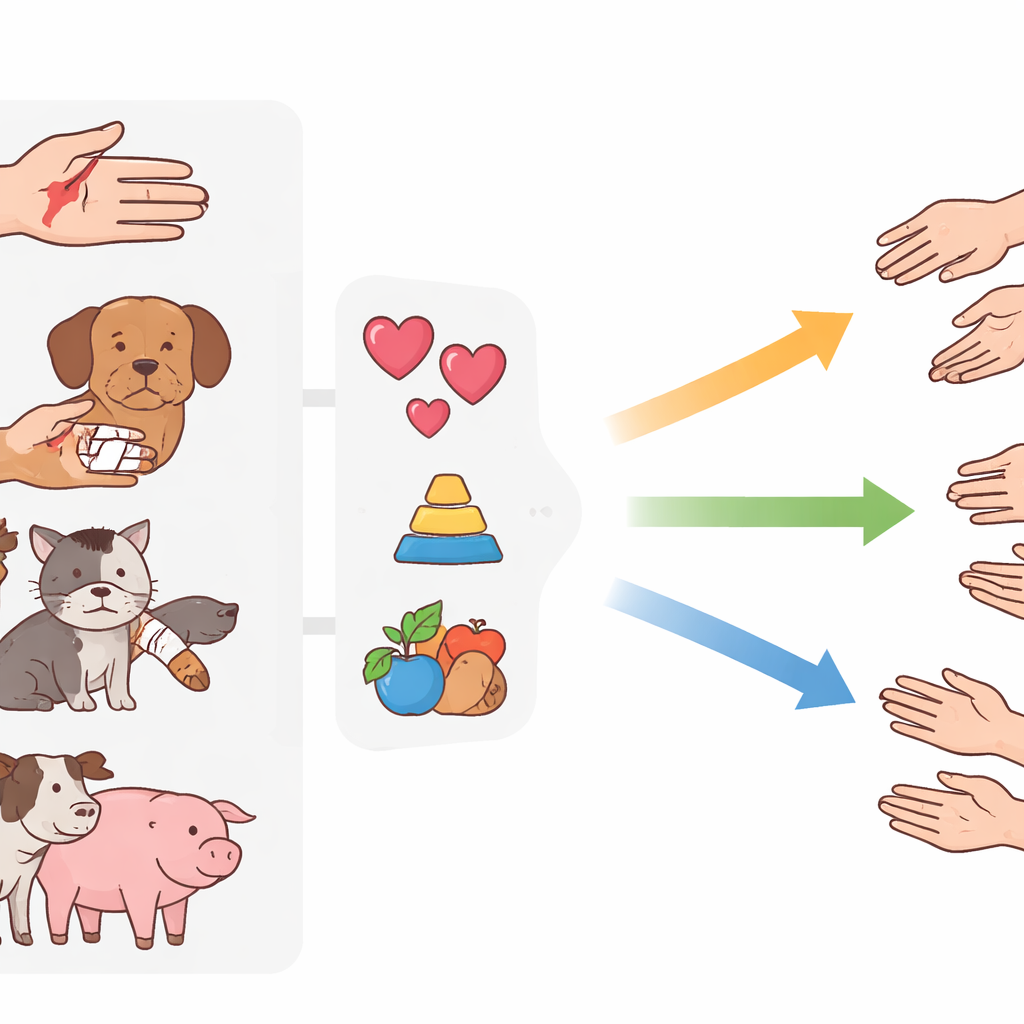
The study also mapped how personal traits and social backgrounds relate to empathy for pain. One profile combined strong concern for animals, low prejudice against them, broad moral concern that extends beyond one’s own group, and frequent exposure to others’ suffering. People with this profile were especially sensitive to animals’ pain and more willing to help them, and their readiness to help was partly explained by how much pain they believed others were in. A second profile blended emotional sensitivity to suffering, religious commitment, and certain cultural backgrounds. These individuals tended to perceive more pain in humans and pets and to express stronger intentions to help, but here helping seemed to follow directly from intense reactions to seeing pain rather than from a general ethic of care.
Why We Favor Some Lives Over Others
Finally, the researchers asked what drives clear biases: helping animals more than humans, and pets more than farm animals. Favoring animals over humans was linked to strong identification with animals, plant-based or reduced-meat diets, living with pets, broad moral concern, and low support for social hierarchies. In contrast, favoring pets over farm animals was tied to higher meat consumption, more conservative and hierarchy-focused views, and certain cultural backgrounds. These patterns hint that our treatment of animals reflects deeper beliefs about status and tradition: some beings are quietly placed "above" others, even when their pain looks the same.
What This Means for Everyday Choices
In plain terms, the study shows that our sense of who deserves help is not just about who is hurting and how badly. It also depends on whether the sufferer is a person, a pet, or a farm animal, and on our own attitudes, culture, and way of life. We may feel moved to protect those we see as vulnerable, familiar, or morally close to us, while downplaying the pain of animals we eat or use. By uncovering these hidden patterns, the work points toward a more reflective form of compassion—one that recognizes suffering wherever it occurs and challenges us to extend care more evenly across species.
Citation: Suñol, M., Bastian, B. & López-Solà, M. Empathy for pain in humans and animals differs based on species, psychosocial and cultural factors. Sci Rep 16, 9605 (2026). https://doi.org/10.1038/s41598-025-32047-1
Keywords: empathy for animals, pain perception, prosocial behavior, speciesism, human–animal relations