Clear Sky Science · en
Effect of mobile phone addiction on sleep quality in patients aged 18–45 years with acute myocardial infarction: a chain mediation analysis of coping style, anxiety, and depression
Why Late-Night Scrolling Matters for the Heart
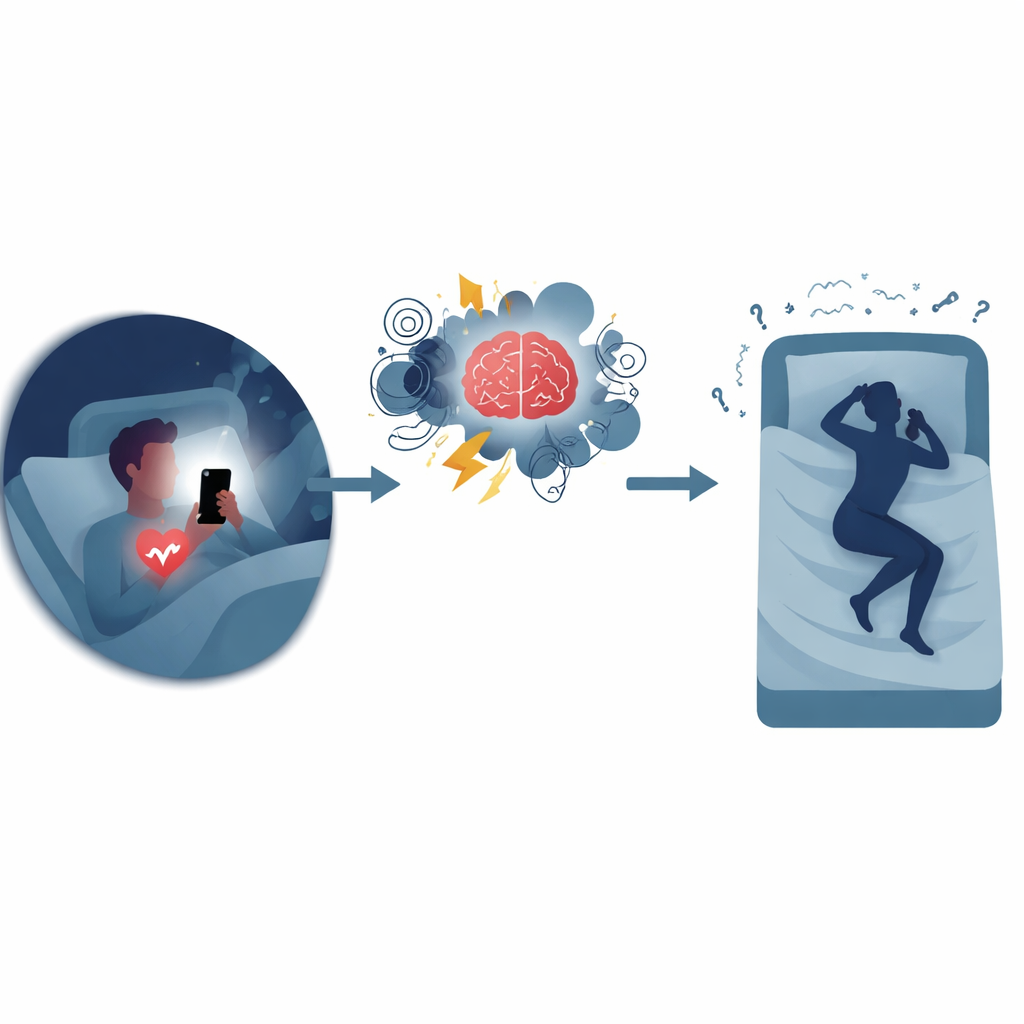
Many young adults wind down at night by scrolling through their phones. But for those who have already suffered a heart attack, this habit may be more than just a sleep stealer—it could be linked to how well they recover. This study examined young patients in China who had acute myocardial infarction, a type of heart attack, to see how heavy mobile phone use, stress coping habits, and mood problems all connect to sleep quality. The findings suggest that managing digital habits and emotional health could become an important part of heart care for younger adults.
Young Hearts Under Pressure
Heart attacks are no longer confined to older age. More adults between 18 and 45 are experiencing acute myocardial infarction, raising alarms among doctors and public health experts. At the same time, this age group are the heaviest users of smartphones. Poor sleep is known to increase the risk of future heart problems, so the researchers asked a simple but important question: in young heart attack patients, is mobile phone addiction tied to sleep problems, and do stress-coping habits and emotional distress help explain that link?
How the Study Was Done
The team recruited 125 patients aged 18 to 45 who were hospitalized with a first-time heart attack at a large hospital in Jinan, China. All participants completed several standard questionnaires. One measured how strongly they were attached to their phones, including signs like feeling uneasy without the device or sacrificing sleep to keep using it. Another assessed sleep quality over the past month. Additional surveys captured how people typically handle stress—through more active, problem-solving approaches or more avoidant, negative ones—as well as symptoms of anxiety and depression. The researchers then used statistical models to explore how these factors were related.
What the Researchers Found
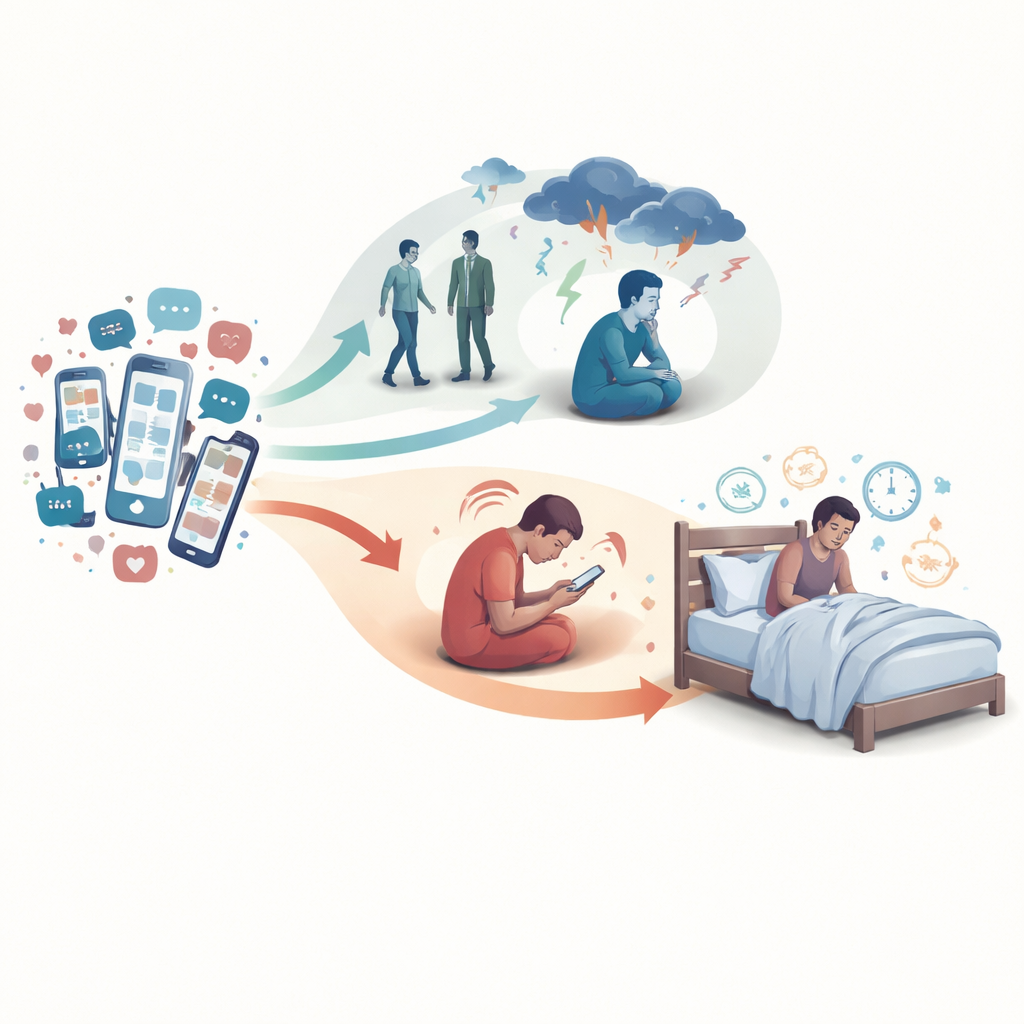
Mobile phone addiction turned out to be common: about two-thirds of these young heart attack survivors met criteria for problematic use. Nearly half had poor sleep, and around four in ten showed clear signs of anxiety or depression. The more dependent patients were on their phones, the worse their sleep scores tended to be. Heavy phone users were also more likely to favor unhelpful coping styles, such as withdrawal or avoidance, and to experience higher levels of anxiety and depression. In turn, negative coping and emotional distress were linked to more severe sleep difficulties, while more positive, proactive coping was linked to better sleep.
Untangling the Links
The researchers tested a "chain" model to see whether phone addiction might lead to poorer sleep partly by worsening coping style or mood. For example, one path proposed that heavy phone use encourages negative coping, which then fuels anxiety and depression, which finally undermines sleep. Although the directions of these connections matched what earlier studies in other groups have suggested, the indirect effects in this sample did not reach conventional statistical strength. Still, the overall pattern showed that phone dependence has a clear direct tie to sleep problems, and that coping habits and mood are tightly interwoven with both.
What This Means for Patients
For young people recovering from a heart attack, this study suggests that late-night and excessive smartphone use is not just a minor bad habit—it is strongly associated with worse sleep, which in turn may influence long-term heart health. The findings point toward a practical, everyday target for care: helping patients set healthier boundaries around phone use, especially before bedtime, while also supporting them in building more constructive ways of handling stress and addressing anxiety or depression. Though more research is needed to prove cause and effect, the message for patients is clear: protecting your sleep by taming your screen time and caring for your mental health may be a meaningful part of protecting your heart.
Citation: Xu, L., Liu, B., Zhou, X. et al. Effect of mobile phone addiction on sleep quality in patients aged 18–45 years with acute myocardial infarction: a chain mediation analysis of coping style, anxiety, and depression. Sci Rep 16, 8475 (2026). https://doi.org/10.1038/s41598-025-31731-6
Keywords: smartphone addiction, sleep quality, young heart attack patients, anxiety and depression, coping styles