Clear Sky Science · en
Social group algorithm-based MPPT coupled with phase shift resonant converter for battery charging through partially shaded PV systems
Why smarter solar charging matters
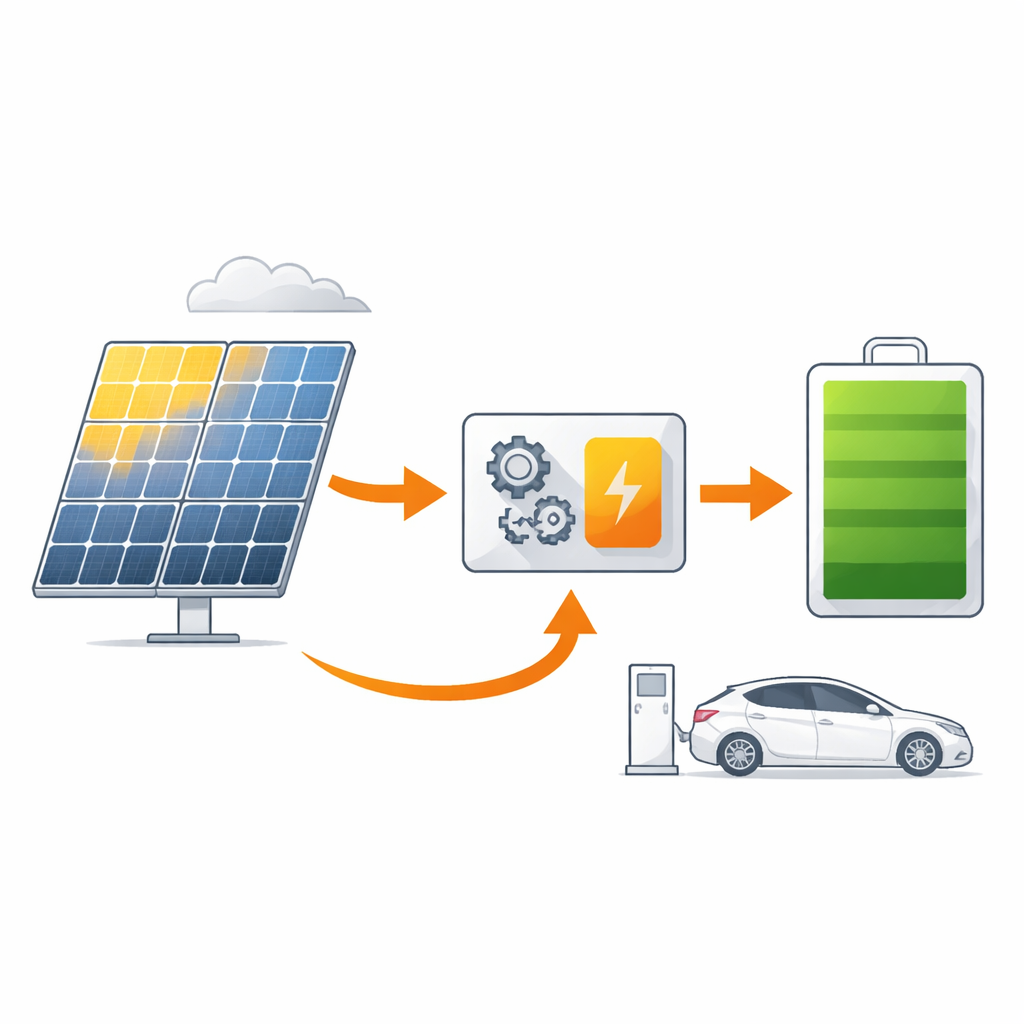
As electric vehicles become more common, finding clean ways to charge them is just as important as building the cars themselves. Many charging stations still depend on electricity produced from fossil fuels, which undercuts the environmental benefits of going electric. Solar panels are an appealing alternative, but their output can swing wildly when clouds pass by, buildings cast shadows, or dust settles on parts of the array. This paper explores a smarter way to pull steady, efficient power from solar panels—even when they are partially shaded—to charge electric-vehicle batteries reliably and with very little wasted energy.
The challenge of uneven sunlight
Solar panels behave in a surprisingly delicate way when only some sections are shaded. A few darkened cells can drag down the performance of an entire array, turning those cells into tiny heaters instead of power producers. Engineers use “maximum power point tracking” controllers to constantly adjust how the panels operate so they produce as much power as possible. Traditional approaches work well when sunlight is uniform, but when some panels are shaded and others are bright, the power–voltage curve develops several peaks instead of a single obvious best point. Standard methods tend to latch onto one of the smaller peaks and stay there, leaving a lot of potential energy untapped.
A social-inspired way to find the best power point
The researchers tackle this problem with a control approach inspired by how people learn inside social groups, called Social Group Optimization. In this method, many candidate operating points for the solar array act like members of a group. Some play the role of leaders that currently perform best, while others are learners that adjust their choices based on the success of their peers. The algorithm alternates between exploring widely—trying out very different operating points—and focusing on the most promising region once it has a good lead. Because it needs only a few tuning settings and simple calculations, this strategy can run in real time on a small embedded controller inside a charger.
A high-efficiency power path to the battery
Finding the right operating point is only half the story; that energy still has to be moved into a battery without major losses. For this, the team designs a single-stage full-bridge resonant converter, a type of circuit that uses a high-frequency transformer and carefully sized inductors and capacitors to switch the power devices when their voltage or current is close to zero. This “soft switching” greatly reduces heat and stress in the electronics. The circuit also provides electrical isolation for safety and can handle a wide range of input from the solar array while delivering a steady low-voltage, high-current output suitable for charging electric-vehicle batteries.
Putting the system to the test
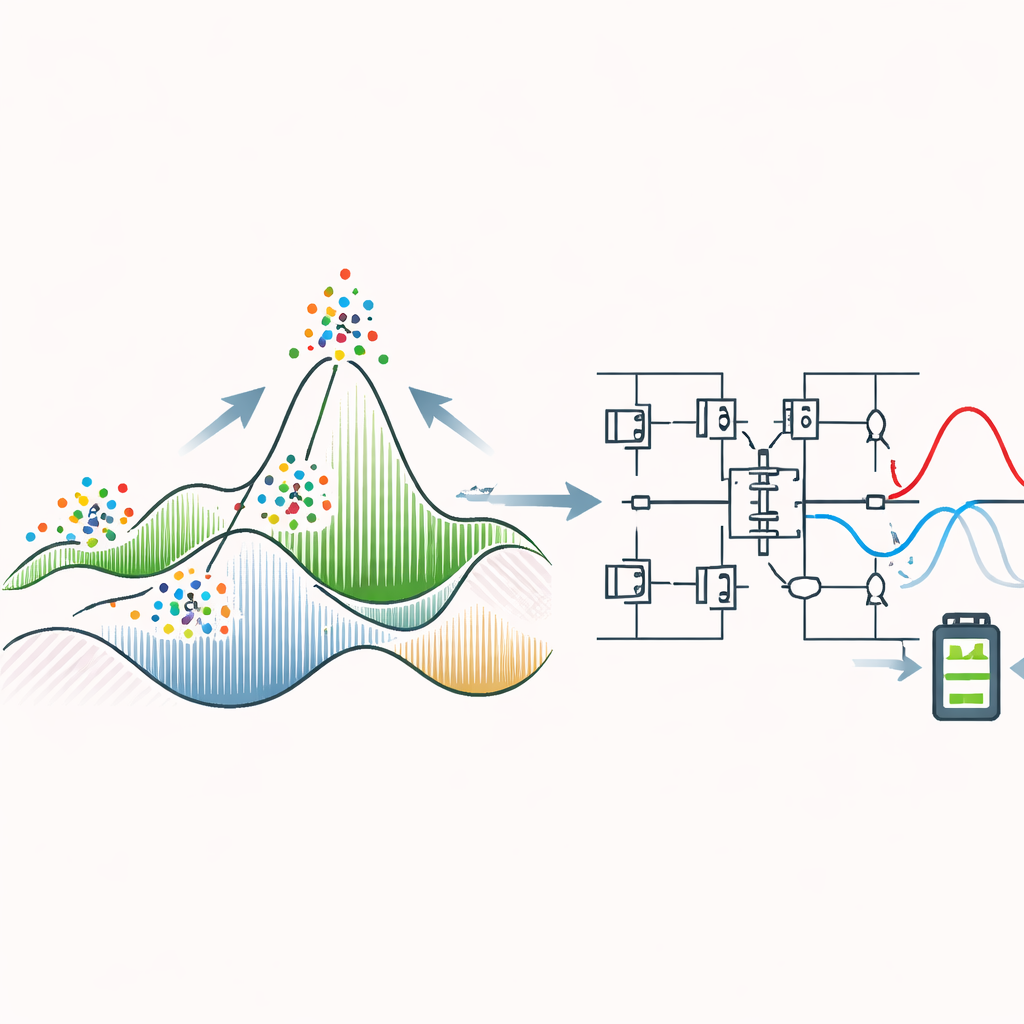
The complete system couples the social-group tracking algorithm with the resonant converter in a unified control scheme. In detailed computer simulations, the authors compare their method against several well-known global search algorithms and a basic tracking approach. Under changing sunlight patterns, the social-group method finds the true global power maximum quickly, with fewer oscillations and smoother changes in operating conditions. At the same time, the converter maintains stable output voltage and current, achieving a peak efficiency of about 97 percent—higher than more traditional two-stage converters—and improving voltage regulation by around 2 percent. Hardware tests using a solar emulator and a 3 kW charging setup confirm that the behavior observed in simulation can be reproduced in practice.
What this means for future charging stations
For a non-specialist, the key message is that the authors have built a charging architecture that both thinks and breathes with the sun. The “thinking” part is the socially inspired algorithm that continually learns where the solar array can deliver the most power, even when parts of it are shaded. The “breathing” part is the resonant power converter that quietly reshapes this fluctuating energy into a smooth, efficient flow into the battery. Together, they show that it is possible to design solar-powered electric-vehicle chargers that waste very little energy and keep working reliably in messy real-world weather, helping charging networks become cleaner and more resilient.
Citation: Jayaraman, J., Ramasamy, S., Vadivel, S. et al. Social group algorithm-based MPPT coupled with phase shift resonant converter for battery charging through partially shaded PV systems. Sci Rep 16, 9596 (2026). https://doi.org/10.1038/s41598-025-31674-y
Keywords: solar EV charging, partial shading, maximum power tracking, resonant converters, power electronics