Clear Sky Science · en
Effect of medium composition on in vitro ovary culture of cucumber
Faster Paths to Better Cucumbers
Modern salad bars and pickle jars depend on plant breeders who slowly refine cucumbers over many generations. This study explores a high‑tech shortcut: growing tiny cucumber ovaries in glass dishes to rapidly create pure breeding lines. The work matters because faster, more precise breeding could deliver tastier, more resilient cucumbers while using fewer resources. Yet the researchers also uncover how stubborn and unpredictable plants can be when pushed in this way, revealing both promise and limits of current techniques.
Why Breeders Care About "Pure" Lines
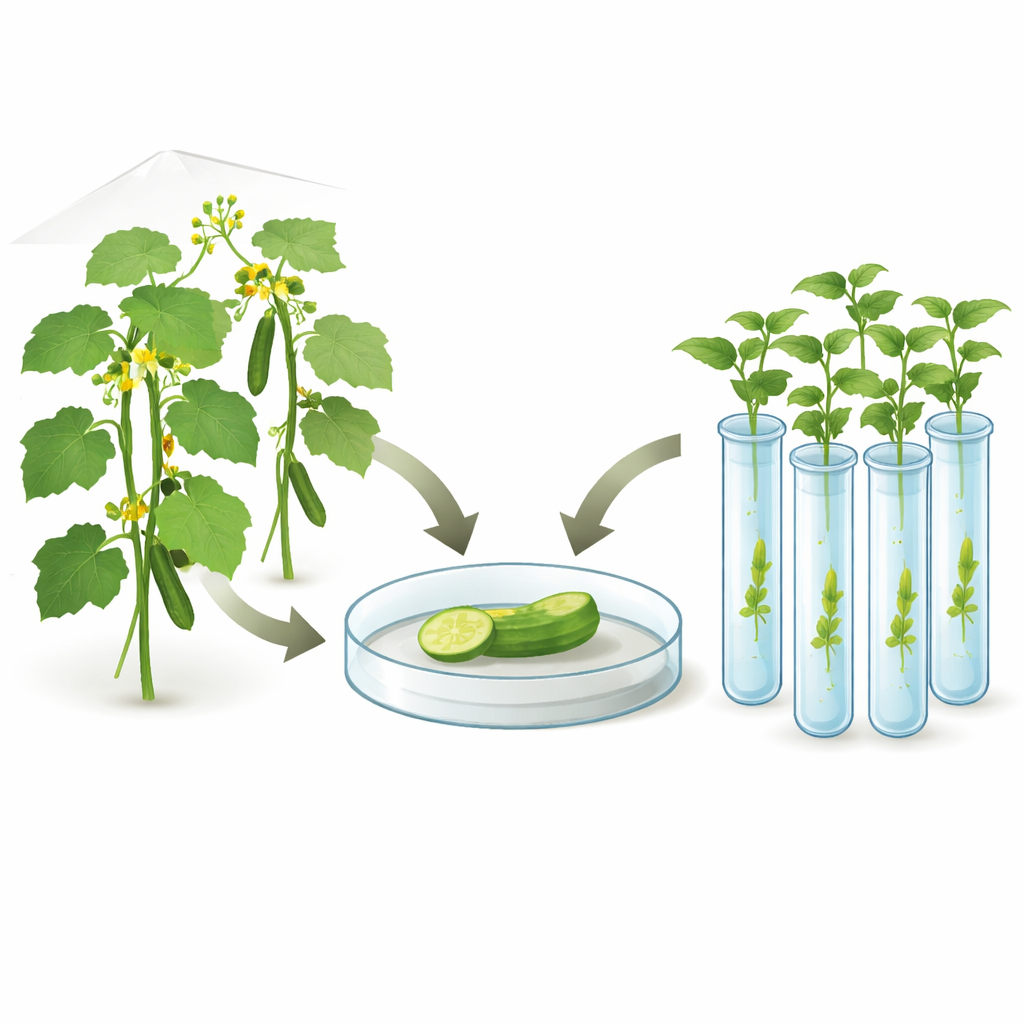
Plant breeders often want plants that pass the same traits reliably from one generation to the next. That requires highly uniform, "pure" lines, which normally take many years of crossing and selection. A powerful alternative is to start from cells that carry only a single set of chromosomes—called haploids—and then double that set to make instant, completely uniform lines. In cucumbers, one of the most promising ways to trigger this shortcut is to culture unfertilized ovaries, the part of the flower that would normally swell into fruit. If those ovaries can be coaxed into forming whole plants, breeders gain a rapid pipeline to new varieties.
Designing the Lab Recipe
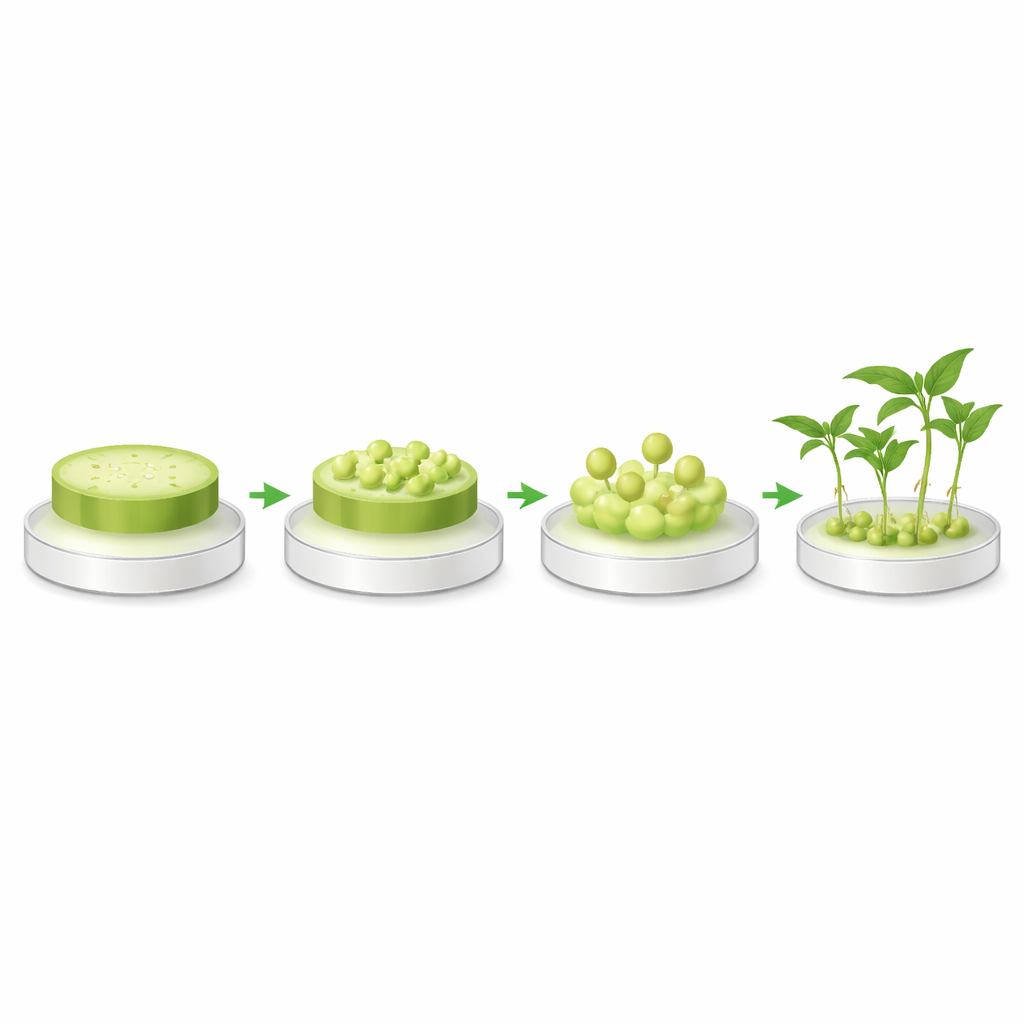
The team focused on four commercially relevant cucumber types—mini, long, pickling, and an open‑pollinated line. They carefully collected young, unfertilized female flower buds and exposed them to a brief cold shock, mimicking stress that can sometimes push cells to reset their developmental path. The ovaries were sliced into thin pieces and placed onto one of four starter (induction) media, each differing mainly in the mix and dose of growth‑controlling substances, and later moved to one of several follow‑up (regeneration) media. All cultures were kept under controlled light and temperature, and the researchers watched for several key stages: swelling ovules, callus (a soft mass of cells), embryo‑like structures, and finally plantlets with leaves and roots.
Which Cucumbers and Recipes Responded Best
Responses differed sharply among both cucumber varieties and media recipes. One particular induction medium, containing a high dose of a synthetic auxin paired with a compound called putrescine, stood out. On this medium, the pickling type "Botanik" showed the highest rate of early development, with embryo‑like structures arising from 88% of cultured pieces. The long cucumber "Sardes" and the mini type PTK40 also responded well, while the open‑pollinated Beith Alpha lagged behind. When the developing structures were kept on the same strong medium, many went on to form more embryos and embryogenic callus, especially in Botanik, which showed exceptional regenerative capacity. Regeneration media enriched with a specific pairing of two common growth regulators proved most successful at turning these embryos and calli into full plantlets.
A Surprising Result: No True Shortcuts Yet
To see whether their new plants actually delivered the hoped‑for shortcut, the researchers analyzed leaf samples from twenty regenerated cucumbers using flow cytometry, a method that measures DNA content in individual cells. If the process had produced haploid plants, these would have had half the usual DNA signal. Instead, every tested plant turned out to be diploid—the normal chromosome level—meaning the cultures had regenerated from ordinary body cells rather than from gamete‑like, haploid cells. Some plants also showed unwanted traits, such as pale, albino growth. In short, the protocol was very good at making plants, but not at making the special kind breeders most want for rapid line development.
What This Means for Future Cucumbers
This study shows that cucumber ovaries can be turned into many embryos and new plants, and that certain varieties and medium recipes are much more responsive than others. However, because all regenerated plants had the normal chromosome number instead of the reduced haploid level, the central goal—creating instant pure breeding lines—was not met. For growers and consumers, that means the dream of much faster cucumber breeding via this method is still a work in progress. The authors argue that better choice of parent varieties, finer tuning of the chemical mixtures, and improved control of stress treatments will be necessary to tip the balance toward true haploid plants and unlock the full potential of this technology.
Citation: Nyirahabimana, F., Erol, M.H., Kaçar, Y.A. et al. Effect of medium composition on in vitro ovary culture of cucumber. Sci Rep 16, 9924 (2026). https://doi.org/10.1038/s41598-025-31636-4
Keywords: cucumber breeding, ovary culture, haploid plants, plant tissue culture, doubled haploids