Clear Sky Science · en
A novel hybrid model for species distribution prediction of soil-transmitted helminthiasis (STH) under soil temperature conditions using Random Forest and Particle Swarm Optimization Algorithm
Why warm ground matters for hidden infections
Across much of Nigeria, millions of people are exposed to tiny parasitic worms that live in soil and can silently damage children’s growth and adults’ productivity. These infections thrive or fade depending on how warm the ground is just a few centimeters beneath our feet. This study explores how combining advanced computer algorithms with detailed soil temperature data can reveal where these parasites are most likely to spread, helping health workers focus limited resources where they are needed most. 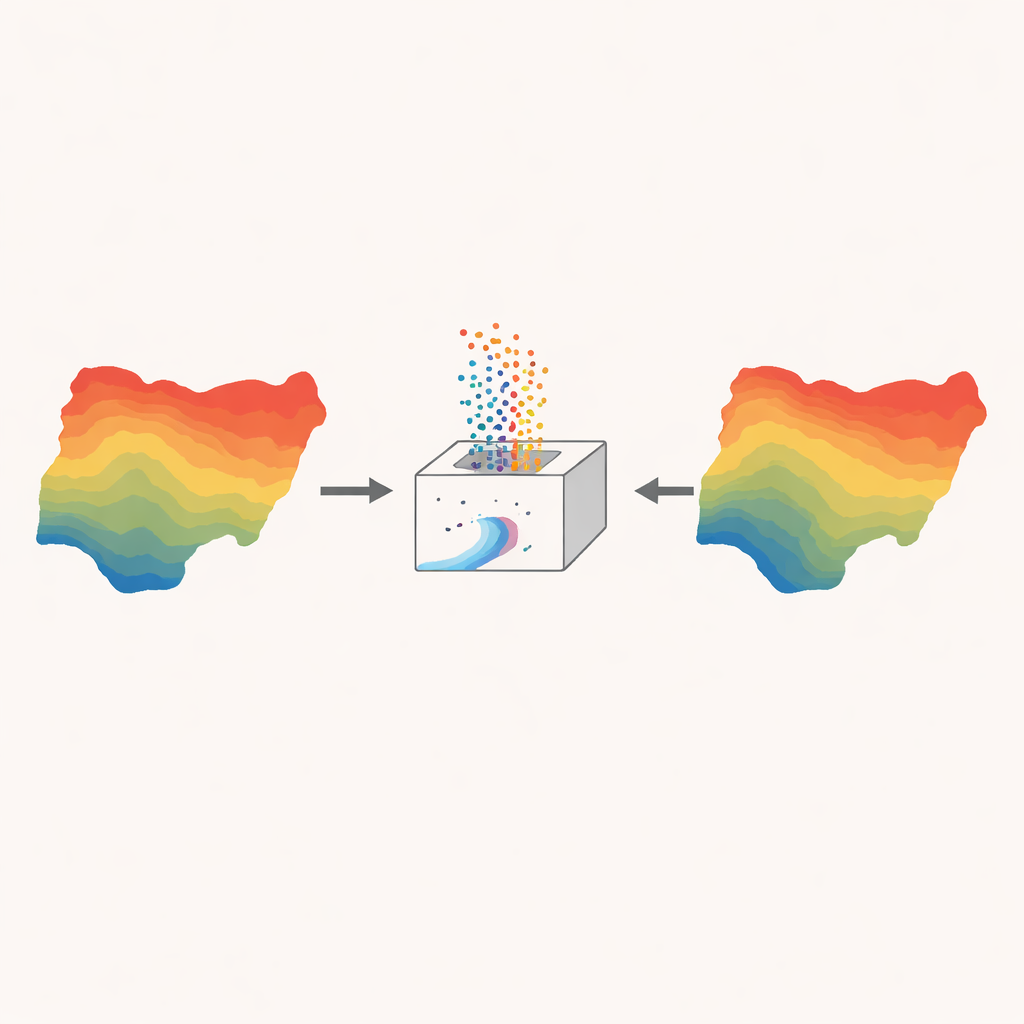
Invisible worms beneath our feet
Soil-transmitted helminths are intestinal worms that spread when human feces contaminate the environment and people come into contact with infected soil. In Nigeria, three main culprits—roundworm, whipworm, and hookworm—remain a major public health problem, especially for children. Their eggs and larvae develop in the ground, and that development is exquisitely sensitive to temperature. Previous global studies have shown that there is a “Goldilocks” range—roughly warm but not scorching—where these parasites flourish. Yet, despite decades of control efforts, it has been hard to pinpoint which communities are at highest risk, partly because maps of infection have not fully captured how soil conditions vary across the landscape.
Turning soil heat into a risk map
To tackle this challenge, the researchers built a detailed picture of Nigeria’s underground climate. They drew on a global soil data set that provides 21 different layers describing how soil temperature behaves over the year: average warmth, seasonal swings, extremes, and month-by-month values at 0–5 cm depth. They paired these layers with location data on where worm infections had been recorded across the country, taken from an international neglected-disease database. Because many of these records only show where infections were found, the team also generated carefully chosen “pseudo-absence” locations—places with no known infections—to teach their models to distinguish between suitable and unsuitable conditions.
How a hybrid smart model learns from the land
At the heart of the study is a hybrid computer model that blends two ideas: decision trees and swarm behavior. The base engine, known as a Random Forest, works by growing many branching trees that each make a simple yes-or-no decision based on soil conditions, then pooling their votes to decide whether a location is likely to host the worms. On top of this, the team added Particle Swarm Optimization, an approach inspired by birds flocking or fish schooling. In this scheme, many “particles” wander through different combinations of model settings and choices of soil temperature features, nudging one another toward combinations that yield more accurate predictions. 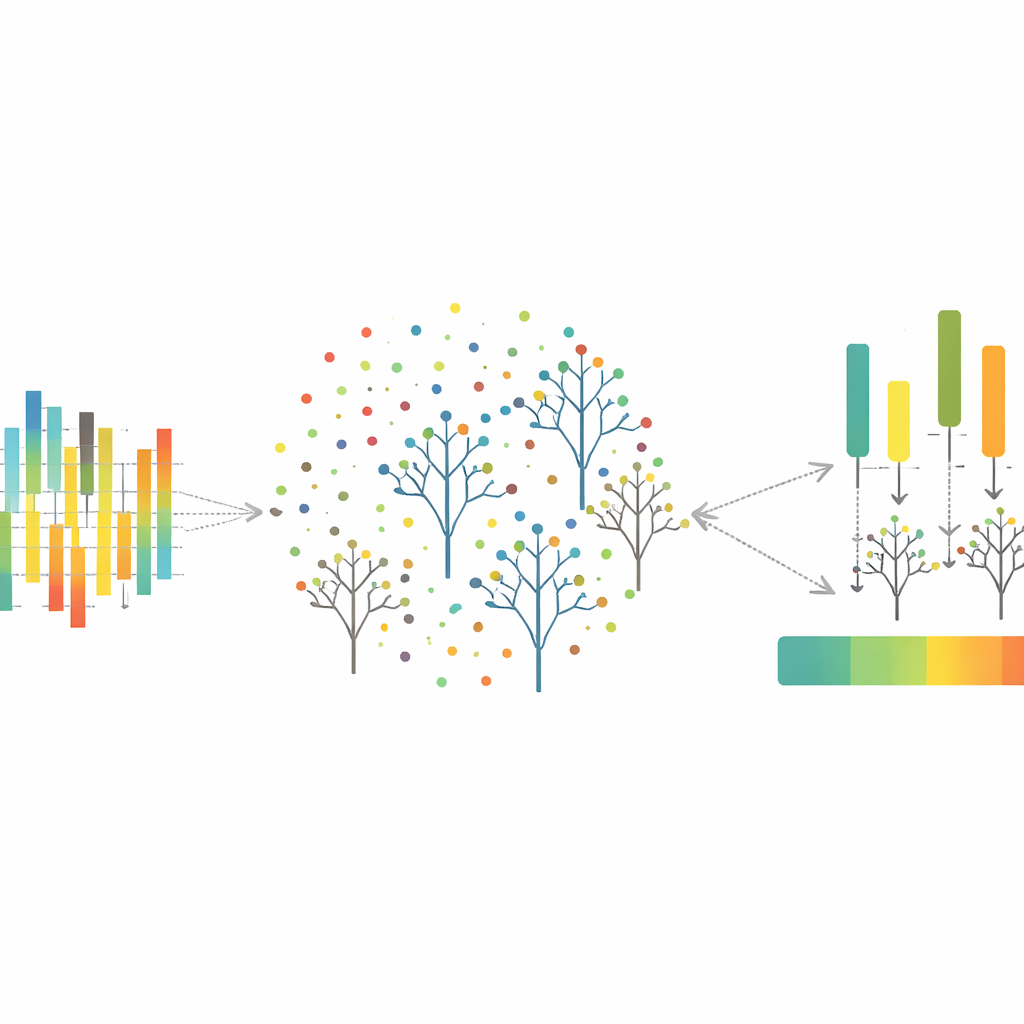
Sharper predictions with fewer clues
When they compared models, the hybrid approach clearly outperformed both a standard Random Forest and a more traditional artificial neural network. The usual Random Forest reached an accuracy of about 87 percent and the neural network about 81 percent, while the optimized hybrid model climbed to roughly 91 percent and showed more stable performance. Notably, the swarm-guided model achieved this improvement using only about half of the available soil temperature features, homing in on a handful of monthly and seasonal temperature patterns that matter most for worm survival. Statistical tests confirmed that the gains were not due to chance. The resulting map of Nigeria revealed distinct high-suitability zones, especially in central and middle-belt regions where soil warmth and variability fall in the parasites’ preferred range.
From computer code to community clinics
For non-specialists, the core message is straightforward: by teaching computers to read subtle patterns in how warm the soil gets and how that warmth changes over time, we can draw much clearer maps of where worm infections are most likely to persist. The study’s hybrid model translates underground temperature into a practical guide for action, suggesting which districts should be prioritized for deworming campaigns, improved sanitation, and ongoing surveillance. Although developed for Nigeria, the same approach could be adapted to other countries and other diseases that depend on environmental conditions, turning invisible shifts in soil and climate into concrete tools for protecting public health.
Citation: Adekunle, T.A., Ogunwande, JM.O., Ogundoyin, I.K. et al. A novel hybrid model for species distribution prediction of soil-transmitted helminthiasis (STH) under soil temperature conditions using Random Forest and Particle Swarm Optimization Algorithm. Sci Rep 16, 9594 (2026). https://doi.org/10.1038/s41598-025-31604-y
Keywords: soil-transmitted helminths, species distribution modeling, soil temperature, machine learning, Nigeria