Clear Sky Science · en
Improving predictive reliability and automation of smart grids using the StarNet ensemble model
Keeping the Lights On in a Changing World
Every time you flip a switch, you trust that electricity will be there. Yet behind that simple action lies a vast, fragile web of power plants, cables, and control rooms that must stay in balance second by second. As we add more solar panels, wind farms, electric cars, and smart devices, keeping this balance becomes harder. This paper explores a new way to use artificial intelligence, called the StarNet ensemble model, to watch over power grids in real time, spot trouble before it spreads, and help operators prevent blackouts while cutting costs.
From Old Grids to Smart, Self-Aware Networks
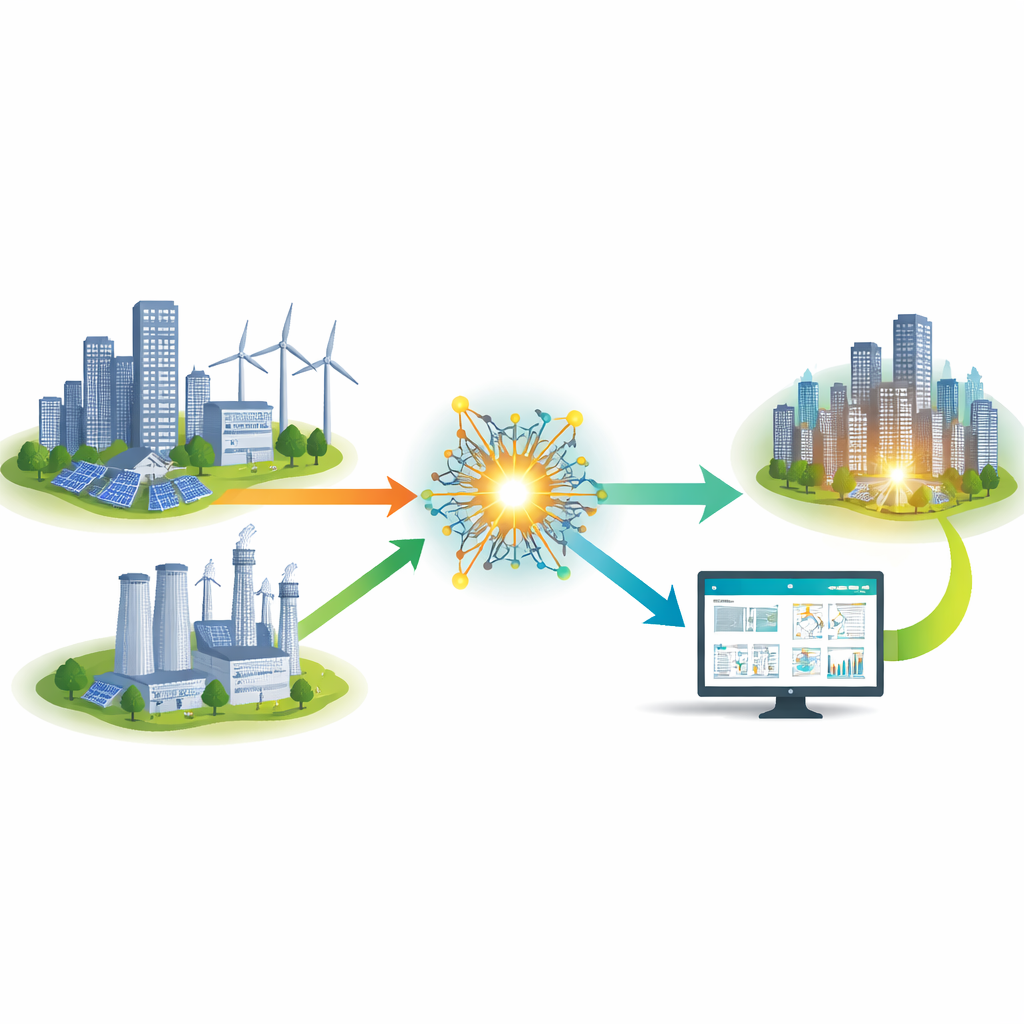
Traditional power grids were built for one-way traffic: big power plants send electricity out, and homes and factories quietly consume it. Operators relied on slow mechanical switches and limited measurements, making it hard to react quickly when something went wrong. Modern "smart grids" add sensors, digital controls, and two-way communication. They can see how much power flows where, integrate rooftop solar and batteries, and automatically reroute electricity. But this new flexibility also brings complexity: sudden changes in demand, weather swings, equipment failures, and even cyberattacks can push the system toward instability. The authors argue that to manage this complexity, grids need intelligent tools that can continuously learn from data and guide decisions in real time.
A New AI “Brain” Watching the Grid
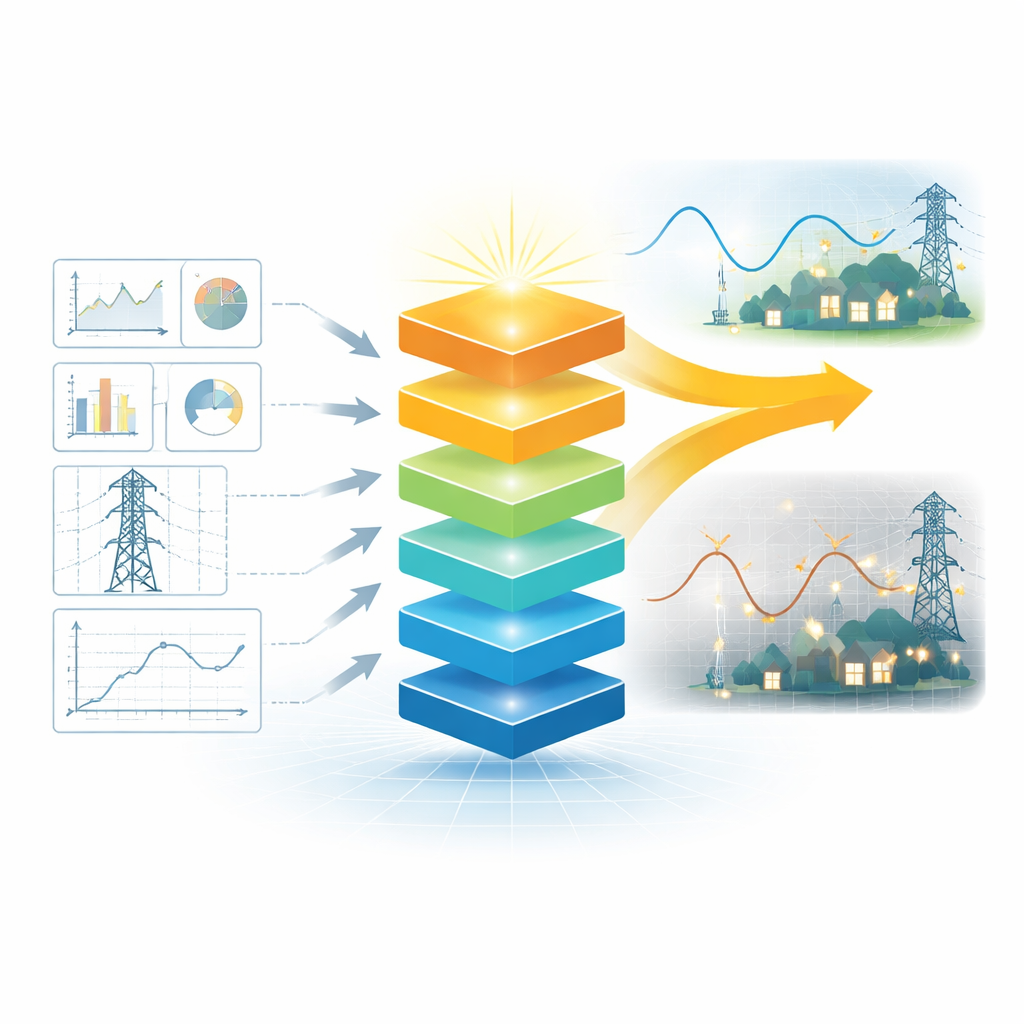
To meet this need, the researchers propose StarNet, an AI framework that acts like a second pair of eyes—and a fast brain—for grid operators. Instead of relying on a single algorithm, StarNet combines several different machine learning models, including decision trees, boosted trees, support vector machines, and nearest-neighbor methods. Each model looks at the same grid measurements, such as how quickly parts of the system respond to changes and how much real and reactive power flows through different lines. Their individual predictions are then blended by a final “referee” model. This stacking approach takes advantage of each method’s strengths while smoothing out their weaknesses, leading to more reliable judgments about whether the grid is stable or drifting toward danger.
Training on Simulated and Real-World Grids
The team first tested StarNet on a simulated mini-grid shaped like a four-pointed star, with one generator node and three consumer nodes. By permuting the consumer positions, they created 60,000 examples of different operating conditions, each labeled as stable or unstable. StarNet learned to classify these cases with more than 99% accuracy, outperforming many popular alternatives. To prove it was not just memorizing a toy problem, the authors then applied the same framework to two well-known benchmarks: the UCI Smart Grid Stability dataset and a model of a 14-bus power system widely used in engineering studies. On both, StarNet again scored better than strong single models like CatBoost and support vector machines, while still performing well when trained on one dataset and tested on the other, a sign of genuine generalization.
From Predictions to Real-Time Action
StarNet is designed not just as a research model but as part of a working control environment. The authors describe a web-based dashboard that continuously streams measurements from the grid, runs them through StarNet, and turns the predictions into clear visual signals for operators. When the model senses rising risk, it can trigger several automated responses: early alerts to field teams for predictive maintenance, controlled reduction of load in selected areas to avoid overloads, and demand-response actions that nudge consumption away from peak times. The system also monitors how the incoming data change over time; when it detects a shift in patterns, it can retrain certain parts of the model on the fly, refreshing its understanding without starting from scratch.
What This Means for Everyday Electricity Users
For most people, the value of this work shows up as something they rarely think about: the absence of power cuts. By using a layered AI system that can spot subtle warning signs earlier than human operators alone, StarNet helps keep the grid in a safe operating zone. Its high accuracy across multiple datasets suggests it can adapt to different network designs, from small microgrids to larger regional systems. The web-based interface means utilities can plug this “intelligent lookout” into existing control rooms with relatively little friction. In plain terms, the study shows that combining several AI methods into a coordinated team can make our electric grids smarter, more reliable, and better prepared for a future filled with clean but variable energy sources and ever-growing demand.
Citation: Chhabra, A., Singh, S.K., Kumar, S. et al. Improving predictive reliability and automation of smart grids using the StarNet ensemble model. Sci Rep 16, 9592 (2026). https://doi.org/10.1038/s41598-025-31479-z
Keywords: smart grid, machine learning, grid stability, predictive maintenance, energy reliability