Clear Sky Science · en
Decreased metallothionein-3 expression in the human spinal cord is a common feature of amyotrophic lateral sclerosis and multiple sclerosis
Why the Brain’s Metal Balance Matters
Amyotrophic lateral sclerosis (ALS) and multiple sclerosis (MS) are best known for causing weakness, paralysis, and problems with movement and sensation. This study asks a less familiar question: could tiny shifts in the brain’s metal chemistry be a common thread linking these two very different diseases? By looking closely at copper and a copper-handling protein called metallothionein‑3 (MT3) in the human spinal cord, the researchers uncover a shared chemical signature that may help explain why nerve cells fail in both conditions.
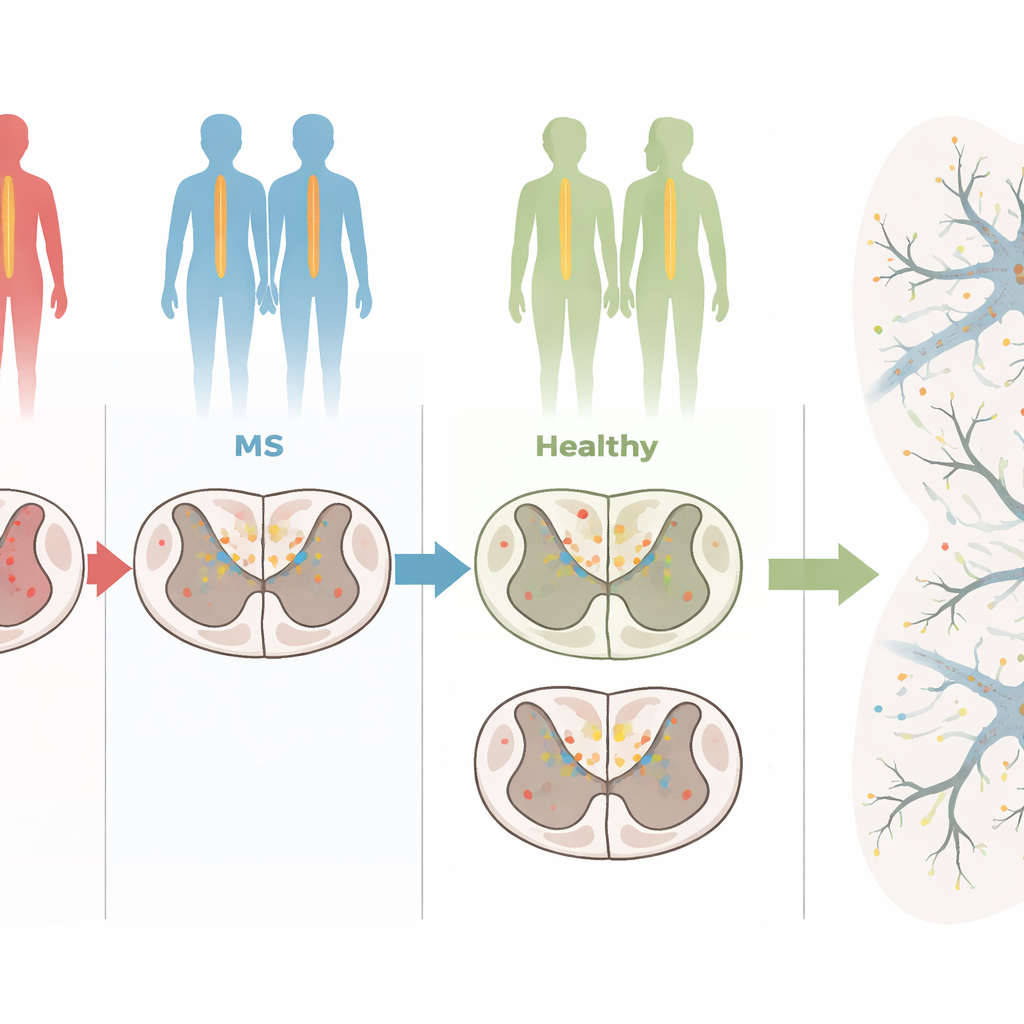
A Hidden Link Between Two Different Diseases
ALS and MS look quite different in the clinic. ALS primarily attacks the motor neurons that control muscles, while MS is marked by loss of the insulating myelin sheath that surrounds nerve fibers, especially in the brain and spinal cord’s white matter. Yet earlier work showed that in both diseases, copper levels are disturbed in specific regions of the spinal cord. Copper is essential for many enzymes that protect cells from damage and help them use energy. That raised the possibility that a shared disturbance in copper handling might quietly contribute to the nerve damage seen in both disorders.
The Role of a Brain-Specific Metal Keeper
Metallothioneins are small proteins that bind metals like copper and zinc, storing and shuttling them safely inside cells. Two forms, MT1 and MT2, are found throughout the body, but MT3 is largely restricted to the brain and spinal cord, where it helps keep metal levels in balance. Earlier hints from gene studies and staining experiments suggested MT3 might be reduced in ALS, and possibly in MS, but its protein levels had not been precisely measured in human spinal cord tissue. This study set out to do that and to see how any changes in MT3 relate to actual copper levels and to copper bound to proteins.
Measuring Metals and Their Carriers in Human Spinal Cord
The team analyzed post‑mortem lumbar spinal cord samples from people with ALS, people with progressive MS, and individuals without neurological disease. They used sensitive mass spectrometry methods to quantify MT3 and other metallothioneins, to measure how much copper and other metals were present, and to separate proteins by size while tracking which ones carried copper. They also stained thin spinal cord sections to visualize where MT3 was located. These complementary approaches allowed them to connect overall metal levels, specific metal‑binding proteins, and the microscopic layout of the tissue.
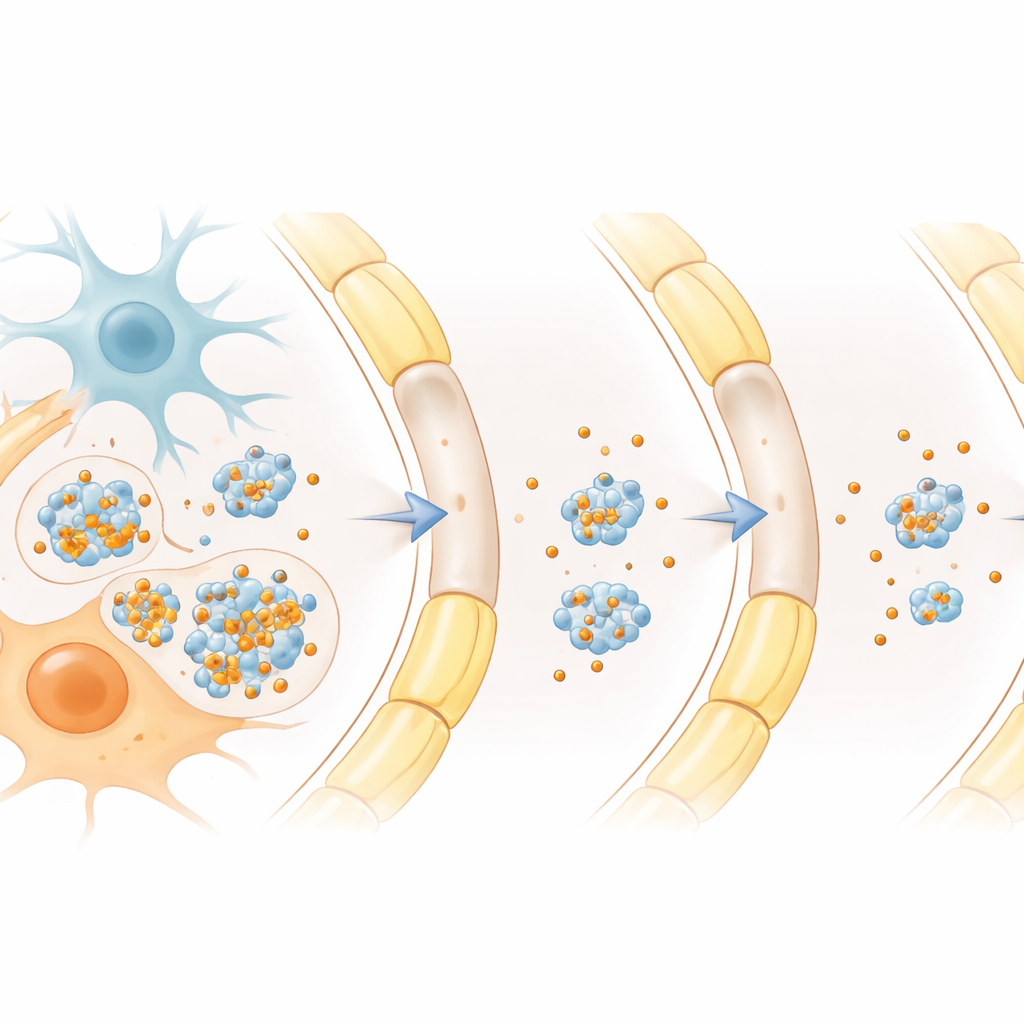
A Shared Drop in MT3 and Copper
The results revealed a clear pattern. MT3 protein levels in the spinal cord were significantly lower in both ALS and MS compared to controls, while the more widely distributed MT1 and MT2 did not change. Staining showed that the loss of MT3 was most obvious in the grey matter, the area rich in nerve cell bodies. At the same time, soluble copper levels in the spinal cord were also reduced in both diseases, whereas zinc, iron, and several other metals were largely unchanged. When the researchers examined which proteins were actually carrying copper, they saw a marked reduction in copper bound in the position that corresponded to MT3, especially in MS. Across individuals, MT3 levels, total copper, and MT3‑associated copper all rose and fell together, pointing to a tight link between this protein and copper availability in the diseased spinal cord.
What This Could Mean for Future Treatments
These findings suggest that in both ALS and MS, the brain’s own copper‑handling system is disrupted in a remarkably similar way: a loss of the MT3 protein in grey matter goes hand‑in‑hand with reduced copper available to key enzymes. The study does not yet explain why MT3 falls or exactly how this contributes to nerve damage, but it strengthens the idea that disturbed copper chemistry is not a side effect but a core feature of both diseases. By identifying MT3 and its copper cargo as shared players in ALS and MS, the work points toward metal‑targeted strategies—aimed at restoring healthy copper balance in the spinal cord—as a promising avenue for future therapies.
Citation: Gunn, A.P., Hilton, J.B.W., Mukherjee, S. et al. Decreased metallothionein-3 expression in the human spinal cord is a common feature of amyotrophic lateral sclerosis and multiple sclerosis. Sci Rep 16, 9598 (2026). https://doi.org/10.1038/s41598-025-31283-9
Keywords: copper imbalance, metallothionein-3, spinal cord, amyotrophic lateral sclerosis, multiple sclerosis