Clear Sky Science · en
Bioanalysis of amphetamines in alternative matrices using a sensitive and validated liquid chromatography-tandem mass spectrometry method and its application to real samples
Why tracking drug use is so challenging
Doctors, addiction specialists, and forensic investigators often need to know not just whether someone has used amphetamines like methamphetamine or MDMA, but also how recently and for how long. Standard tests based on blood or urine only give a brief snapshot, missing much of a person’s drug history. This study explores whether a single, highly sensitive laboratory method can reliably detect amphetamine use in several different types of body samples at once, painting a fuller picture of both recent and long-term use.
Looking at the body from many angles
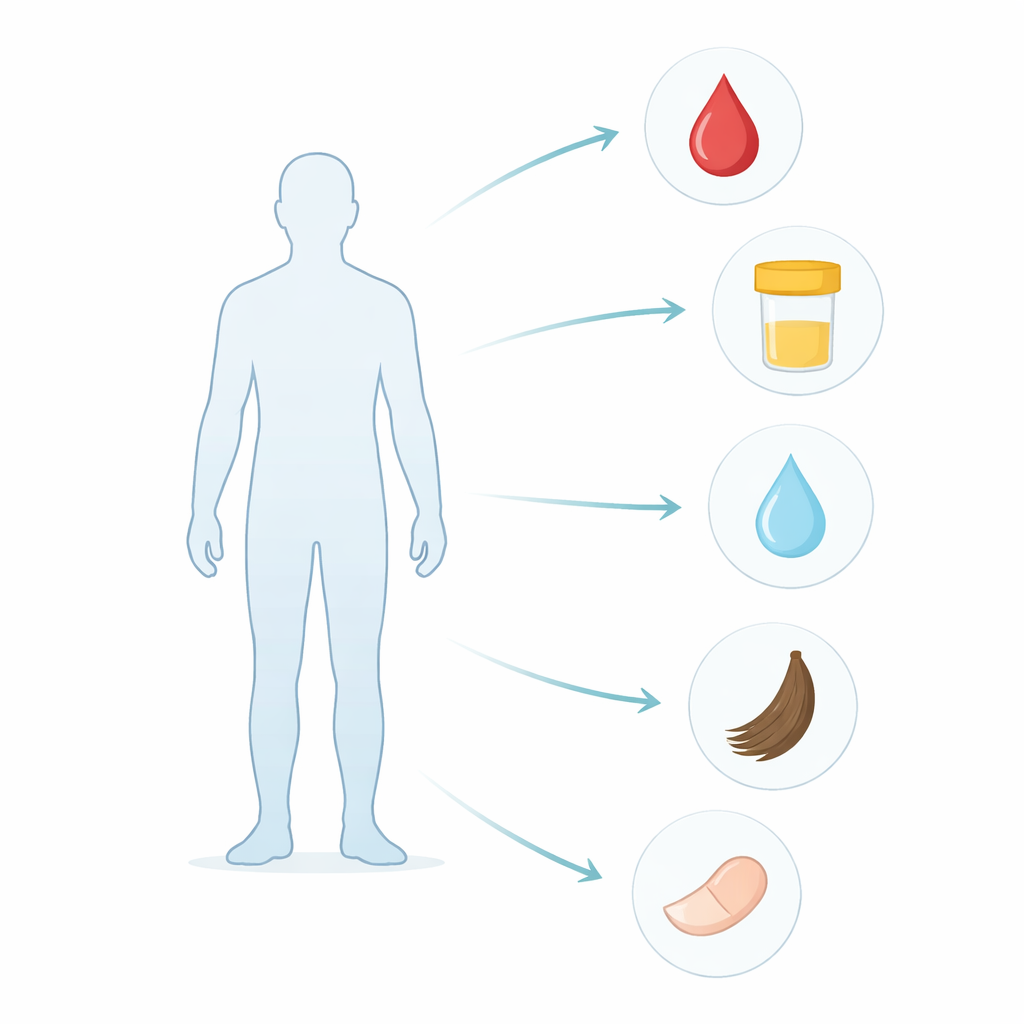
The researchers set out to compare five kinds of specimens from the same people: blood, urine, saliva-like oral fluid, scalp hair, and fingernails. They focused on four closely related drugs—amphetamine, methamphetamine, MDMA (often known as ecstasy), and its breakdown product MDA. Fifty individuals with a known history of amphetamine use donated all five sample types within about a day and a half of their last use. By examining these samples side by side, the team could see how each type reflects drug exposure over different time scales, from hours to many months.
Building a single, very sensitive test
To analyze such different materials, the team relied on a sophisticated laboratory technique called liquid chromatography–tandem mass spectrometry. In simple terms, this approach first separates the chemicals in a sample and then weighs and fragments them with extreme precision. The scientists carefully prepared each sample type—washing hair and nails to remove outside contamination, digesting them so the drugs could be released, and then pulling the drugs out of all specimens with solid-phase extraction cartridges. They checked the method against international forensic guidelines, confirming that it could reliably spot amphetamines at very low levels across all matrices, with consistent performance day after day.
What each sample type reveals
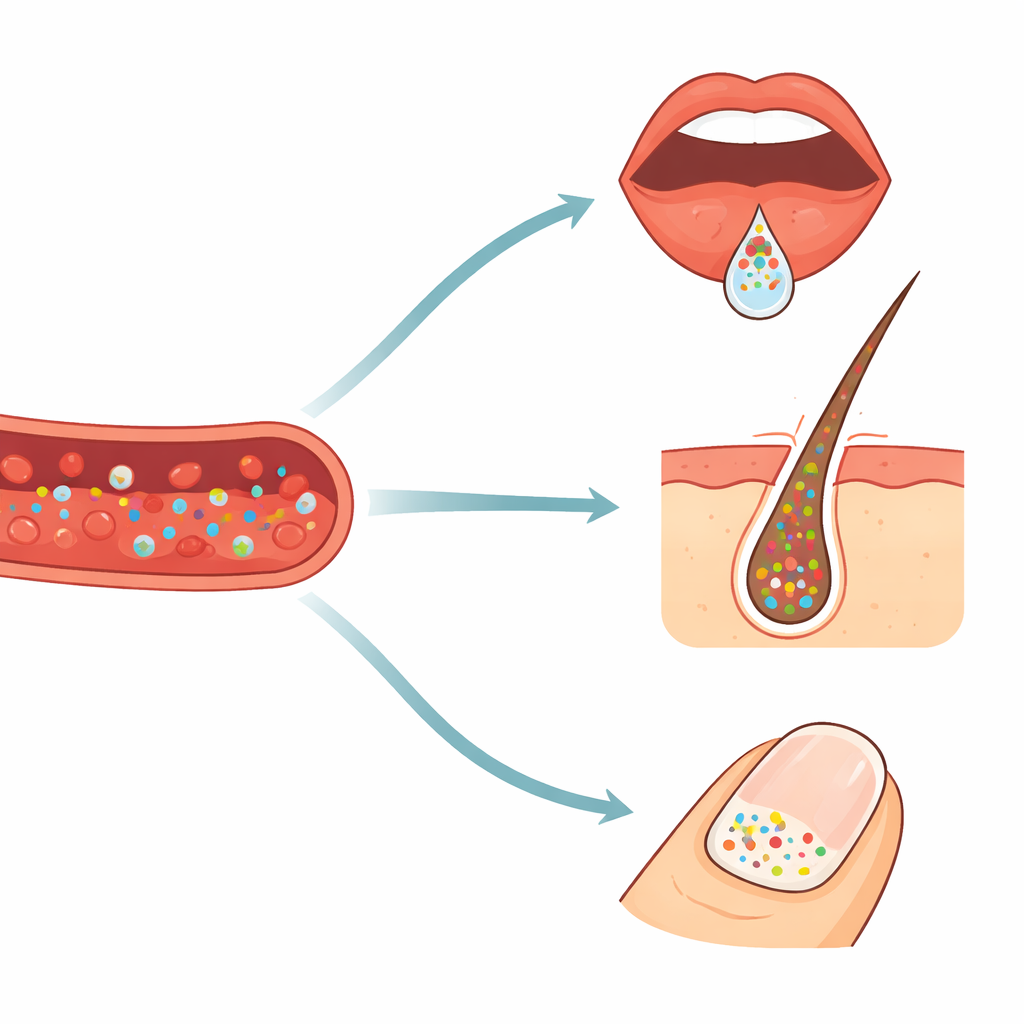
When the method was applied to real samples, clear patterns emerged. Blood and urine, the traditional choices, reflected only very recent consumption because amphetamines are broken down and excreted quickly. Oral fluid, collected non-invasively from the mouth, closely mirrored the “active” drug circulating in the body and tracked recent use almost as well as blood—while avoiding needles, privacy issues, and many of the tampering risks of urine. In contrast, hair and nails, which grow slowly and trap substances within their structure, captured a long record of use. Hair generally showed the highest drug levels, likely because dark pigment binds these stimulants strongly, whereas nails contained lower but still meaningful amounts that aligned with longer-term exposure.
A long memory in hair and nails
Because hair grows about one centimeter per month, the three-centimeter segment closest to the scalp represented roughly three months of a person’s drug history. Fingernails grow more slowly, so small clippings from the tip reflected exposure from several months earlier. The researchers found that people who reported using amphetamines for longer periods tended to have higher levels in both hair and nails, confirming that these tissues keep a durable chemical diary of use. Rigorous washing of hair and analysis of the wash liquids showed no detectable amphetamines, indicating that the drugs measured inside the strands came from actual ingestion rather than environmental contamination.
What this means for real-world testing
In plain terms, this work shows that a single, well-tuned laboratory method can read both the “short story” and the “long novel” of amphetamine use from different parts of the body. Oral fluid offers a practical, non-invasive way to check for very recent use, suitable for roadside checks, workplace screening, or clinical monitoring. Hair provides the clearest window into months of repeated use, while nails add extra confirmation when hair is unavailable or has been altered. Together, the five sample types help doctors and forensic experts understand not just whether someone has used amphetamines, but how that use has unfolded over time.
Citation: Makhdoom, H.S., Abid, A.I., Khan, N.U.H. et al. Bioanalysis of amphetamines in alternative matrices using a sensitive and validated liquid chromatography-tandem mass spectrometry method and its application to real samples. Sci Rep 16, 9591 (2026). https://doi.org/10.1038/s41598-025-30861-1
Keywords: amphetamine detection, drug testing matrices, hair and nail analysis, oral fluid testing, forensic toxicology