Clear Sky Science · en
Size dependent efficacy of zinc oxide nanoparticles in zinc biofortification of basmati rice
Why better rice matters for health
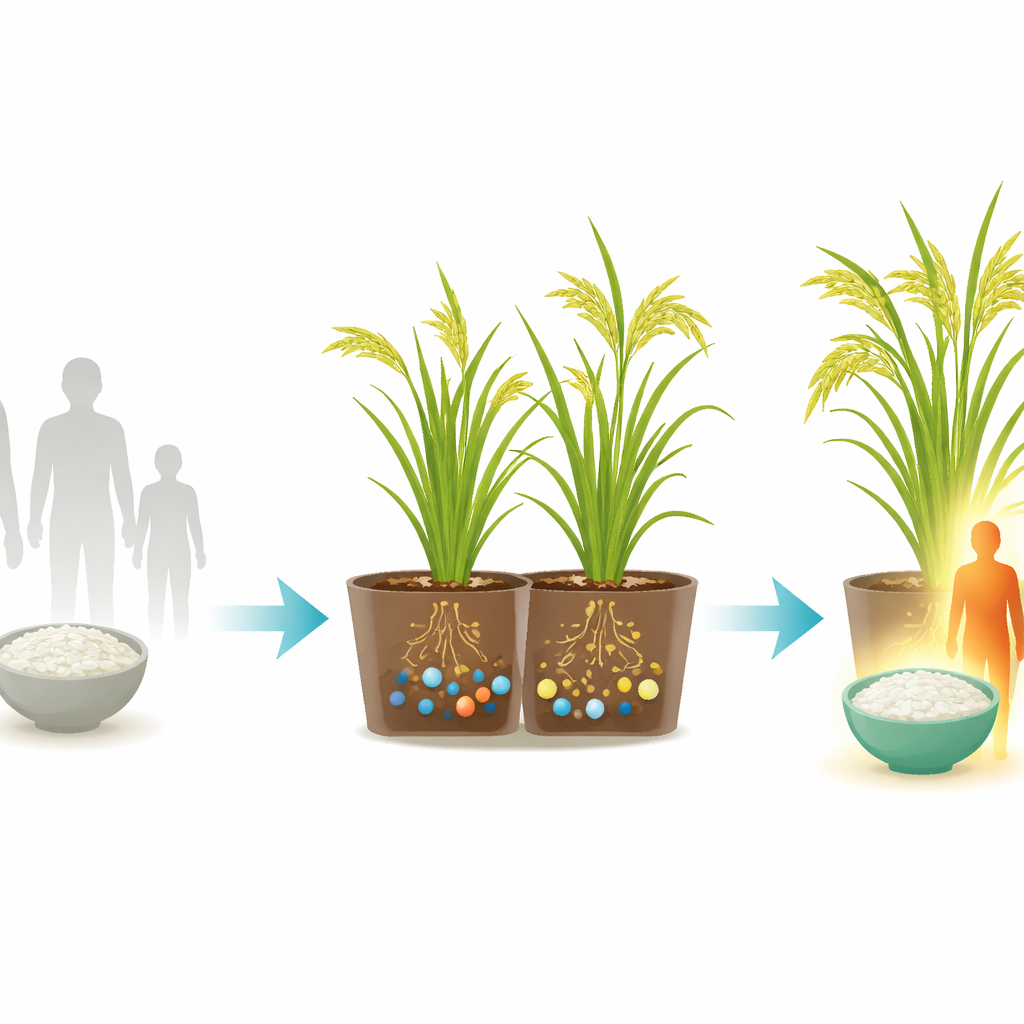
For billions of people, especially in Asia, a bowl of rice is the main meal of the day. Yet ordinary rice is surprisingly poor in the essential mineral zinc, which our bodies need for growth and a strong immune system. This paper explores a new way to grow rice that is richer in zinc by using ultra‑small particles of zinc oxide in the soil. The goal is simple but far‑reaching: make everyday rice more nourishing without changing how it looks, tastes, or is cooked.
Tiny particles with a big job
The researchers focused on zinc oxide nanoparticles, which are specks of mineral so small that thousands could fit across a grain of sand. They tested three sizes—30, 40, and 95 nanometers—in pots of soil growing two popular basmati rice varieties from India, Pusa Basmati‑1121 and Pusa Basmati‑1509. Instead of spraying plants, they mixed these particles into the soil before transplanting young rice. A standard zinc sulfate fertilizer served as the control. Throughout the growing season, they tracked how well the plants captured light, breathed through their leaves, grew roots and shoots, and ultimately filled their grain. They also measured how much zinc ended up in the roots and rice grains, and how much of a natural “anti‑nutrient” called phytic acid was present.
Healthier leaves and stronger roots
Rice grown with the smallest particles, 30‑nanometer zinc oxide, showed the most dramatic improvements. Leaves photosynthesized more efficiently, letting the plants convert sunlight into food at rates about one‑fifth higher than the control. Tiny pores on the leaves opened more readily, improving gas exchange, and green pigments such as chlorophyll and protective carotenoids rose by roughly one‑quarter to almost one‑half. Inside the leaves, protein levels increased and protective enzymes like catalase became more active, helping the plants manage the harmful by‑products of normal metabolism. Underground, the root systems of treated plants became longer, thicker, and more branched, with surface area gains of about a third. This more extensive root network is crucial, because it allows the plant to mine the soil more effectively for water and nutrients, including zinc.
More grain, fewer empty husks
The boost in plant vigor translated into clear yield gains. With zinc oxide nanoparticles, rice plants produced more tillers (the stalks that bear grain heads), longer panicles, and heavier grain clusters. The 30‑nanometer treatment, in particular, increased the number of productive tillers and the weight of grain harvested from each plant by around one‑third compared with conventional zinc fertilizer. Plants also formed many more fully filled grains and far fewer hollow, unfilled ones, pointing to better pollination and grain development. One of the two basmati varieties, PB‑1121, responded especially strongly in reproductive traits, but both cultivars benefited. Statistical analyses showed that grain yield was closely tied to the number of fertile tillers and filled grains—and strongly hindered by the number of empty grains—highlighting how the nanoparticles improved the whole grain‑setting process.
Zinc‑richer rice that is easier to absorb
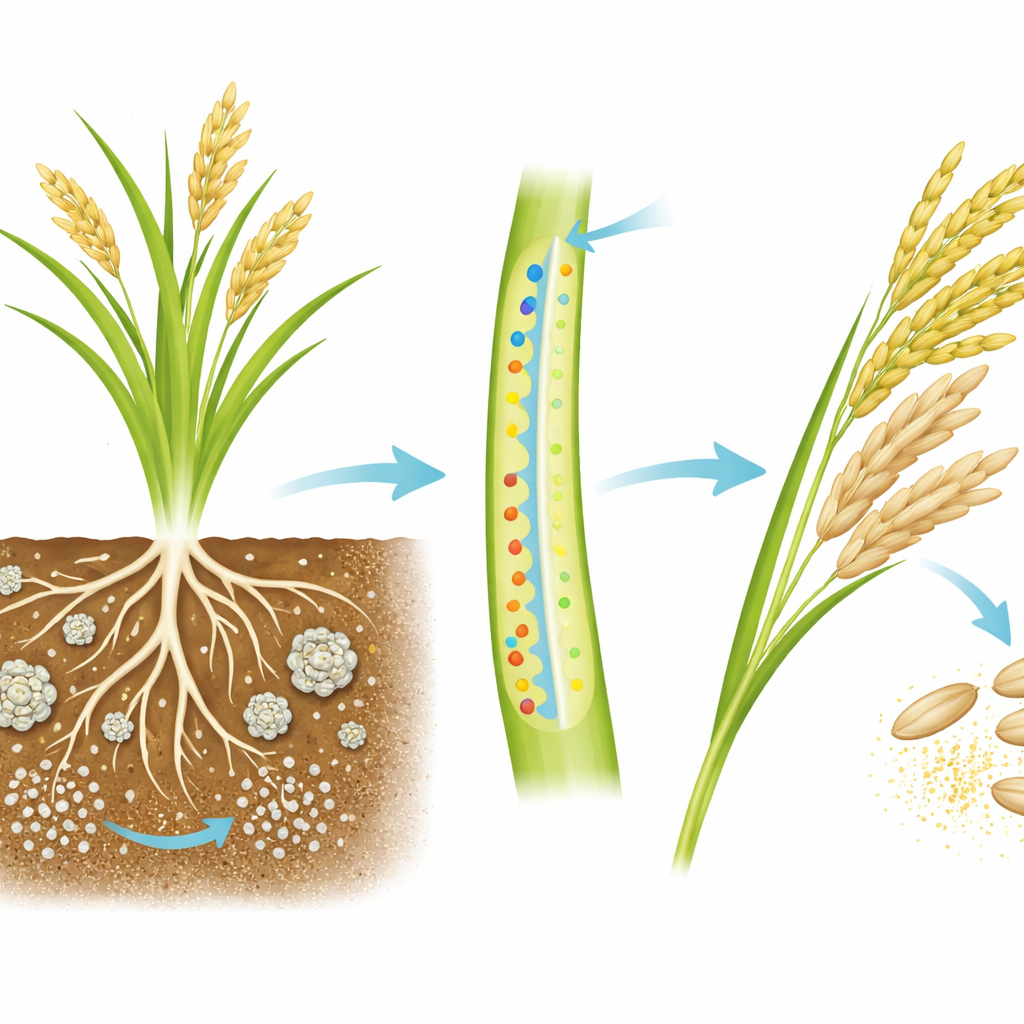
Beyond yield, the key question was whether the rice itself became more nutritious. Here, the results were striking. At harvest, roots of plants treated with 30‑nanometer particles held nearly two to three times as much zinc as those given standard fertilizer, and a substantial portion of that zinc had moved into the grains. Grain zinc content rose by roughly half, with increases of up to about 57% in one variety. At the same time, levels of phytic acid in the grain fell by up to 24%. This compound normally binds zinc and other minerals, making them harder for the human gut to absorb. Lower phytic acid, together with higher zinc, means the zinc in these grains should be more available to people who eat them. Correlation analyses confirmed that grains with more zinc tended to have less phytic acid, indicating that the same treatments that enriched zinc also made it easier to use nutritionally.
What this means for everyday meals
Put simply, the study shows that mixing very small zinc oxide particles—especially 30‑nanometer ones—into soil can help rice plants grow better, yield more, and pack significantly more usable zinc into each grain, all while reducing a natural blocker of mineral absorption. For families who rely on rice as their main food, such “nano‑biofortified” rice could quietly improve diets and support healthier growth and immunity, without changing cooking habits or requiring supplements. The authors emphasize that longer‑term field trials and careful checks on soil life and environmental safety are still needed. But their results suggest that smart use of nanotechnology could become a powerful tool in the fight against hidden hunger caused by zinc deficiency.
Citation: Paranimuthu, S., Pandey, R., Yadav, A. et al. Size dependent efficacy of zinc oxide nanoparticles in zinc biofortification of basmati rice. Sci Rep 16, 8886 (2026). https://doi.org/10.1038/s41598-025-30827-3
Keywords: zinc biofortification, nanofertilizers, basmati rice, micronutrient deficiency, crop nutrition