Clear Sky Science · en
Repurposing of natural products for spinocerebellar ataxia type 3 using integrated network pharmacology and in silico approaches
Why this research matters for patients and families
Spinocerebellar ataxia type 3 (SCA3) is a rare, inherited brain disease that slowly robs people of balance, coordination, and independence. There is currently no cure and no approved drug that can halt its progression. This study explores whether compounds that already exist in nature—many drawn from traditional medicines—could be intelligently “repurposed” with the help of powerful computer tools, opening a faster and potentially safer path to new treatments.
Hunting for helpful molecules in nature
The researchers focused on natural products: chemicals found in plants and other living organisms that have long been a source of modern medicines. They collected 15 promising natural compounds previously reported to ease features of SCA3 in cell or animal models. Using specialized databases, they predicted which human proteins each compound might interact with, and separately compiled thousands of genes linked to SCA3. By comparing the two sets, they zeroed in on 239 overlapping targets—proteins that are both involved in the disease and potentially influenced by these natural molecules. 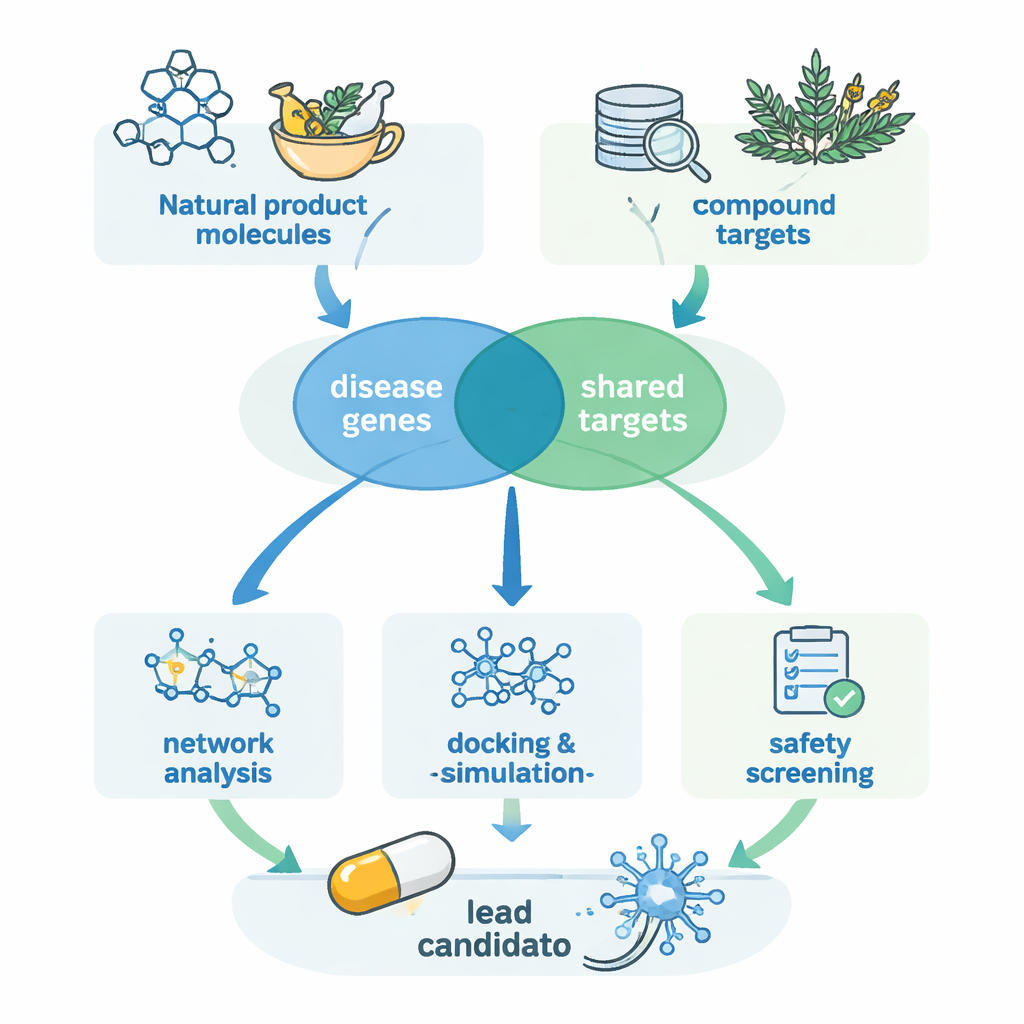
Mapping the disease’s weak spots
Next, the team built large “interaction maps” showing how these 239 proteins talk to one another inside cells. In these maps, some proteins act like busy hubs in a transportation network, connecting many routes at once. Two such hubs, called AKT1 and TP53, stood out as especially central. The researchers then examined which cellular pathways—sets of linked biochemical reactions—were most affected. One pathway, known as MAPK signaling, emerged as particularly important and is already recognized for its role in brain cell survival, stress responses, and degeneration. Many of the natural compounds appeared to influence this pathway, suggesting a common route by which they might protect neurons in SCA3.
Putting crocin under the microscope (virtually)
Among all the tested molecules, crocin—a bright orange pigment from saffron—showed the strongest predicted binding to both AKT1 and TP53. To understand this in more detail, the team used computer-based docking, which fits a virtual copy of each compound into a 3D model of the protein, like trying keys in a lock. Crocin “fit” the AKT1 and TP53 proteins better than a reference experimental drug called troriluzole, forming more stable contacts and stronger interactions. The scientists then ran long molecular dynamics simulations, which mimic how atoms move over time in a watery, body-like environment. These simulations showed that protein–crocin complexes remained stable, formed many hydrogen bonds, and settled into low-energy, steady shapes—features consistent with a strong and reliable interaction.
How this might help protect brain cells
AKT1 and TP53 help decide whether a stressed neuron recovers or dies. In SCA3, faulty forms of the ataxin-3 protein disturb signaling networks that involve both of these key regulators, tipping the balance toward cell damage and loss. The computer models suggest that crocin could latch onto AKT1 in regions important for its activity and onto TP53 in its DNA-binding area, subtly reshaping how these proteins behave. Earlier laboratory studies in other brain disease models show that crocin can reduce oxidative stress, calm inflammation, stabilize mitochondria (the cell’s power plants), and tune cell death pathways. Taken together, the new simulations support the idea that crocin might help restore a healthier survival–death balance in neurons affected by SCA3.
From computer predictions to real-world therapies
While crocin’s predicted safety profile looks favorable, and its behavior in simulations is encouraging, this work is still at the computer-model stage. The study does not test crocin directly in people with SCA3. Instead, it provides a detailed roadmap pointing to crocin as a strong candidate for further laboratory and animal testing, and eventually carefully designed clinical trials. 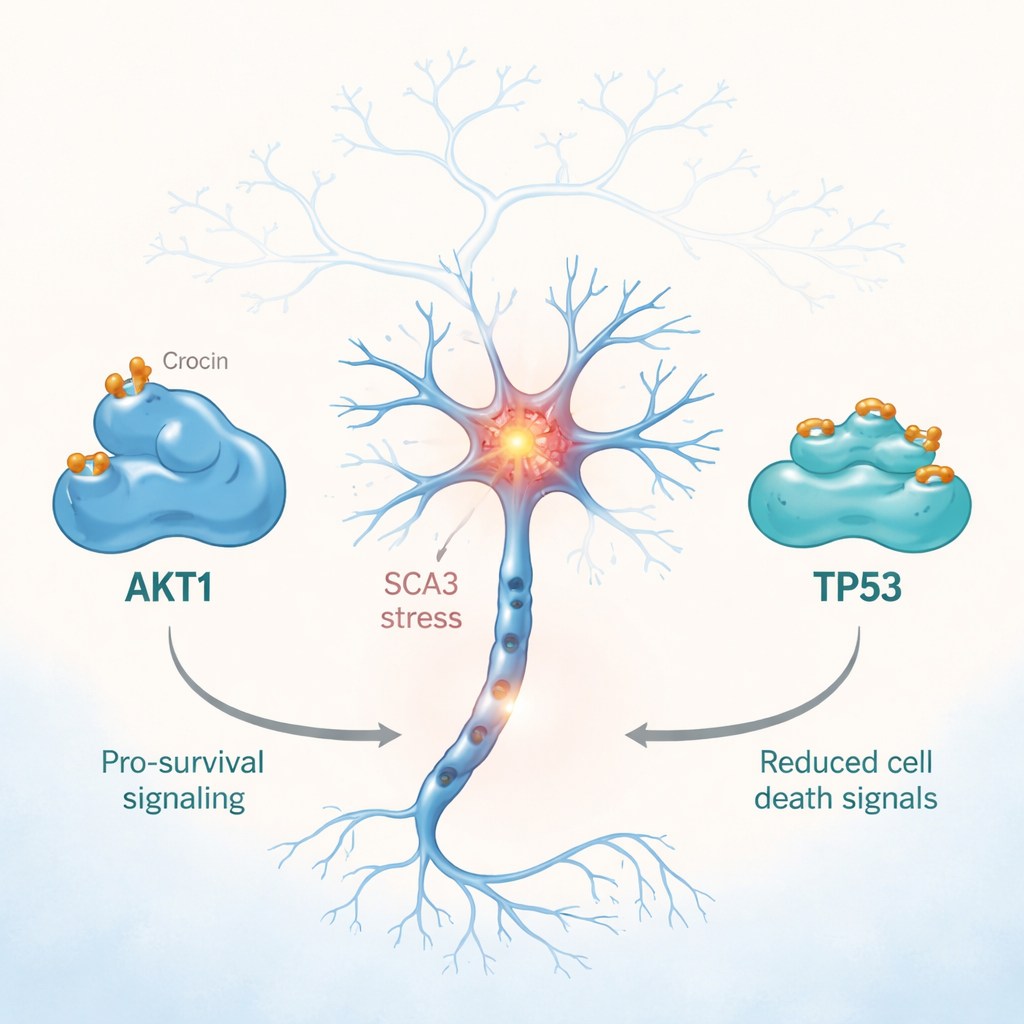
Citation: Roney, M., Mohd Hisam, N.S., Uddin, M. et al. Repurposing of natural products for spinocerebellar ataxia type 3 using integrated network pharmacology and in silico approaches. Sci Rep 16, 7332 (2026). https://doi.org/10.1038/s41598-025-30652-8
Keywords: spinocerebellar ataxia type 3, natural products, drug repurposing, crocin, neurodegeneration