Clear Sky Science · en
Cerebrospinal fluid and plasma metabolites in Parkinson’s disease: a Mendelian randomization study
Why body chemistry matters in Parkinson’s
Parkinson’s disease is best known for shaking hands and stiff movements, but behind these visible symptoms lies a hidden world of chemistry. Our brains and blood are filled with tiny molecules produced as the body turns food into energy, clears waste, and fuels nerve cells. This study asks a simple but powerful question: are some of these molecules merely bystanders in Parkinson’s, or do they actually help drive – or prevent – the disease? By using people’s genetic makeup as a kind of natural experiment, the researchers look for chemical clues that could one day lead to earlier diagnosis or new treatments.
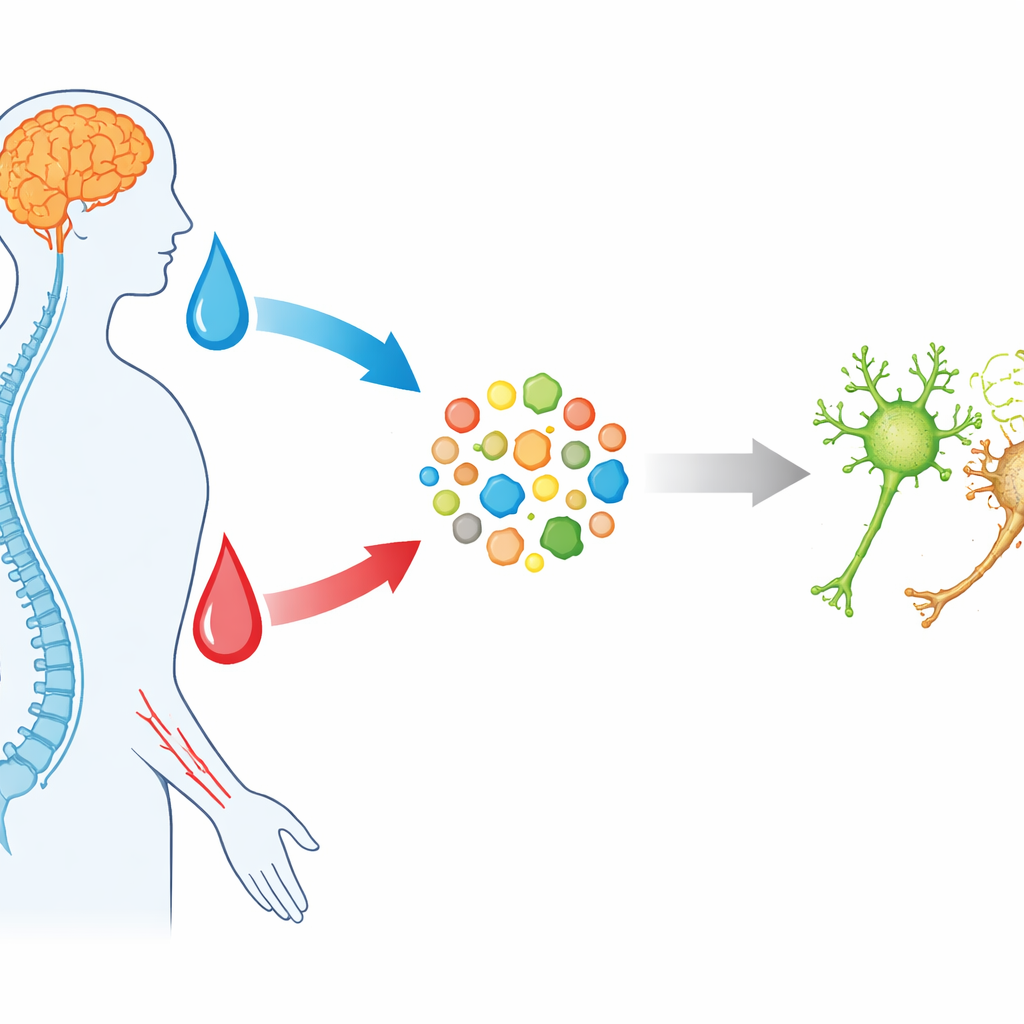
Using genetics as nature’s experiment
Most studies that link blood or brain chemicals to disease cannot easily tell cause from effect: does a molecule change because someone has Parkinson’s, or did that change help trigger the illness in the first place? Here, the team used an approach called Mendelian randomization, which takes advantage of the fact that genetic variants are assigned at conception, long before disease develops. Certain genetic patterns are known to nudge levels of specific molecules up or down. If people born with a “high-level” version of a metabolite also turn out to have more or less Parkinson’s, that suggests the molecule itself may influence risk, not just reflect it.
Scanning brain fluid and blood for chemical signals
The researchers combined large genetic and chemical datasets from thousands of adults of European ancestry. They examined more than a thousand metabolites in blood plasma and over three hundred in cerebrospinal fluid, the clear liquid that bathes the brain and spinal cord. They then matched these data to genetic studies of Parkinson’s involving more than fifteen thousand patients. After filtering for strong, reliable genetic signals, they tested which molecules showed signs of a causal link to Parkinson’s risk, and double-checked their results with several complementary statistical methods and sensitivity tests.
Risky and protective molecules
The analysis highlighted a small set of brain-fluid molecules and a larger group in blood that appear to tilt the odds of developing Parkinson’s. In cerebrospinal fluid, four chemicals – including dimethylglycine, gluconate, and oxalate – showed patterns consistent with raising risk, while two others seemed to offer some protection. In blood plasma, 49 metabolites were flagged: about half were linked to higher risk and half to lower risk. Some of the risk-related compounds were involved in fat processing and energy use, hinting at stressed mitochondria, the cell’s power plants. Others tied into pathways that handle nitrogen waste, suggesting that difficulties clearing toxic byproducts such as ammonia and urea could harm vulnerable brain cells.
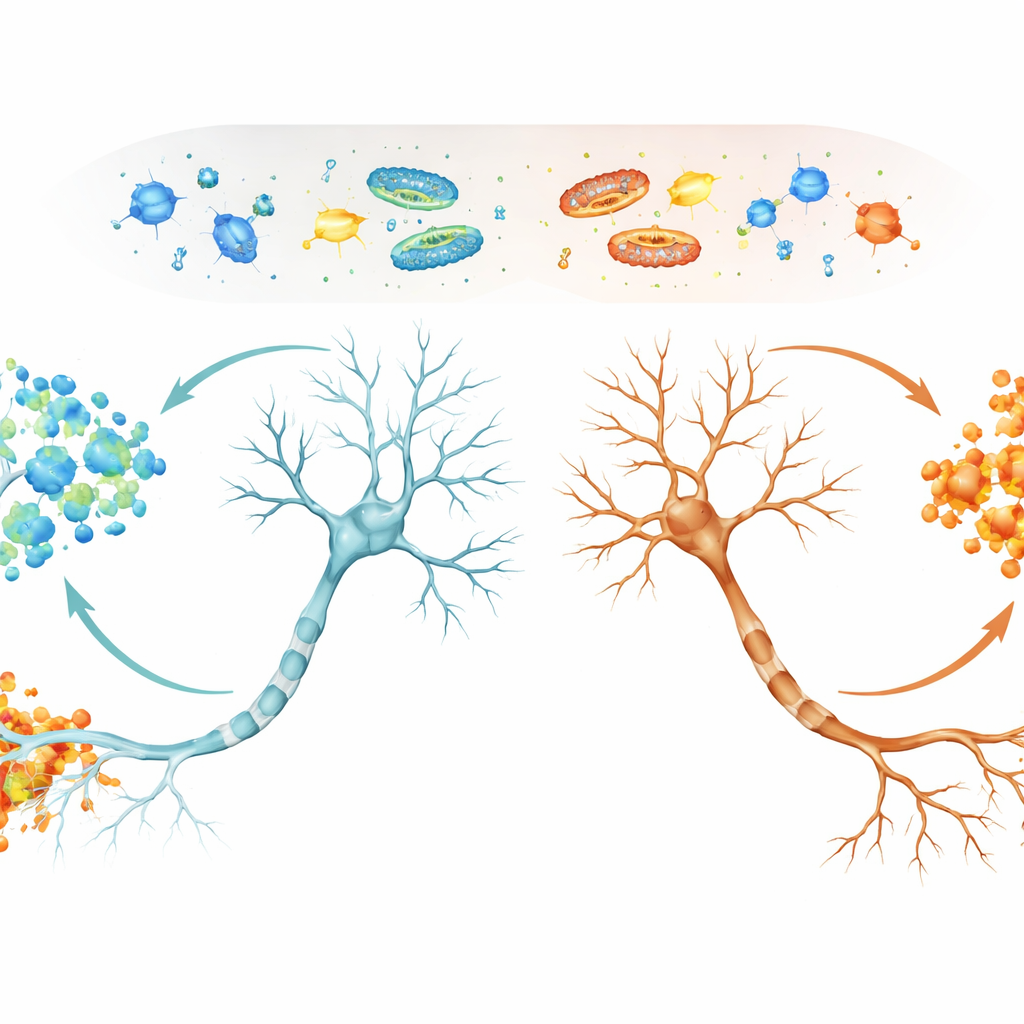
A standout protector and stressed power plants
Among all the blood molecules, one in particular, called O-sulfo-L-tyrosine, consistently appeared to protect against Parkinson’s across multiple analytical tests. This compound reflects how the body handles tyrosine, an amino acid that the brain uses as a building block for dopamine, the messenger that is famously depleted in Parkinson’s. Lower levels of O-sulfo-L-tyrosine may signal that tyrosine supplies are running short, potentially starving dopamine-producing neurons. The study also found that certain fat-related molecules and imbalances in energy-related acids pointed to faulty mitochondrial function and disturbed nitrogen recycling – processes that can increase oxidative stress and damage nerve cells over time.
What this means for people with Parkinson’s
While none of the findings yet meet the strictest statistical thresholds, together they sketch an emerging picture: in Parkinson’s disease, specific patterns of small molecules in brain fluid and blood may not just mirror the illness but help shape who gets it and how it progresses. If future, larger studies confirm these results, doctors could one day use blood tests to spot high-risk chemical profiles, track disease earlier, or tailor diets and drugs that nudge key metabolites in a safer direction. The strong signal for O-sulfo-L-tyrosine, in particular, marks it as a promising candidate biomarker and a possible target for therapies aimed at supporting dopamine-producing cells and easing the chemical strain on the aging brain.
Citation: Wang, JL., Zhao, Q., Zheng, R. et al. Cerebrospinal fluid and plasma metabolites in Parkinson’s disease: a Mendelian randomization study. Sci Rep 16, 9588 (2026). https://doi.org/10.1038/s41598-025-30521-4
Keywords: Parkinson’s disease, metabolomics, cerebrospinal fluid, plasma biomarkers, Mendelian randomization