Clear Sky Science · en
An insight into comparative sex based proteomic profiling of Hilsa Tenualosa ilisha towards domestication and aquaculture
Why this river fish matters to your plate and our rivers
Hilsa is a silvery migratory fish that fuels livelihoods, fills markets, and is celebrated on dinner tables across South Asia. Yet its wild stocks are under pressure from overfishing, river dams, and pollution. This study looks inside Hilsa’s blood to examine thousands of tiny protein molecules that help the fish grow, fight disease, and survive its demanding journey from the sea into freshwater rivers. By decoding these hidden systems, the researchers hope to lay the groundwork for successful Hilsa farming and smarter conservation, protecting both an iconic species and a vital food source.
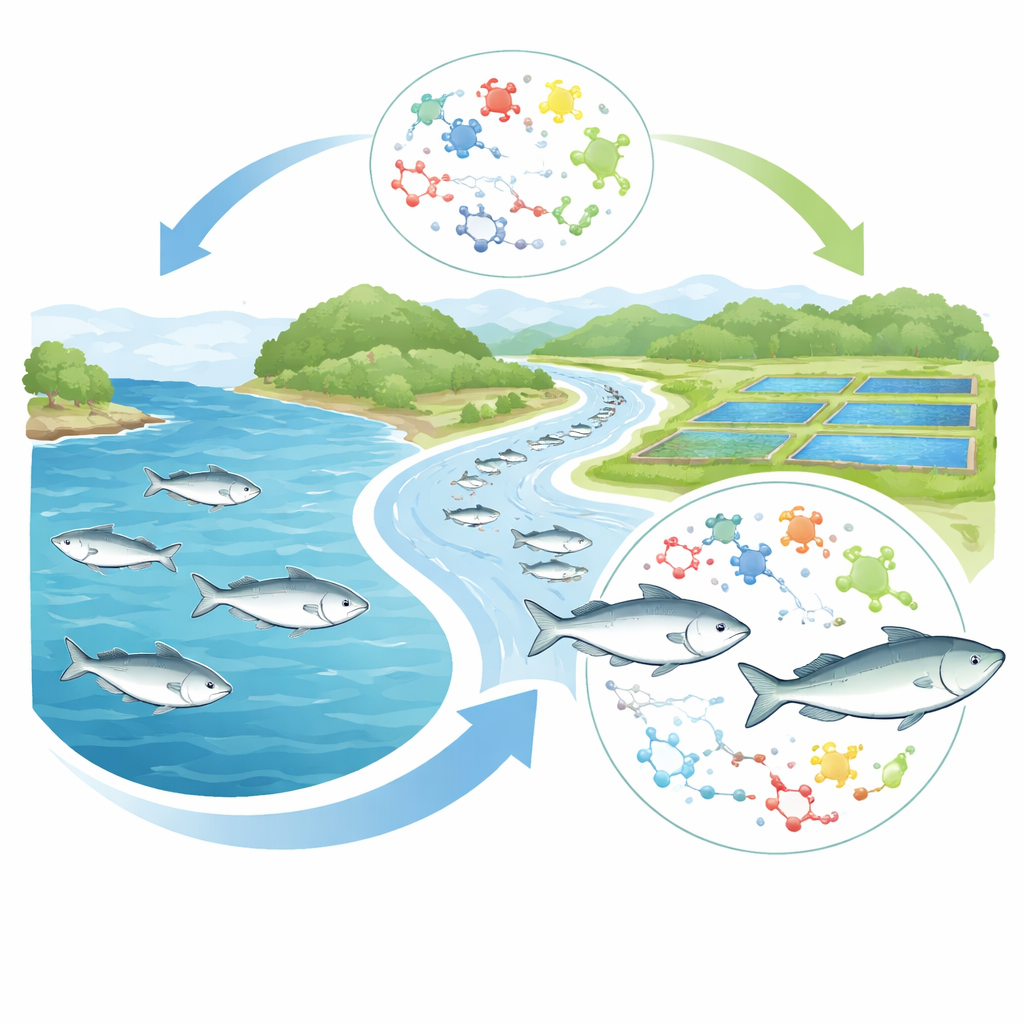
Following a traveler from sea to river
Hilsa spend much of their lives in coastal waters but swim upstream into rivers to spawn. During this journey they face rapid changes in temperature, salt levels, food availability, and pathogens. To understand how the fish copes, the team collected blood from wild male Hilsa caught in the Ganga River across six size (and therefore age) groups, from small juveniles to large adults. They used a powerful technique called mass spectrometry to catalog the proteins present in blood serum, then compared these data with an earlier survey of female Hilsa. Rather than focusing on a few well-known molecules, the approach captures thousands at once, giving a panoramic view of the fish’s internal defenses and metabolism.
Reading the hidden map of blood proteins
The researchers identified 2,555 distinct proteins across all male fish, with each weight group containing hundreds of them. Interestingly, the number of proteins did not simply rise with body size. Medium-sized males (about 200–300 grams) showed the richest protein mix, while a larger group around 400–500 grams had far fewer. This uneven pattern suggests that Hilsa go through complex internal transitions as they grow and prepare for migration and reproduction, rather than changing in a smooth, linear way. A core set of 142 proteins appeared in all males regardless of size, forming a shared backbone of basic functions, especially in immunity and transport.
The fish’s built‑in shield and repair crew
Many of the most common proteins were linked to the immune system and to maintaining body tissues. These included large “trap” molecules like Alpha‑2‑Macroglobulin that can bind and neutralize harmful enzymes, complement proteins that help mark and destroy invaders, and fibulin, which contributes to the structure of blood vessels and connective tissue. Using computer tools, the team mapped how these proteins work together in networks and which biological pathways they support. They found strong signals for processes such as complement activation (a major arm of innate immunity), the engulfing of particles by immune cells, and pathways involved in stress resistance and energy balance. Larger males showed particularly strong enrichment of these defense‑related routes, consistent with the greater challenges they face during long river journeys and spawning.
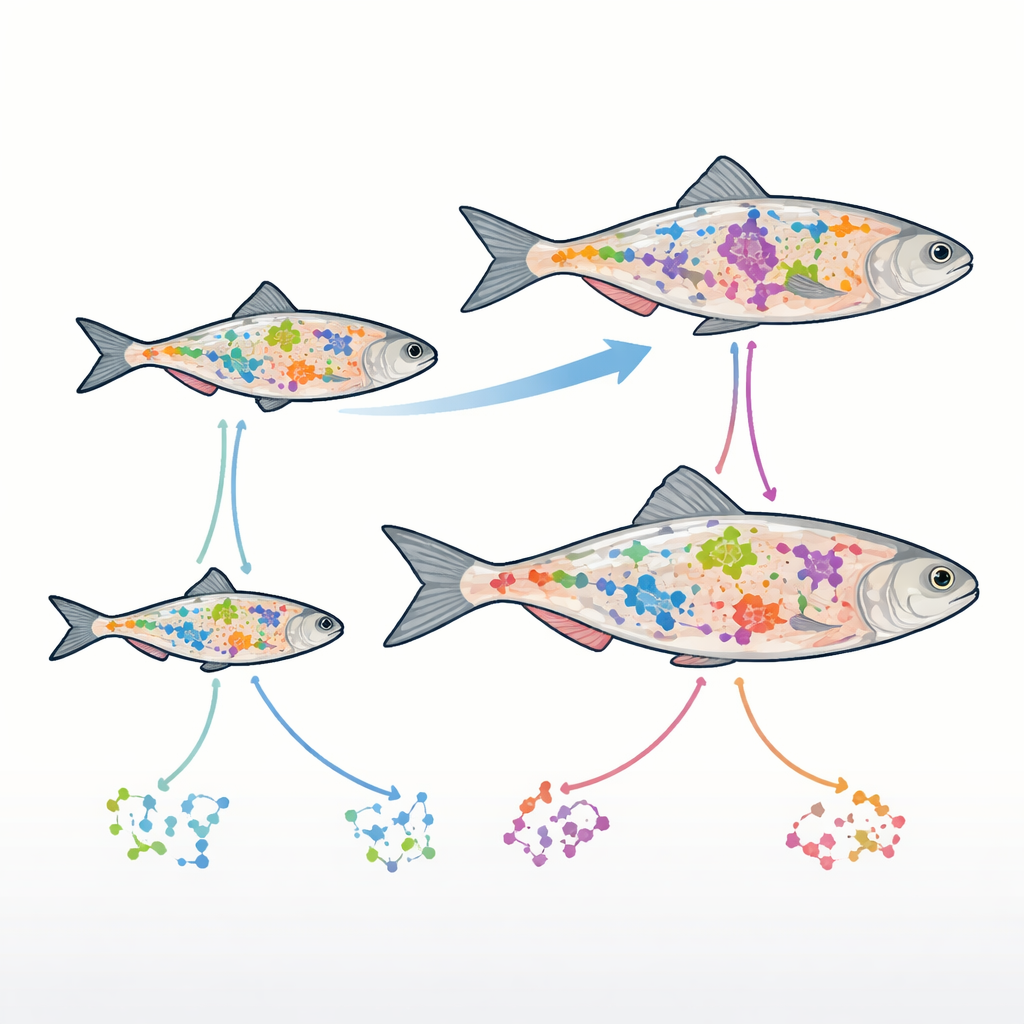
How males and females quietly differ
When male data were compared with the previously studied females, the overall picture was surprisingly similar: both sexes share a highly conserved set of serum proteins and immune pathways. However, some subtle but important differences emerged. Males more often carried proteins such as MADS‑box factors and anaphylatoxin‑related components, which are tied to growth, development, and the fine‑tuning of inflammation. Females, on the other hand, more frequently showed vitellogenin‑like and lipid‑transport proteins, reflecting their role in producing and nourishing eggs. Pathway analysis also revealed that males tended to have stronger signals in certain immune and growth‑control circuits, including those related to viral defense and cell growth regulation.
From molecular clues to future fish farms
By charting when and how these proteins appear across life stages and between sexes, the study offers a molecular blueprint of Hilsa’s resilience. It shows that while males and females rely on a shared core of immune and transport proteins, they adjust the abundance of specific molecules as they grow, migrate, and reproduce. These patterns point to protein markers that could be used to monitor fish health, select robust broodstock, or fine‑tune conditions in captivity. In practical terms, the work moves Hilsa a step closer to successful domestication and sustainable aquaculture, helping to secure a culturally important fish for future generations while easing pressure on wild river populations.
Citation: Chakraborty, H., Chakraborty, H.J., Das, B.K. et al. An insight into comparative sex based proteomic profiling of Hilsa Tenualosa ilisha towards domestication and aquaculture. Sci Rep 16, 9586 (2026). https://doi.org/10.1038/s41598-025-30326-5
Keywords: Hilsa, fish immunology, proteomics, aquaculture, migration