Clear Sky Science · en
Association between visceral adipose tissue measured by deep neural network architecture and chronic kidney disease
Why Belly Fat and Kidney Health Matter
Many people know that extra weight can strain the heart, but fewer realize it can also quietly damage the kidneys. This study explores how different types of belly fat relate to chronic kidney disease, and how modern artificial intelligence (AI) tools can turn routine medical scans into an early warning system for kidney trouble. The findings suggest that where we store fat—and whether we are male or female—may matter as much as how much we weigh.
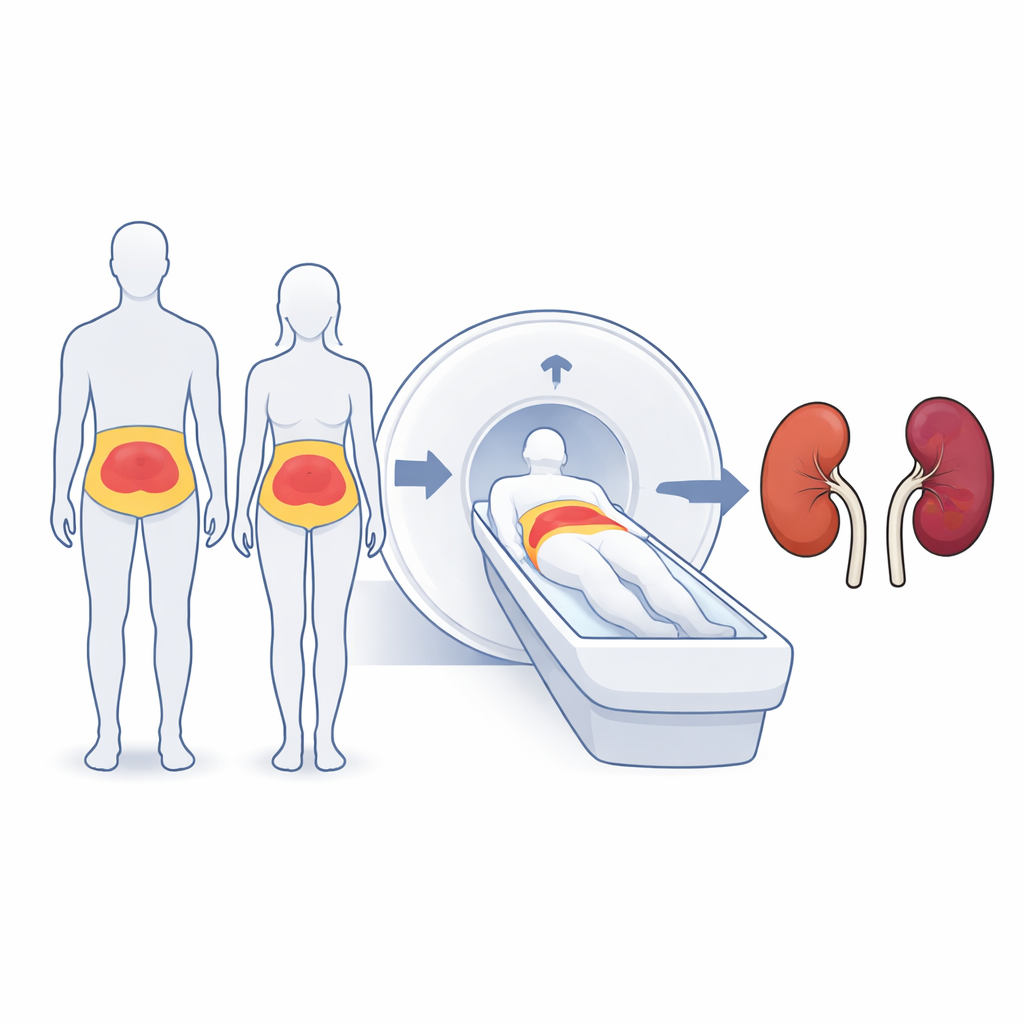
Two Kinds of Belly Fat
Not all belly fat behaves the same. Deep inside the abdomen lies visceral fat, which wraps around internal organs. Closer to the skin is subcutaneous fat, the soft layer you can pinch. Earlier research linked overall obesity to kidney disease, but common measures like body mass index (BMI) cannot tell these two fat types apart. Using abdominal CT scans and an AI program, the researchers in this study could separate and measure the total volume of visceral and subcutaneous fat in three dimensions, giving a clearer picture of how body fat is actually arranged.
How the Study Was Done
The team analyzed health check-up data from more than 14,000 adults in Korea who had chosen to undergo abdominal CT scans. Participants were between 40 and 80 years old and had blood and urine tests to assess kidney function. A deep-learning system automatically scanned each CT image, isolated the upper abdomen, and calculated the volumes of visceral fat, subcutaneous fat, and their ratio. The researchers then compared these measurements with whether a person met the definition of chronic kidney disease, based mainly on how well the kidneys filtered waste from the blood.
What the Researchers Found
The results showed a clear pattern: more visceral fat was linked to a higher chance of having chronic kidney disease in both men and women, even after taking age, high blood pressure, and diabetes into account. However, subcutaneous fat behaved differently depending on sex. In women, larger amounts of this surface fat were tied to a lower risk of kidney disease, suggesting a possible protective effect. In men, by contrast, greater subcutaneous fat was associated with a slightly higher risk. When the researchers grouped people into four levels from lowest to highest fat volume, those in the highest visceral fat group had the greatest odds of kidney disease, while women in the highest subcutaneous fat group had the lowest odds.
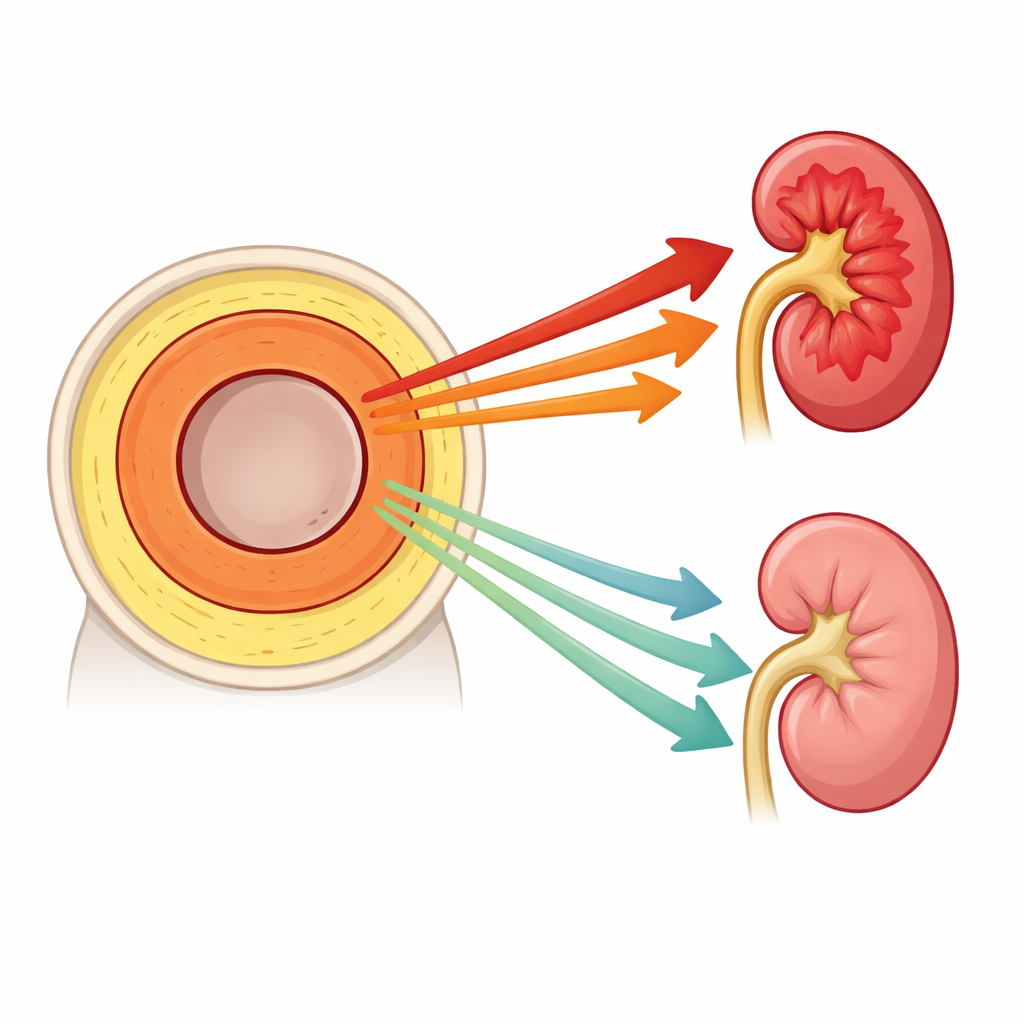
Why Fat Around the Organs Is Risky
Visceral fat is more biologically active than the fat under the skin. It can trigger overactivity of the nervous system and hormone systems that regulate blood pressure and salt balance, placing extra strain on the kidneys. It also tends to be accompanied by fat deposits around the kidneys themselves, which can squeeze these organs and alter blood flow. On top of this, visceral fat releases substances that promote inflammation, oxidative stress, and poor responses to insulin, all of which can speed the decline of kidney function. The different patterns seen between men and women may reflect the influence of sex hormones and typical fat distribution, with men tending to carry more visceral fat and women more subcutaneous fat.
What This Means for Patients and Care
This study suggests that looking beyond simple weight or waist size to the actual distribution of belly fat can improve kidney risk assessment. AI tools that automatically read existing CT scans could flag people with high levels of visceral fat who might benefit from closer monitoring or early lifestyle changes, even if they are not extremely heavy by standard measures. At the same time, the apparently protective role of surface fat in women hints that not all extra weight has the same impact on kidney health. While the study cannot prove cause and effect and was limited to one ethnic group and one medical center, it points toward a future in which smarter imaging analysis helps personalize kidney disease prevention.
Citation: Chung, G.E., Yoon, J.W., Kim, H. et al. Association between visceral adipose tissue measured by deep neural network architecture and chronic kidney disease. Sci Rep 16, 9587 (2026). https://doi.org/10.1038/s41598-025-30244-6
Keywords: visceral fat, chronic kidney disease, abdominal CT, artificial intelligence, body composition