Clear Sky Science · en
Comparative UPLC/MSn study and multimodal assessment of the anti-inflammatory, analgesic, and antioxidant properties of methanol and aqueous extracts of Scabiosa atropurpurea L.
Wildflower Helpers for Pain and Swelling
Many people rely on pills like ibuprofen to tame headaches, joint pain, or swollen tissues—but these medicines can irritate the stomach, liver, and kidneys when used for long periods. This study explores an old remedy from North Africa, the wildflower Scabiosa atropurpurea, to see whether simple extracts made with water or alcohol can safely calm inflammation, ease pain, and protect the body from damaging oxygen-based "rust" known as oxidative stress.
A Traditional Remedy Put to the Test
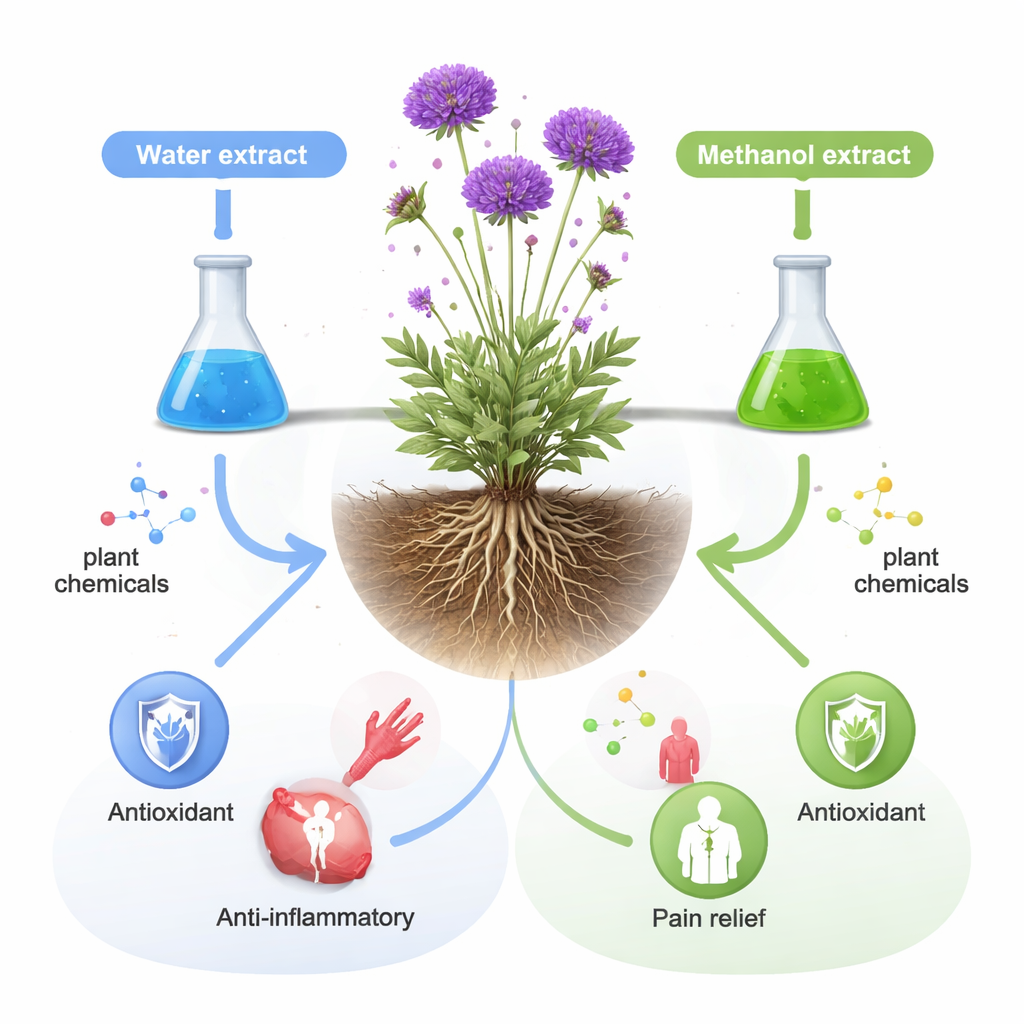
Scabiosa atropurpurea has long been used in folk medicine to treat skin problems, coughs, fevers, and internal inflammation. The researchers set out to test these traditional claims in a modern, systematic way. They prepared two types of extracts from the plant’s above-ground parts: one using hot water, similar to making a strong herbal tea, and one using methanol, a laboratory alcohol that draws out slightly different sets of natural chemicals. They then asked three key questions: what molecules are present, how strongly do the extracts act as antioxidants and anti-inflammatories, and do they actually relieve pain in living animals?
Peeking Inside the Plant’s Chemical Toolbox
Using a sensitive technique that separates and weighs tiny molecules, the team identified 34 plant compounds in the two extracts. Most belonged to families already famous for health benefits, including polyphenols, flavonoids, tannins, and certain plant oils and terpenes. These molecules are common in many fruits, teas, and medicinal herbs, and are known for soaking up harmful free radicals and dialing down inflammatory signals. The water and methanol extracts shared some molecules but also had distinct chemical “fingerprints,” suggesting that how you prepare the plant can change which compounds you end up with and how strong the biological effects might be.
Antioxidant and Anti-Inflammatory Power
The scientists next tested whether the extracts could neutralize reactive oxygen species, which are unstable forms of oxygen that can damage cells. In laboratory assays, the water-based extract was especially good at quenching both hydroxyl radicals and hydrogen peroxide, two aggressive oxidants. It also did a better job than the alcohol extract at blocking the unwanted unfolding, or “denaturation,” of proteins—an event linked to inflammatory and arthritic conditions. These results point to the plant’s polyphenol-rich brew as a strong natural shield against oxidative and inflammatory damage.
From Test Tube to Living Animal
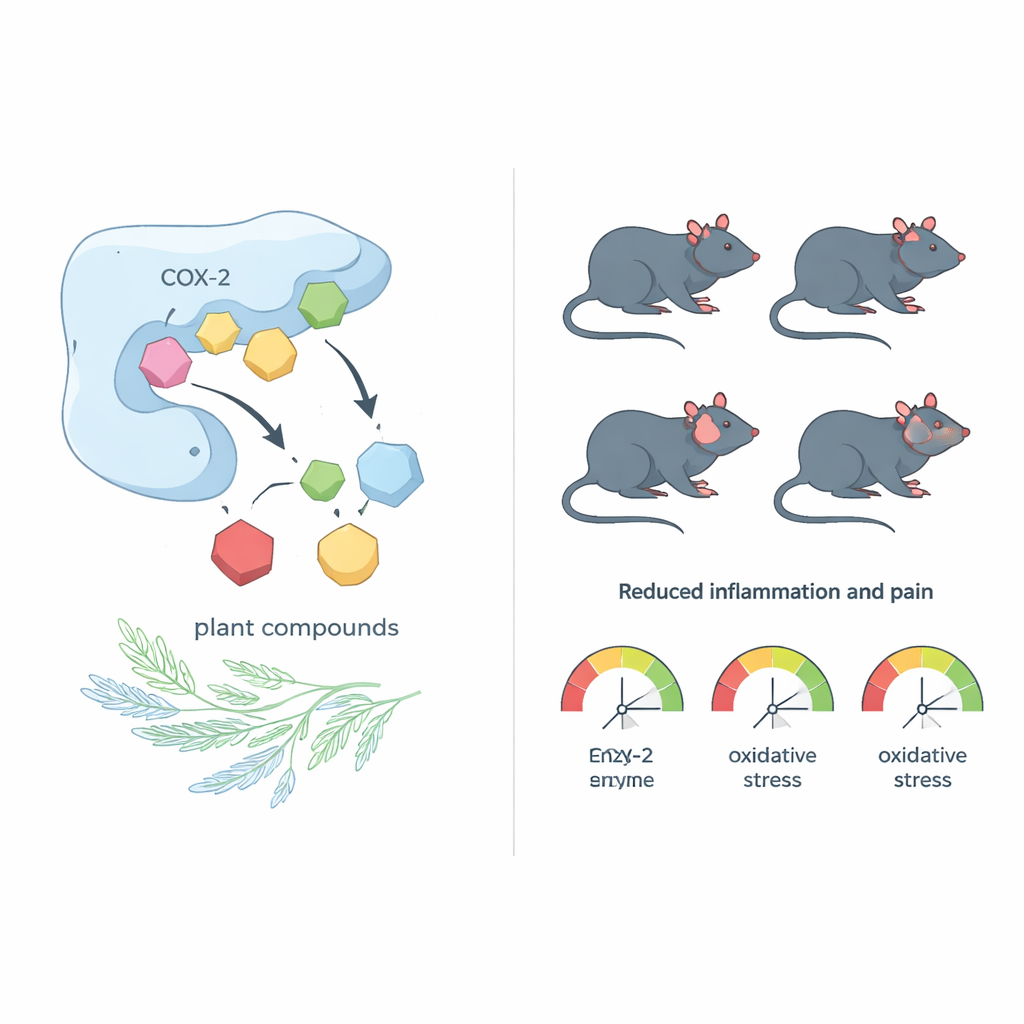
To see whether these promising effects held up in living organisms, the researchers tested the extracts in mice. In several standard models of inflammation—swelling of the ear and paw triggered by irritants—the water and methanol extracts both reduced redness and edema to a degree similar to that achieved by established anti-inflammatory drugs, but without signs of acute toxicity even at very high doses. In a chemical-induced pain test, the methanol extract slightly outperformed the water extract, cutting the number of pain-related “writhes” almost as much as a strong aspirin dose. Computer-based docking simulations added another layer of support: key plant compounds were predicted to bind tightly to the COX‑2 enzyme, a major target of many pain and inflammation medications.
What It All Means for Future Medicines
For the lay reader, the takeaway is that a humble wildflower appears to house a cocktail of natural chemicals that, together, can reduce inflammation, ease pain, and mop up harmful oxidants—while looking relatively safe in animal tests. This does not mean people should self-medicate with homemade extracts, which can vary widely in strength and purity. But it does suggest that carefully developed products based on Scabiosa atropurpurea, or purified versions of its most active compounds, could one day offer gentler alternatives or companions to standard painkillers and anti-inflammatory drugs.
Citation: Zeggar, H.S., Karbab, A., Elhawary, E.A. et al. Comparative UPLC/MSn study and multimodal assessment of the anti-inflammatory, analgesic, and antioxidant properties of methanol and aqueous extracts of Scabiosa atropurpurea L.. Sci Rep 16, 7724 (2026). https://doi.org/10.1038/s41598-025-29765-x
Keywords: medicinal plants, natural anti-inflammatory, herbal pain relief, antioxidant extracts, Scabiosa atropurpurea