Clear Sky Science · en
Functional genomics integration of glycolysis-related gene networks reveals prognostic biomarkers and immune microenvironment regulation in breast cancer
Why sugar-burning tumors matter for patients
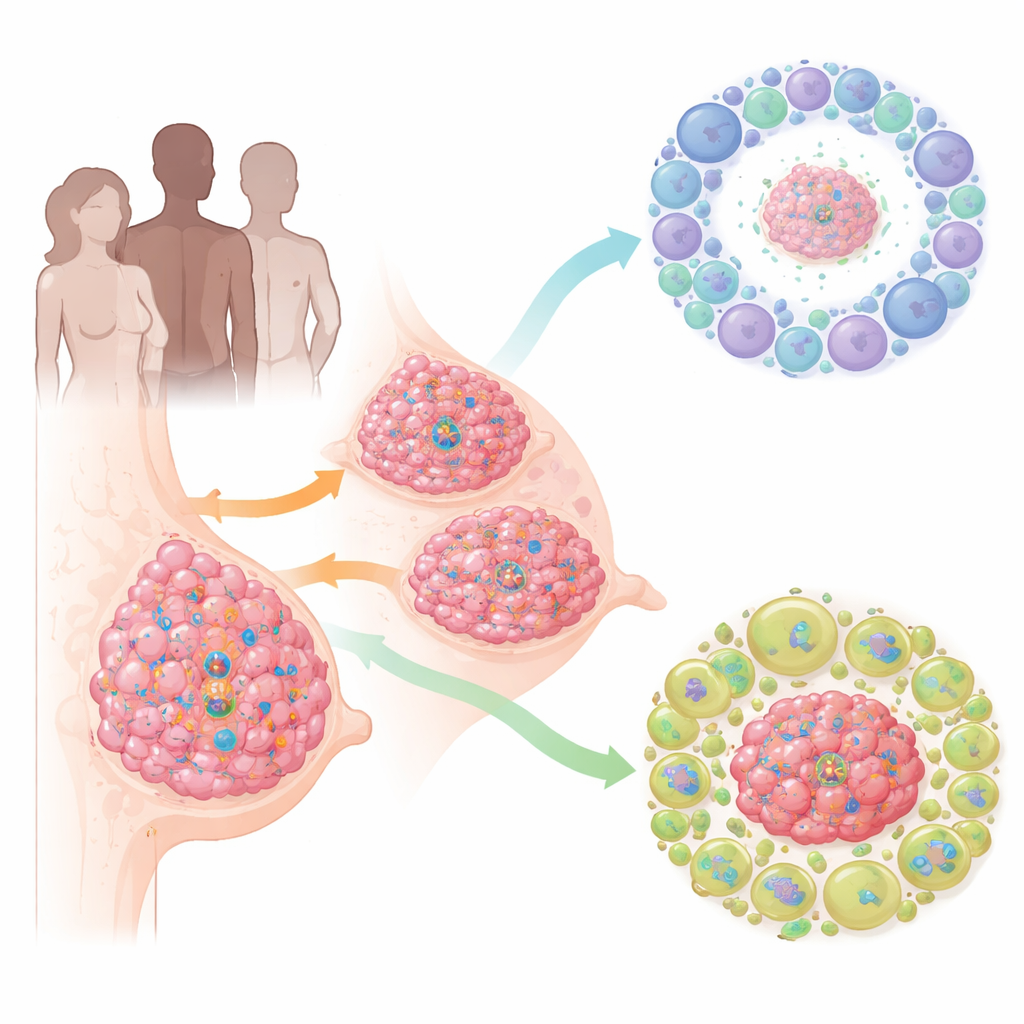
Breast cancer cells often burn sugar in an unusual way, even when oxygen is plentiful. This altered energy use, known as glycolysis, does more than just fuel tumor growth – it can reshape the immune cells that surround the cancer and influence how patients fare. This study combines large genetic databases, single-cell measurements, and computer modeling to show how sugar-hungry tumors in the breast are linked to distinct immune landscapes, differences in patient survival, and potential new drug options.
Looking inside tumors through many data lenses
The researchers began by collecting several types of data from thousands of women with breast cancer. They used bulk tumor profiles from large consortia (TCGA and METABRIC), fine-grained single-cell RNA sequencing from patient samples, and genetic studies that connect DNA variants to changes in gene activity. From these sources they assembled a list of more than four thousand genes involved in glycolysis, then narrowed it down to a few hundred that were both altered in tumors and tightly linked to breast cancer biology. Using machine learning, they built a 16-gene “glycolysis score” that could be calculated for each tumor.
Risk groups divided by tumor sugar use
When patients were split into high- and low-score groups, clear differences in outcome emerged. Tumors with high glycolysis scores were more likely to carry many mutations, show signs of rapid cell division, and be linked to poorer overall survival. This pattern was especially strong in hormone-sensitive (Luminal A and B) and triple-negative breast cancers, where high scores marked patients with notably shorter survival times. By combining the glycolysis score with basic clinical information such as age and stage, the team created an easy-to-read chart, called a nomogram, that estimated a patient’s chances of surviving one, three, or five years more accurately than traditional measures alone.
Immune neighborhoods shaped by tumor metabolism
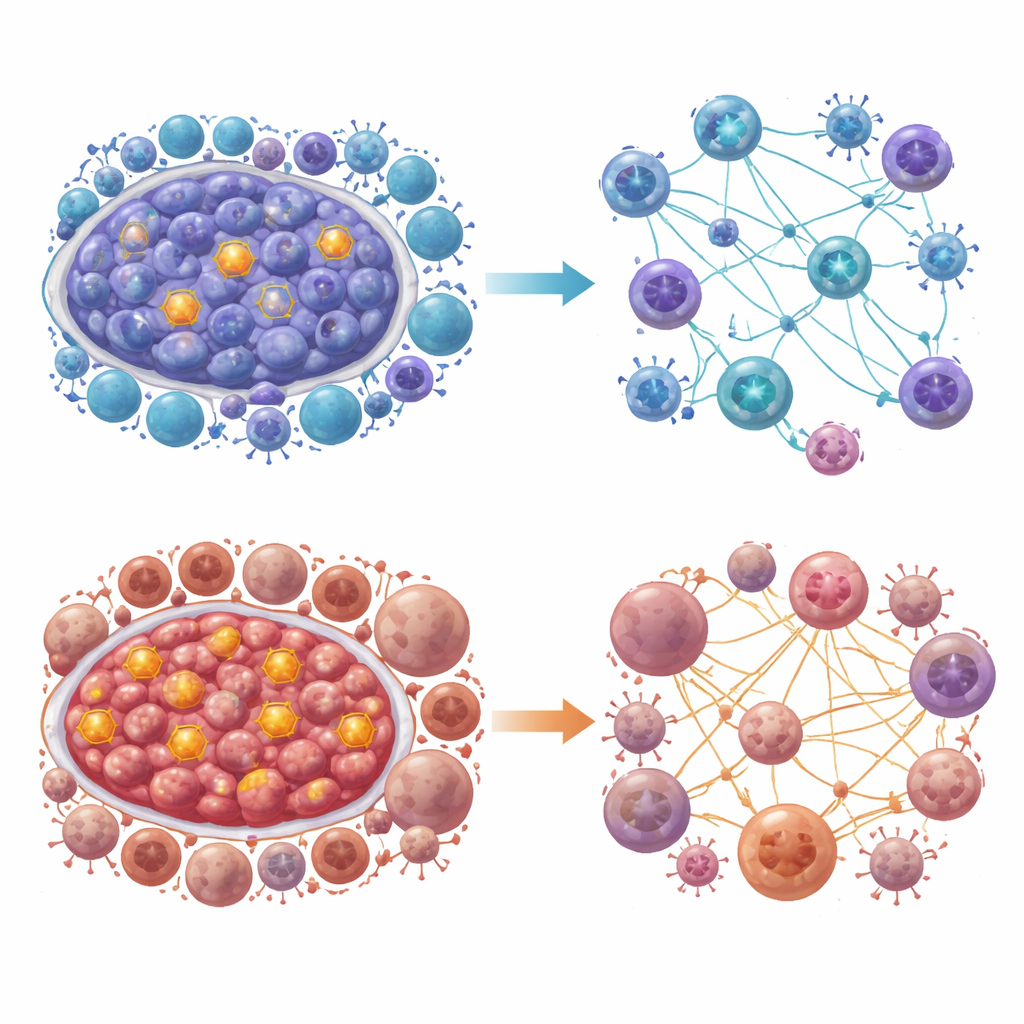
The study then asked how this metabolic signature relates to the immune “neighborhood” around tumors. Using algorithms that infer which immune cells are present in bulk samples, high-score tumors were found to be rich in so‑called M2 macrophages and other cells associated with suppression and chronic inflammation, while having fewer cancer-fighting CD8 T cells and antigen-presenting dendritic cells. In contrast, low-score tumors tended to sit in a more “hot” immune environment, with more active killer T cells and helpful B cells. Single-cell sequencing confirmed that, inside tumor tissue, certain immune cells – especially myeloid cells and T cells – themselves showed higher glycolysis activity, suggesting that the tumor’s metabolic state and immune cells’ behavior are tightly intertwined.
Cell-to-cell signals and key protective or risky genes
Zooming in further, the team mapped how different cell types talk to each other using signaling molecules. Myeloid cells with high glycolysis relied heavily on pathways such as MHC-II, MIF, and SPP1 to communicate, while T cells favored MHC-I, CCL, and CXCL signals. These patterns differed between high- and low-glycolysis states and between breast cancer subtypes, hinting at why some tumors are more resistant to immune attack. To probe cause and effect, the researchers used a genetic approach called Mendelian randomization. They found that higher genetically driven activity of two genes, NT5E and NRG1, was associated with a slightly lower risk of breast cancer, whereas higher S100B activity was linked to greater risk. Laboratory tests confirmed that these genes were altered in breast cancer cell lines, and computer docking suggested that existing drugs such as trametinib and AZD8055 could bind strongly to proteins related to this glycolytic network.
What this means for future treatment
Taken together, the study paints a picture in which tumors that rely heavily on sugar-burning not only grow faster but also build a more hostile immune setting that shields them from attack. By capturing this behavior in a 16-gene score, doctors may eventually be able to better sort patients into risk groups and tailor therapy choices. The identification of specific protective and risky genes, along with drug candidates that target their pathways, points toward future strategies that combine metabolism-targeting treatments with immunotherapy. If validated in clinical trials, this metabolism–immune roadmap could help convert more breast tumors from immune “cold” to “hot,” improving outcomes for women worldwide.
Citation: Niu, Y., Jiang, Y., Wang, Z. et al. Functional genomics integration of glycolysis-related gene networks reveals prognostic biomarkers and immune microenvironment regulation in breast cancer. Sci Rep 16, 9583 (2026). https://doi.org/10.1038/s41598-025-29391-7
Keywords: breast cancer, tumor metabolism, glycolysis genes, immune microenvironment, precision oncology