Clear Sky Science · en
Household food waste from a settlement perspective in Cape Town South Africa
Why wasted food matters to everyday life
Across the world, huge amounts of perfectly edible food end up in the bin, even as many families struggle to put a meal on the table. This article zooms in on one community on the edge of Cape Town, South Africa, to show what food waste looks like in daily life when money, space, and basic services are all in short supply. By listening to residents and counting what gets thrown away, the study reveals how food waste is tied to poverty, unreliable infrastructure, and local values like Ubuntu, which stress caring for others. The story from this settlement helps explain why cutting food waste is not just about telling people to “be more careful,” but about fixing the conditions they live in.
Life in a crowded settlement
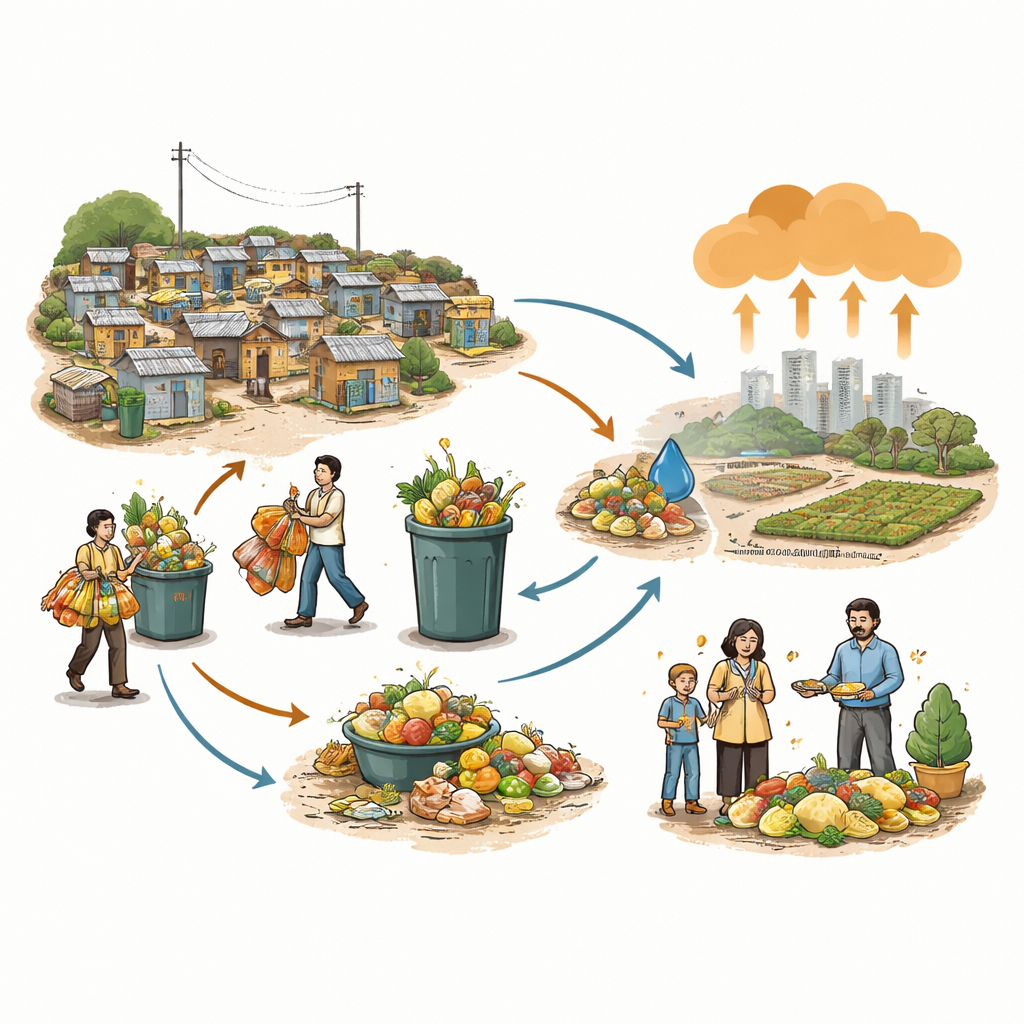
The research focuses on Wallacedene, a densely packed, largely informal settlement on Cape Town’s outskirts. Many households live in small, crowded structures with limited access to reliable electricity, cooling, and formal waste collection. Jobs are often insecure, and incomes come in fits and starts. These pressures shape how people buy, store, and cook food. The authors used a mixed approach: 85 households completed detailed questionnaires and a smaller group took part in an in-depth discussion. This combination allowed the researchers to capture both numbers and personal stories about what happens to food from the moment it is bought to the moment it is eaten—or discarded.
How much food ends up in the bin
The results show that food waste is a daily reality. About 85% of the surveyed households said they throw away edible food. The items most often wasted were everyday staples: vegetables, bread, fruit, rice, mealie meal used for pap, and meat. While the actual amounts per household might fit into a bowl or plate, these small portions are wasted repeatedly. Over time, they add up to a serious loss of money for families already living on the edge. From a broader view, this also means wasted water, land, and energy used to produce and transport the food—resources South Africa can ill afford to lose, especially given its water scarcity and high levels of hunger.
Why good intentions are not enough
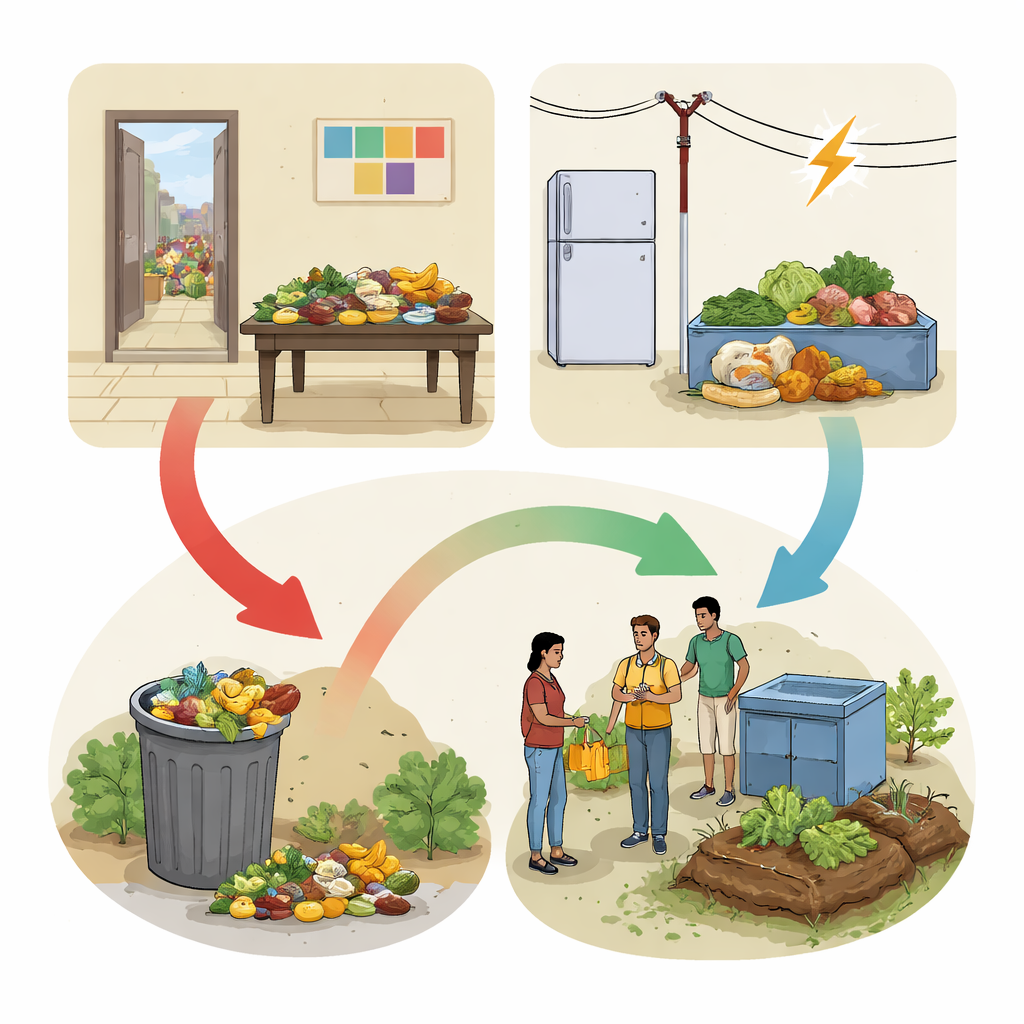
Residents do not simply shrug at wasted food. Many described strong emotions—sadness, anger, guilt, embarrassment, and even a desire to cry—when they saw food being thrown away. Yet their intentions to waste less often clash with the realities of settlement life. Irregular incomes can lead to bulk buying when money is briefly available, even if storage space is lacking. Limited or shared refrigerators and frequent power cuts mean food spoils quickly. Busy households may not plan meals tightly or reuse leftovers, especially when cooking for large families or visitors. These barriers create a gap between what people feel is right and what they are actually able to do, showing that moral appeals alone cannot solve the problem.
What happens to discarded food
Most of the households that waste food toss it into municipal bins when these are available. Others rely on open dumping, flushing food into sewers, or basic composting. Only a small fraction regularly pass extra food to neighbors in need or use it as animal feed. In a settlement where waste services are already stretched, rotting food can block drains, attract pests, and add to unsanitary living conditions. At the same time, the idea of Ubuntu—“I am because we are”—still resonates strongly. Some participants linked food waste to a loss of community spirit, remembering traditions where surplus food was shared rather than thrown away. This tension between current practice and deeply held values offers a powerful starting point for change.
Paths toward less waste and stronger communities
The authors conclude that reducing household food waste in places like Wallacedene calls for more than simple advice about shopping lists and leftovers. They argue for a mix of practical steps: better waste and storage infrastructure in informal areas, community education on planning meals and preserving food without reliable fridges, school programs that teach children about food and the environment, and stronger links between shops, charities, and local groups to redirect surplus food. Rooting these efforts in the spirit of Ubuntu—encouraging food sharing, mutual responsibility, and respect for scarce resources—could make them more meaningful and effective. In everyday terms, the study shows that when communities are supported with the right tools and systems, wasting less food can help stretch tight budgets, clean up shared spaces, and ensure that more plates are filled instead of bins.
Citation: Madondo, S.E., Sinden, E. & Schenck, C. Household food waste from a settlement perspective in Cape Town South Africa. Sci Rep 16, 9577 (2026). https://doi.org/10.1038/s41598-025-26239-y
Keywords: food waste, food security, informal settlements, Cape Town, Ubuntu