Clear Sky Science · en
Spectroscopy based analysis of rice residue driven by microbial decomposition and nitrogen management under zero till wheat in Northern India
Turning Crop Waste into a Resource
Every autumn in northern India, farmers face a tough choice: how to quickly clear immense amounts of leftover rice straw so they can plant wheat on time. The fastest answer has often been to burn the straw in the field, filling the air with smoke and harming soil health. This study explores a cleaner alternative. By using helpful microbes and smarter fertilizer use, the researchers show how farmers can break down rice straw right in the field, grow good wheat crops, and at the same time cut pollution and improve their soil.
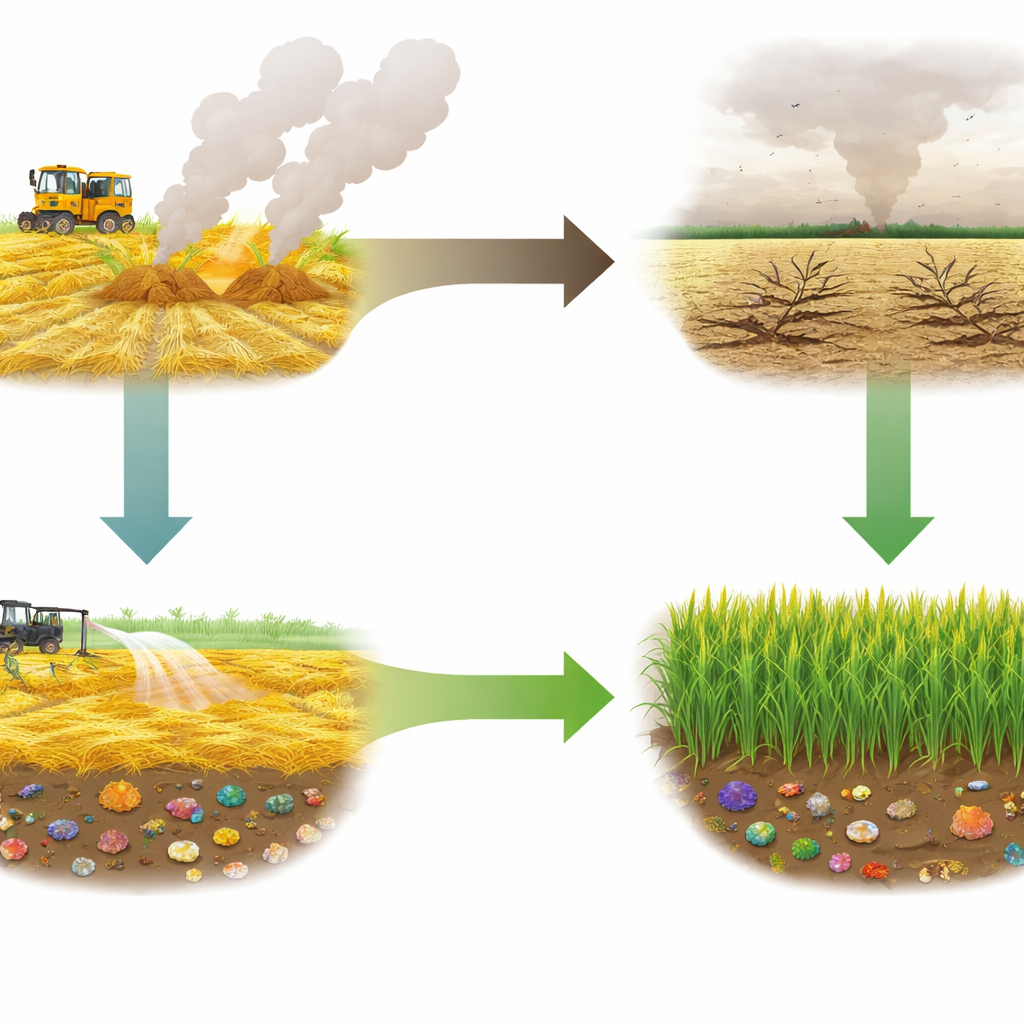
The Problem with Burning Fields
The rice–wheat rotation across the Indo-Gangetic Plains feeds millions of people but leaves behind huge piles of rice straw after harvest. Because there are only two to three weeks between rice harvest and wheat sowing, many farmers burn the residues in place to save time. This practice releases large amounts of smoke and greenhouse gases, removes valuable nutrients from the soil, and kills many of the tiny organisms that help keep soil fertile. Over time, repeated burning can degrade the land and worsen air quality for entire regions.
A New Way to Handle Leftover Straw
The research team tested a more sustainable approach on farms in Punjab, India. Instead of burning, they left the chopped rice straw on the field and sowed wheat directly into it using a machine called the Happy Seeder, which can drill seed through surface residues without plowing. They then combined different levels and forms of nitrogen fertilizer—including part from farmyard manure—with sprays of selected microbes. These microbes, mainly a bacterium called Delftia and a fungus called Aspergillus, are known to help break down tough plant material like straw. The goal was to see which mixture of microbes and nitrogen management would speed up straw decay, build up soil life, and still give farmers strong wheat yields.
How Microbes Help the Soil Work Harder
By regularly sampling the soil through the wheat growing season, the scientists measured how many bacteria, fungi, and cellulose-eating microbes were present. They found that treatments combining higher nitrogen (150 kilograms per hectare) with either manure or urea and microbial sprays led to much larger populations of these helpful organisms, especially around 60 days after sowing. Advanced imaging tools backed this up: under a scanning electron microscope, straw pieces treated with Delftia and the microbe mixture showed cracks, collapsed surfaces, and eroded silica cells—visible signs that the microbes were actively digesting the straw. Infrared spectroscopy further revealed chemical changes in the straw’s building blocks, indicating that cellulose, hemicellulose, and lignin were being broken down into simpler compounds that could feed soil life and crops.
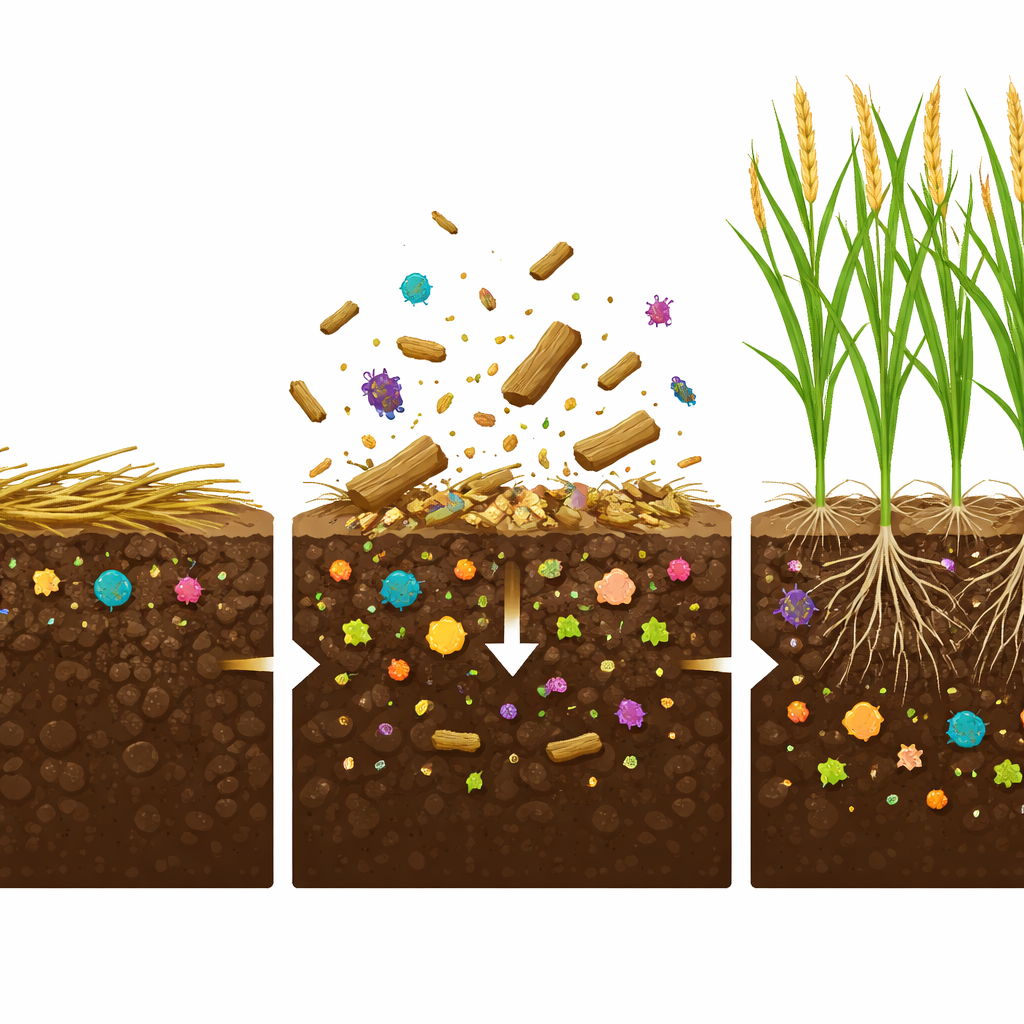
From Healthier Soil to Bigger Harvests
The boost in microbial activity translated into better crop performance. Wheat grown with 150 kilograms of nitrogen per hectare plus a light urea spray on the residues produced up to about 9–17 percent higher grain yields than the standard fertilizer recommendation, depending on the site. Using a blend of manure and urea at the same nitrogen level, combined with the microbe mixture, gave the highest counts of beneficial soil microbes and strong yields as well. Statistical analyses showed that bacterial, fungal, and straw-degrading communities tended to rise and fall together, suggesting a tightly linked living network that responds to how residues and nutrients are managed.
What This Means for Farmers and the Environment
In simple terms, the study shows that farmers do not have to choose between clearing their fields quickly and protecting the environment. Leaving rice straw on the soil, adding a well-planned dose of nitrogen (especially with some manure), and spraying with helpful microbes can speed up natural breakdown of residues, enrich soil life, and raise wheat yields. Instead of turning straw into smoke, this approach turns it into food for the soil and the next crop. If widely adopted, it could reduce stubble burning, improve air quality, and support more sustainable grain production across one of the world’s most important farming regions.
Citation: Khedwal, R.S., Singh, J., Kalia, A. et al. Spectroscopy based analysis of rice residue driven by microbial decomposition and nitrogen management under zero till wheat in Northern India. Sci Rep 16, 8279 (2026). https://doi.org/10.1038/s41598-025-25793-9
Keywords: rice straw management, microbial decomposition, zero till wheat, nitrogen fertilization, sustainable agriculture