Clear Sky Science · en
Analysis of the correlation between combined multiple cytokine detection and colorectal cancer
Why tiny blood signals matter for colon health
Colorectal cancer is one of the world’s most common and deadly cancers, yet current screening tools either miss early disease or require uncomfortable procedures like colonoscopy. This study explores a different idea: can a simple blood test that measures many immune messengers at once reveal who is more likely to have colorectal cancer? By looking at a panel of 14 such messengers, called cytokines, the researchers asked whether specific patterns in the blood might flag tumor presence and point toward new, less invasive ways to detect the disease earlier. 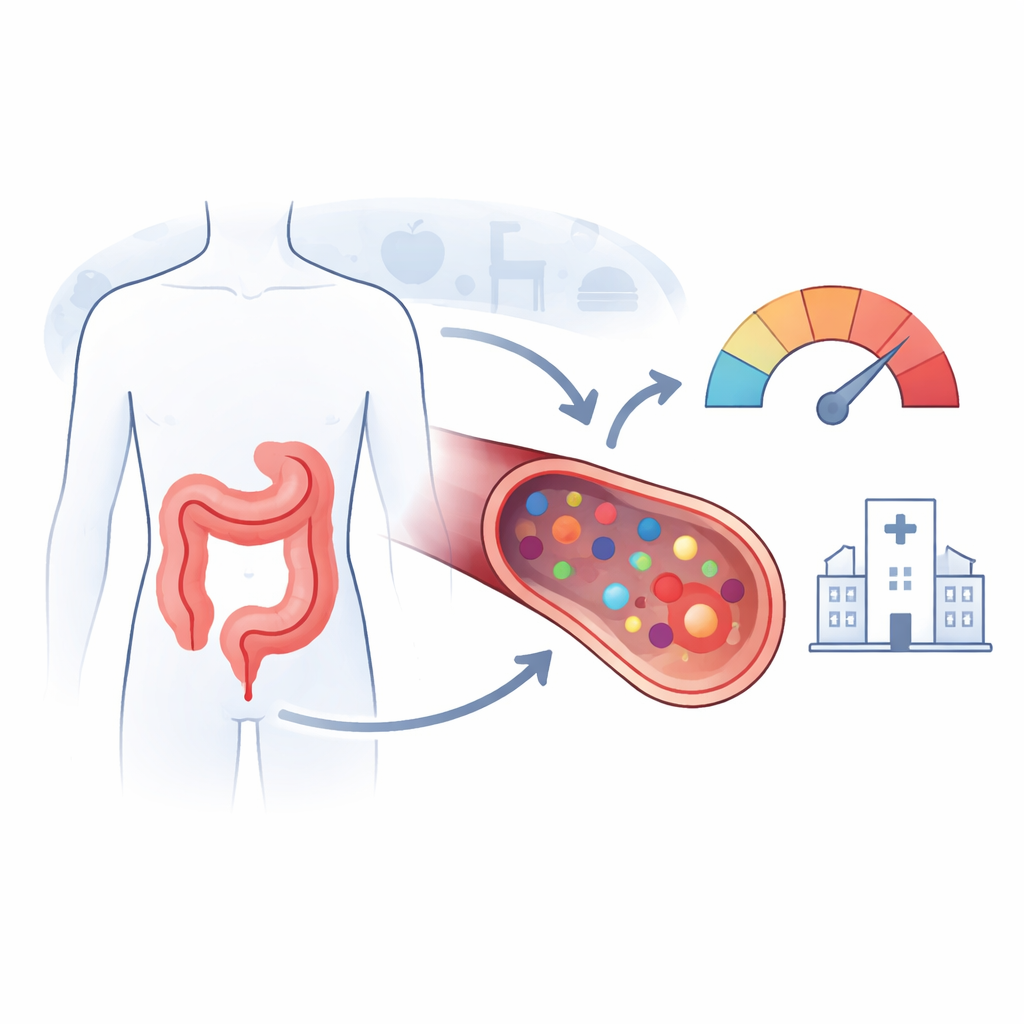
Checking the blood of patients and healthy people
The team collected blood from 56 people newly diagnosed with colorectal cancer and 25 cancer‑free volunteers of similar age and sex. None of the patients had received treatments such as chemotherapy or radiotherapy, which could alter immune signals, and the healthy group had no known serious illnesses. Using a high‑throughput technique, the scientists measured levels of 14 cytokines in each person’s serum in a single run, giving a broad snapshot of the immune environment instead of focusing on just one marker at a time.
Which immune messengers stand out
Several cytokines clearly differed between patients and healthy individuals. Two signals, IL‑2RA and IL‑6, were markedly higher in people with colorectal cancer, while IFN‑γ, IL‑8, and IL‑5 also tended to be elevated. When the researchers built statistical models that accounted for age and sex, IL‑6 and IFN‑γ in particular showed strong ties to cancer risk: for each stepwise rise in these markers (after a standard mathematical transformation), the odds of having colorectal cancer increased several‑fold. Additional curve‑based analyses suggested that rising IL‑6 and IL‑10 tracked with higher cancer risk across their ranges, reinforcing the idea that these immune messengers are closely linked to tumor presence. 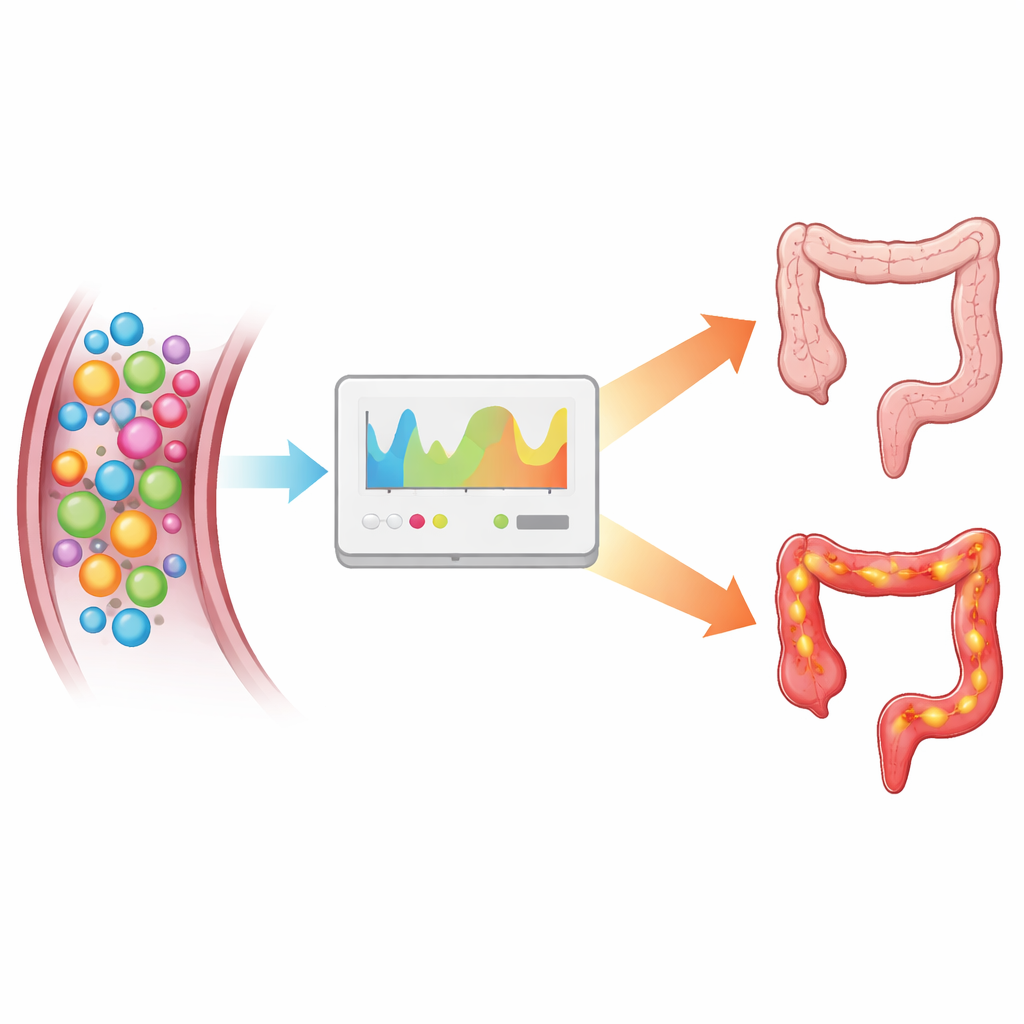
Looking at the whole immune mix, not just one marker
Cancers do not act on a single signal, and neither does the immune system, so the team also treated all 14 cytokines as a mixture rather than isolated players. Using an advanced method called Bayesian Kernel Machine Regression, they estimated how shifting the entire cytokine profile from average levels to higher levels affected disease risk. When all 14 messengers were moved from the middle of their typical range to the upper range, the estimated risk of colorectal cancer rose notably. Within this mixture, IL‑6, IL‑5, IFN‑γ, IL‑2RA, IL‑8, and IL‑10 contributed the most to pushing risk upward, while some others appeared to have weaker or even opposite trends.
What this could mean for future tests and treatments
The findings support a picture of colorectal cancer as a disease deeply entangled with chronic inflammation and imbalanced immune signaling. Rather than relying on a single blood marker, a combined “immune fingerprint” built from several cytokines may better distinguish patients from healthy people and could eventually complement or guide traditional screening methods. The study is still small, and larger, long‑term studies will be needed to see how these markers change over time and around treatment, but it offers early evidence that a multi‑cytokine blood test could become a useful, minimally invasive tool for earlier diagnosis and better risk assessment.
A simple takeaway for patients and families
For non‑specialists, the key message is that colorectal cancer leaves clues not only in the intestine but also in the blood. Certain immune messengers—especially IL‑6, IFN‑γ, IL‑2RA, IL‑5, IL‑8, and IL‑10—tend to be higher when cancer is present, and when many of them rise together, the overall risk appears to increase. While this work does not replace colonoscopy or other standard tests, it points toward future blood‑based checks that might help catch problems earlier, personalize follow‑up, and ultimately improve outcomes for people at risk of colorectal cancer.
Citation: Hui, Y., Chu, M., Wang, H. et al. Analysis of the correlation between combined multiple cytokine detection and colorectal cancer. Sci Rep 16, 10808 (2026). https://doi.org/10.1038/s41598-025-25415-4
Keywords: colorectal cancer, cytokines, blood biomarkers, early detection, cancer immunology