Clear Sky Science · en
Assessment of climatic parameter variation and its impact on sustainable agriculture in Dir Upper Pakistan with mitigation and adaptation strategies
Why Mountain Farming in Pakistan Matters to Us All
High in the mountains of northern Pakistan, small farming communities are facing rapid shifts in weather that threaten their harvests and water supplies. This study looks closely at Upper Dir, a remote district whose changing climate offers a preview of the pressures many other mountain regions may soon face. By tracing how temperature, rain, air moisture, wind, and soil dryness have evolved over two decades—and how they are likely to change through the end of this century—the researchers show how climate change can unsettle food production, water security, and rural livelihoods, while also testing practical ways to adapt.
Tracking the Changing Mountain Weather
The team combined detailed weather records from 2002 to 2023 with global climate datasets to build a picture of how Upper Dir’s climate is shifting. They examined temperature, rainfall, humidity, wind speed, and an index of how dry the landscape is, then used several statistical tools to detect long-term trends and the frequency of extremes. To peer into the future, they applied a high-emission scenario known as RCP 8.5, which assumes that greenhouse gas emissions continue to rise strongly throughout the century. They also used mapping tools to connect climate patterns with land use, showing how forests, fields, and settlements have changed as conditions warm.
What the Numbers Say About Heat, Rain, and Drying
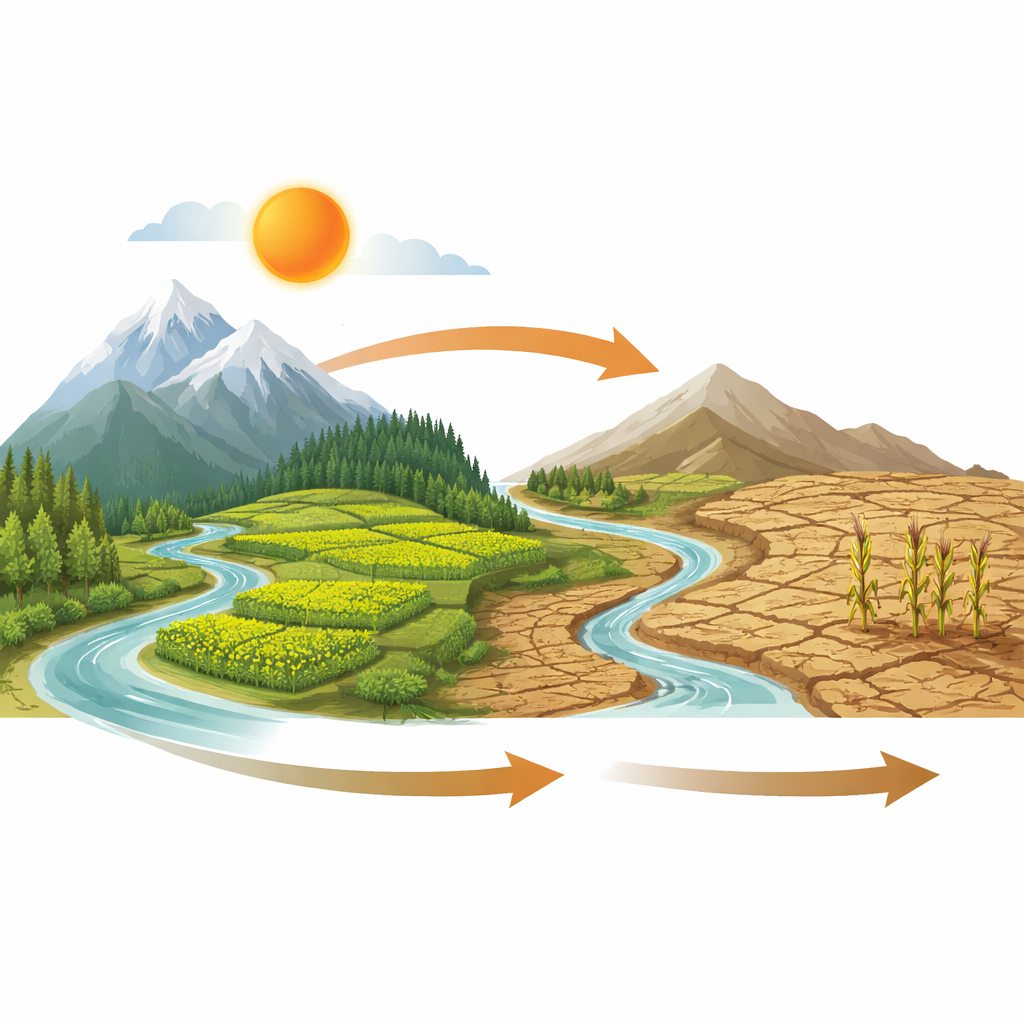
The results point to a clear warming signal: the annual mean temperature in Upper Dir has risen by about 2 °C since 1980. At the same time, total rainfall has slipped by roughly 2%, and soil moisture has dropped by about 6%, all signs of a landscape becoming drier overall. Humidity in the air has actually increased—especially during the monsoon months—which can encourage plant diseases and make heat waves feel even more oppressive. Wind speeds, by contrast, show no strong long-term trend, although occasional gusty years produce damaging storms. Together, these changes mean farmers are dealing with hotter growing seasons, less reliable rain, and soils that hold less water.
A Glimpse of the Rest of the Century
Looking ahead, the projections are stark. Between 2011 and 2040, Upper Dir is expected to warm by about 1.5 to 3.5 °C, with a typical rise near 2.5 °C. From 2041 to 2070, that increases to 4 to 7 °C, and by 2071 to 2100, the median warming could reach 8.5 °C, with the hottest model estimates climbing as high as 12 °C above late‑20th‑century levels. As temperatures rise, evaporation and plant water loss intensify, drying out soils and shortening the time crops have to grow and fill grain. Models also show that late winter and early spring are likely to become much drier, while some later seasons may see heavier and more erratic downpours. That mix—prolonged dry spells punctuated by cloudbursts—raises the risk of both drought and flash floods, straining already fragile mountain farming systems.
Farms, Forests, and Water Under Pressure
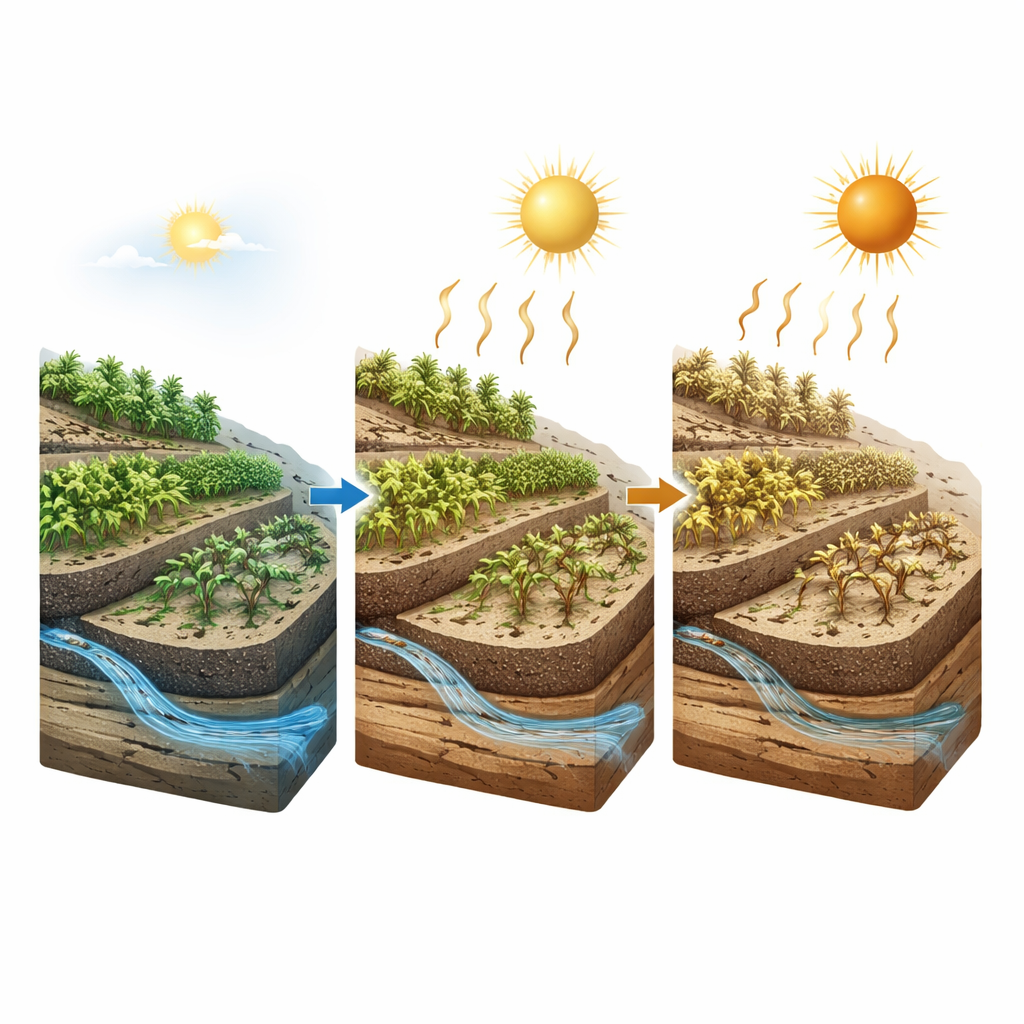
For farmers in Upper Dir, these trends are not abstract graphs but daily realities. Wheat and maize, key staples in the area, are highly sensitive to swings in temperature and moisture. Late cold spells can delay wheat development, while sudden spring heat can cause the crop to ripen too quickly, cutting yields. Drier soils and reduced river flows make irrigation harder just as plants demand more water. Forests around the farms are also at risk: hotter, drier conditions contribute to more frequent fires, while intense rains can trigger landslides that strip away fertile topsoil. The study finds that land cover is changing as people clear forests, expand fields, and build new settlements, further weakening nature’s ability to buffer floods, store water, and regulate local climate.
Testing Solutions on the Ground
Rather than stopping at diagnosis, the researchers also worked directly with local communities to try ways of coping. They introduced climate‑resilient fruit species such as tamarillo, olive, avocado, and dragon fruit, distributing more than 30,000 saplings to diversify farm incomes and make better use of warmer conditions. They promoted tunnel farming to shield vegetables from frost and heat, agroforestry systems that mix trees with crops to protect soil and store carbon, and the construction of small dams and efficient irrigation channels to capture and carefully use scarce water. Alongside these on‑farm steps, the study calls for broader “climate‑smart” policies, including afforestation, better land‑use planning, and integrated water management that takes the whole mountain watershed into account.
What It All Means for Mountain Communities
The picture that emerges is of a region already feeling the weight of climate change and headed toward much tougher conditions if emissions remain high. Warmer air, shifting rains, and drying soils are likely to disrupt crop cycles, reduce yields, and squeeze water supplies, threatening both food security and local economies in Upper Dir and similar mountain districts. Yet the study also shows that practical, locally tailored measures—from new crop choices to smarter water storage—can help communities adapt. For readers far from Pakistan’s peaks, Upper Dir offers a clear message: what happens to climate in remote mountain farms echoes through river systems, food markets, and migration patterns well beyond their valleys, making their resilience a matter of global concern.
Citation: Khan, R., Alwabel, A.S.A., Ahmad, A. et al. Assessment of climatic parameter variation and its impact on sustainable agriculture in Dir Upper Pakistan with mitigation and adaptation strategies. Sci Rep 16, 9576 (2026). https://doi.org/10.1038/s41598-025-24940-6
Keywords: climate change, mountain agriculture, Pakistan, water resources, adaptation strategies