Clear Sky Science · en
Drying kinetics, power consumption, economic and environmental analysis of pomegranate peels drying using a hybrid solar dryer compared with oven dryer
Turning Fruit Waste into Useful Treasure
Pomegranate juice is popular around the world, but nearly half of each fruit—mainly the peel—usually ends up as waste. That peel is actually rich in natural chemicals that can be used in food, medicine, and cosmetics. The challenge is how to dry it safely and cheaply without wasting electricity or harming the environment. This study looks at a smart way to do that using the sun, comparing a new hybrid solar dryer with a standard electric oven to see which dries pomegranate peels better, cheaper, and with a smaller carbon footprint.
A Smarter Way to Use Sunshine
The heart of the work is a hybrid indirect solar dryer, a cabinet-sized device that uses sunlight as its main heat source but also includes a small electric heater and fans for backup and control. Sunlight warms air inside a flat metal collector; fans push this hot air into an insulated drying chamber, where pomegranate peels rest in thin layers on rotating trays for even exposure. A control unit keeps the air temperature and humidity at set values, so the process remains steady even when outdoor conditions change. The researchers tested three drying temperatures—50, 60, and 70 °C—and three peel layer thicknesses—1, 2, and 3 cm—then compared the results with a conventional electric oven run under the same temperature and thickness conditions. 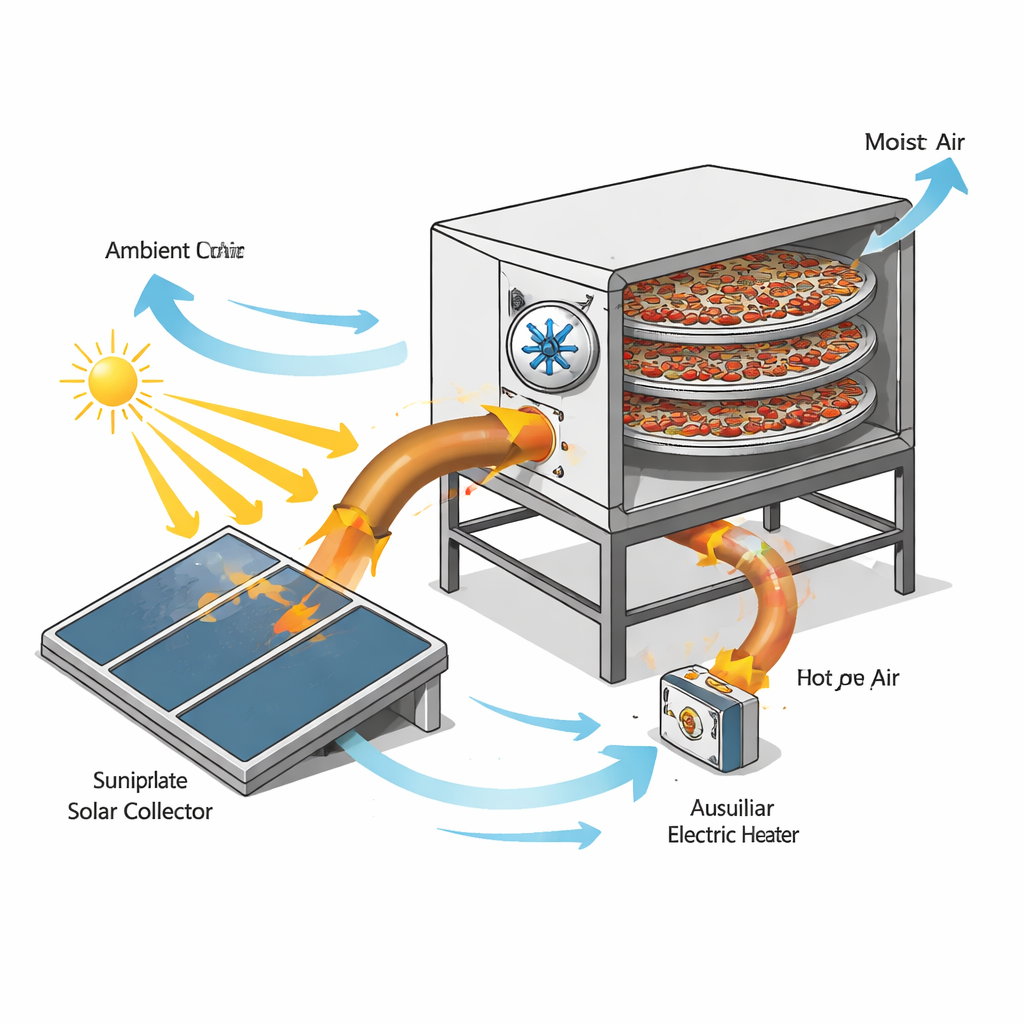
How Fast the Peels Lose Water
Fresh pomegranate peels start out with very high moisture, about three-quarters of their weight as water. Both the solar dryer and the oven were able to bring this down to a very dry final state of around 2–3% water, which is dry enough for safe storage and later processing. As expected, higher drying temperatures made the peels lose water faster, and thicker layers generally showed higher momentary drying rates because they contained more water to remove. In both systems, the drying rate peaked early—when free water escapes easily—and then dropped as the peels became drier and water had to move from deeper inside the tissue. At 70 °C and 3 cm thickness, the hybrid solar dryer reached a peak drying rate of about 196 kilograms of water removed per kilogram of dry matter per hour, slightly higher than the oven at similar conditions.
Cutting Electricity Use and Carbon Emissions
Although both systems produced similarly dry peels, their energy use was very different. The conventional oven relied entirely on electricity, while the hybrid solar dryer used a mix of solar heat and a smaller amount of electrical backup. As a result, the solar-based system reduced electrical power consumption by roughly two-thirds to three-quarters compared with the oven, depending on temperature and layer thickness. For example, at the most demanding condition (50 °C and a 1 cm layer), the oven consumed about 7,769 watts per kilogram of peels, while the hybrid dryer used only about 2,116 watts per kilogram. Over its lifetime, the solar dryer’s construction required about 1,270 kilowatt-hours of “embodied” energy, but its annual operation avoided so much fossil-based electricity that the energy payback period was only about 2.4 to 6.3 years—well below the 30-year lifetime assumed. This translated into an estimated 75.5 tons of carbon dioxide emissions avoided and several hundred to over two thousand U.S. dollars in potential carbon credit value over its life. 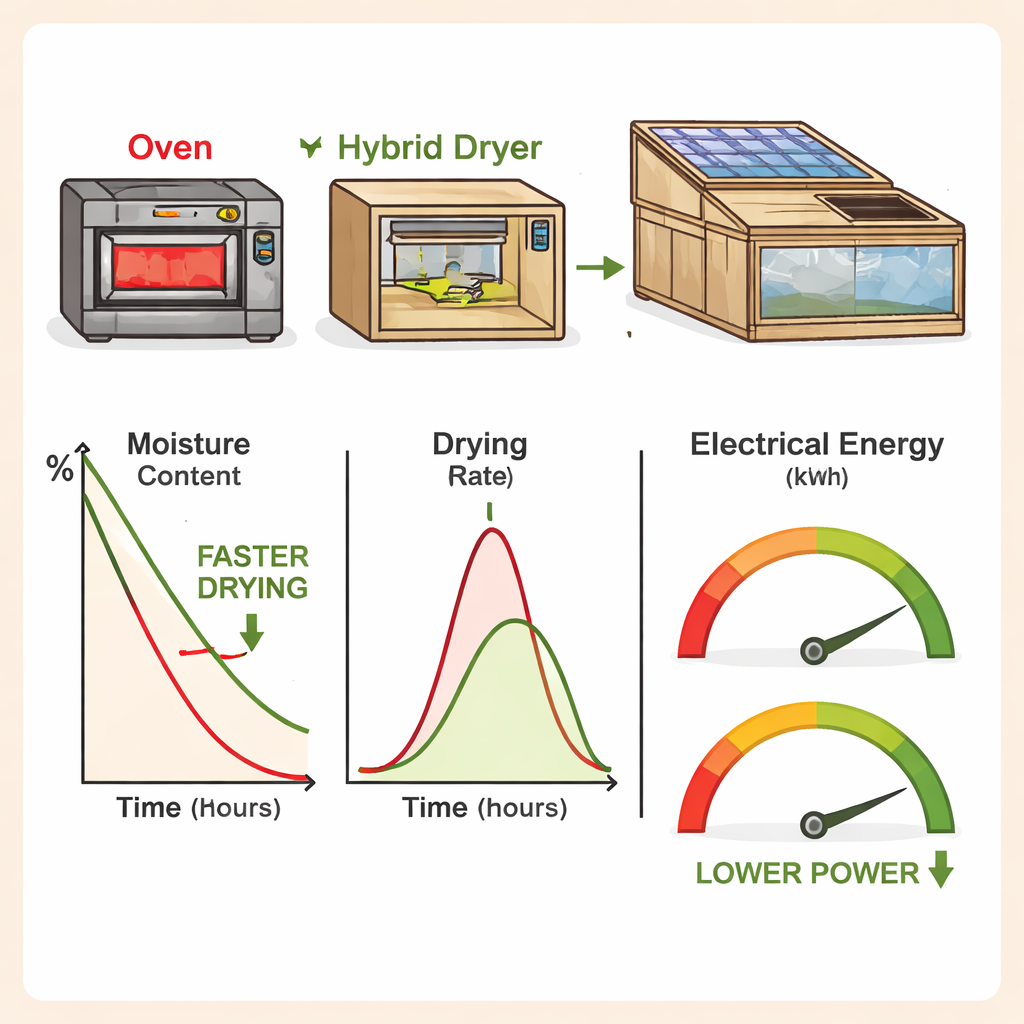
Counting the Costs for Farmers and Industry
The team also examined money, not just energy. The hybrid dryer is deliberately simple in construction, using a wooden frame, basic insulation, a standard heater, and a small fan, keeping the purchase cost around 200 U.S. dollars—much lower than many industrial dryers. When they accounted for investment, maintenance, and electricity, they found that drying pomegranate peels in the solar dryer could cost as little as about 144.5 U.S. dollars per ton, especially when running at 70 °C with a 1 cm peel layer. That setup dries quickly, which means more tons of peels can be processed per year, spreading the fixed costs over a larger output. In many cases, the hybrid dryer was cheaper to run per ton than the oven, while also using less grid electricity.
Why This Matters for Everyday Life
For a layperson, the takeaway is straightforward: instead of throwing away pomegranate peels, we can dry them efficiently using the sun and turn them into ingredients for healthier foods, supplements, and cosmetics. The study shows that a relatively low-cost hybrid solar dryer can deliver good drying performance, sharply cut electricity use, and reduce greenhouse gas emissions compared with a regular oven. With short energy payback times and lower running costs, such systems could help farmers, small processors, and rural communities add value to agricultural “waste,” improve incomes, and support climate-friendly food production at the same time.
Citation: Metwally, K.A., Khater, ES.G., Bahnasawy, A.H. et al. Drying kinetics, power consumption, economic and environmental analysis of pomegranate peels drying using a hybrid solar dryer compared with oven dryer. Sci Rep 16, 7395 (2026). https://doi.org/10.1038/s41598-025-22464-7
Keywords: solar drying, pomegranate peel, food waste valorization, renewable energy, hybrid dryer