Clear Sky Science · en
The three obstetrics delays determine uterine rupture at Nekemte specialized hospital: a hospital-based case-control study
Why this study matters for mothers and babies
Childbirth is usually a time of joy, but in many low- and middle-income countries it can still be life-threatening. One of the most dangerous complications is uterine rupture, a tear in the womb during late pregnancy or labor. Although it is relatively rare, it can be deadly for both mother and baby. This study from Nekemte Specialized Hospital in western Ethiopia looks closely at why uterine ruptures happen, focusing on where and why care is delayed along a woman’s path from home to hospital. Understanding these delays can help health systems prevent tragedy and save lives.
The path from home to hospital
The researchers used nine years of data from Nekemte Specialized Hospital, reviewing the records and interviews of 470 women who gave birth there between 2014 and 2022. Ninety-four of these women experienced a uterine rupture, while 376 did not and served as a comparison group. By looking at differences between these groups, the team examined how personal history, pregnancy care, and the timing of care influenced the risk of the womb tearing. They paid special attention to the well-known “three delays” in maternal care: delay in deciding to seek help, delay in reaching a health facility, and delay in receiving timely treatment once at the facility. 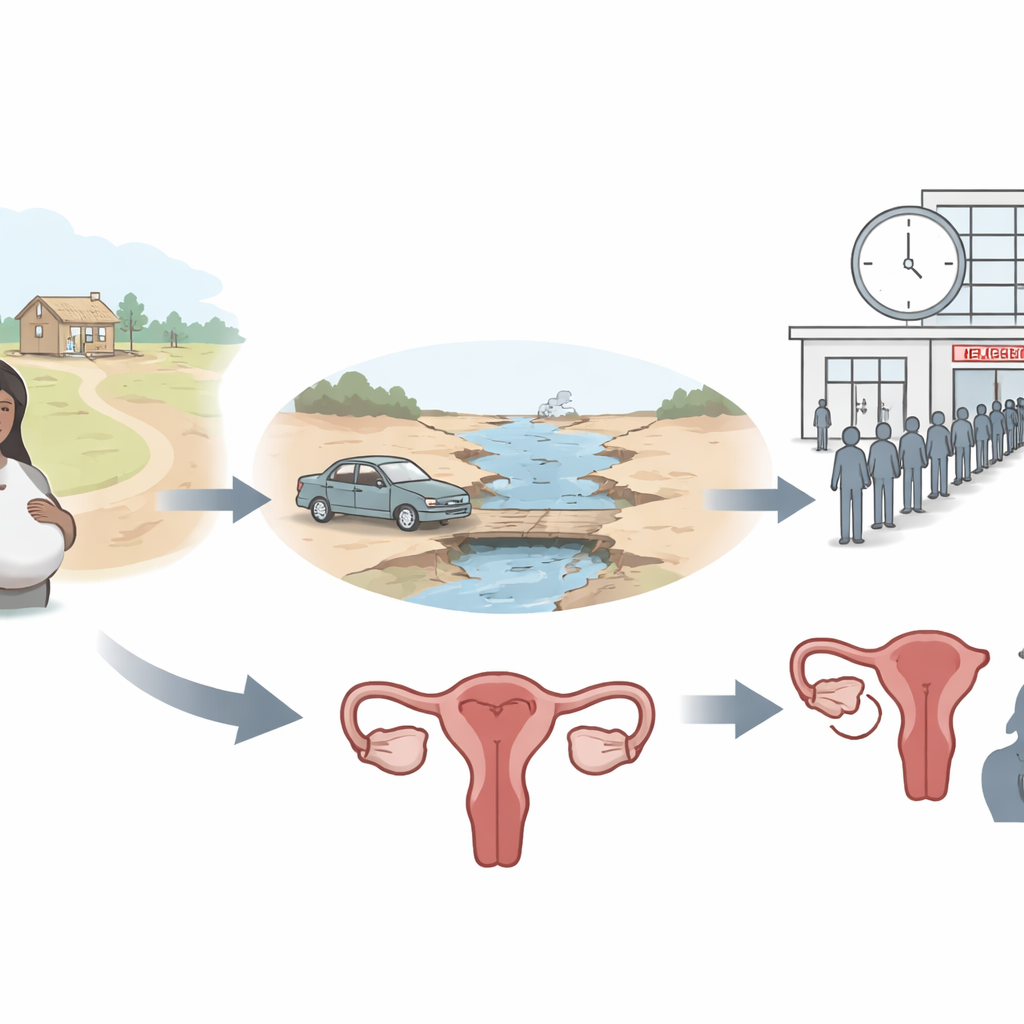
Who is most at risk
The study found that certain women faced much higher odds of uterine rupture. Women who had given birth to five or more children (grand multiparous women) were nearly three times more likely to experience a rupture than women with fewer births. A history of abortion also tripled the risk, and women who had previously delivered by cesarean section faced almost three times the odds of rupture compared with those who had never had a cesarean. Being sent to Nekemte Hospital from another health facility was another warning sign: referred women had more than double the odds of rupture, suggesting that complications often build up before they reach specialist care.
How delays and transport problems fuel danger
Beyond personal history, the timing and logistics of care played a striking role. Women who reported transportation problems—such as lack of vehicles, poor roads, or high costs—were almost six times more likely to suffer a uterine rupture. Even more alarming, women who waited more than 30 minutes after arriving at the hospital before receiving care had about 17 times higher odds of rupture than those treated quickly. These findings highlight how even relatively short waits can become critical when a woman is in obstructed or difficult labor. Interestingly, women who needed more than an hour to walk to their local health post appeared less likely to experience rupture, a counterintuitive result the authors suggest may reflect better planning for birth or stronger prenatal care among those living farther from basic facilities. 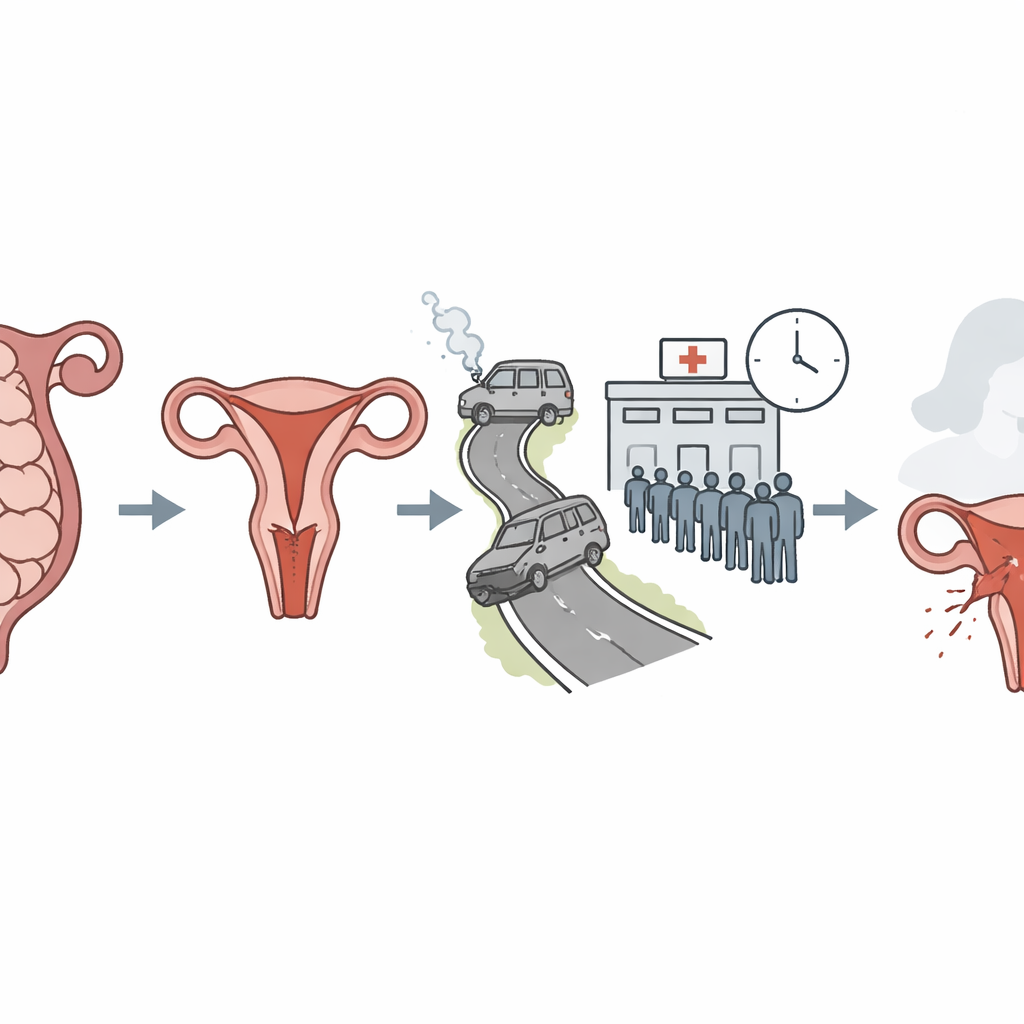
What the findings mean for health services
Taken together, the results show that uterine rupture is not only about medical risk factors inside the body; it is also about the system that surrounds pregnant women. Many of the highest-risk women—those with many previous births, a prior cesarean, or a history of abortion—were known to the health system through antenatal care, yet still encountered long waits or transport barriers when labor turned complicated. The three delays model helped the researchers pinpoint where the chain of care broke down: slow or difficult transport to higher-level care, and especially slow response after arrival at the hospital. These are areas where better organization, staffing, and referral systems could make a rapid difference.
Turning evidence into safer births
For a general reader, the message of this study is clear: timely, well-organized care can be the difference between life and death in childbirth. The authors conclude that reducing uterine rupture in settings like Nekemte requires more than operating rooms and skilled surgeons. It calls for faster response times in hospitals, more reliable and affordable transport, and stronger prenatal care for women with multiple births, prior cesareans, or abortions. By tackling all three types of delay—from the first decision to seek help to the moment treatment begins—health systems can move closer to a future where childbirth is safe, regardless of where a woman lives.
Citation: Kumara, M.G., Debelew, G.T. & Ademe, B.W. The three obstetrics delays determine uterine rupture at Nekemte specialized hospital: a hospital-based case-control study. Sci Rep 16, 9574 (2026). https://doi.org/10.1038/s41598-025-22115-x
Keywords: uterine rupture, obstetric delays, maternal health, Ethiopia, emergency childbirth care