Clear Sky Science · en
Imagery and breathing exercises improve swimming performance, mental toughness, and coherence
Why calm minds matter in the pool
Competitive swimming is often seen as a test of muscles and lungs, but anyone who has stood on a starting block knows that the real battle also takes place in the mind. This study explored whether simple, at-home mental practices—quiet breathing and vivid imagination—could help teenage swimmers not only shave time off their races, but also feel tougher and more in control under pressure. By pairing nightly breathing exercises with imagining a perfect race, the researchers asked: can training the mind and heart, as well as the body, give young athletes a healthier edge?
What the swimmers actually did
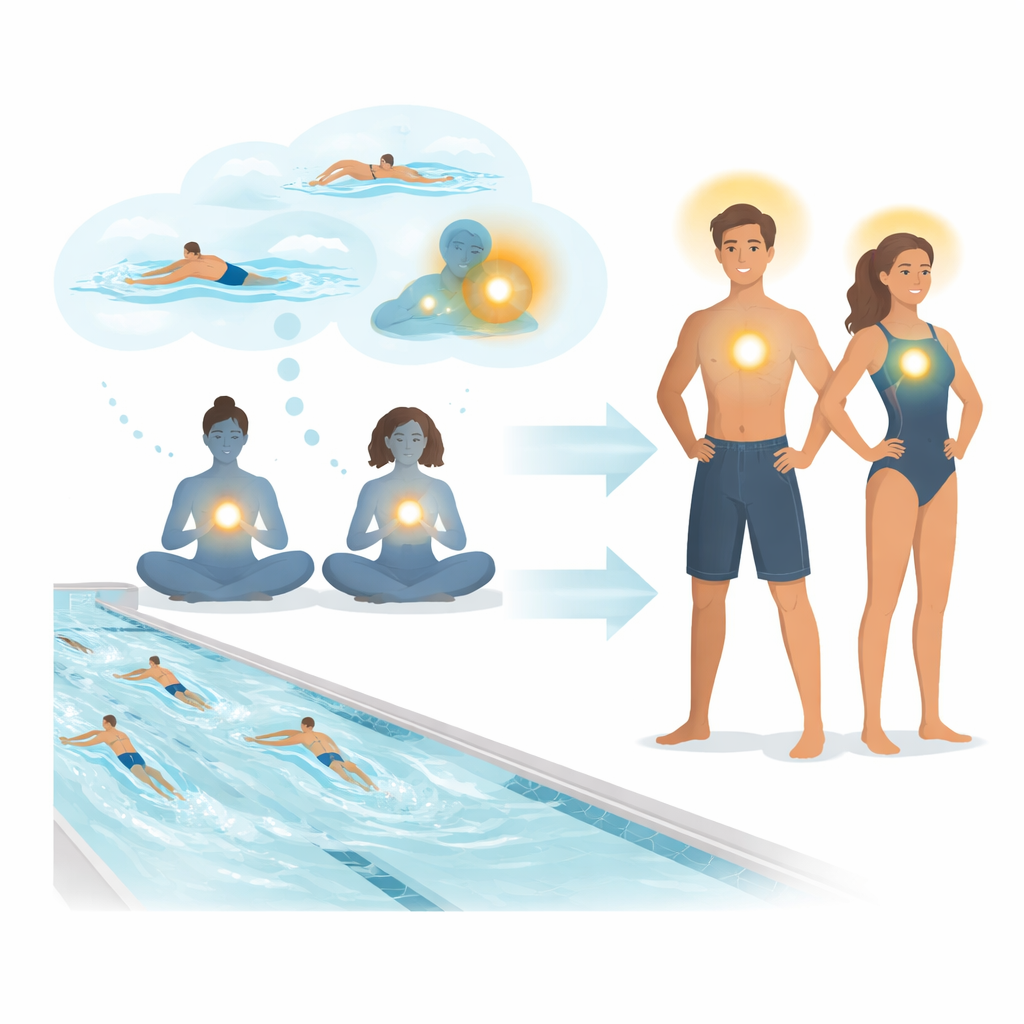
Nineteen club swimmers between 13 and 18 years old took part in a ten-week experiment during their regular summer training. All of them continued their usual five-day-a-week pool workouts. Half were randomly assigned to an extra routine: every night before bed, they spent about 15 minutes taking slow, even breaths—four seconds in through the nose and four seconds out through the mouth—while picturing themselves swimming a smooth, successful 200-meter freestyle. They were taught the method in person, followed a written guide, and received daily reminders and check-ins through a messaging group to keep them on track. The other half simply carried on with normal training, giving the researchers a direct comparison between physical training alone and physical training plus mental practice.
How the team checked mind, heart, and speed
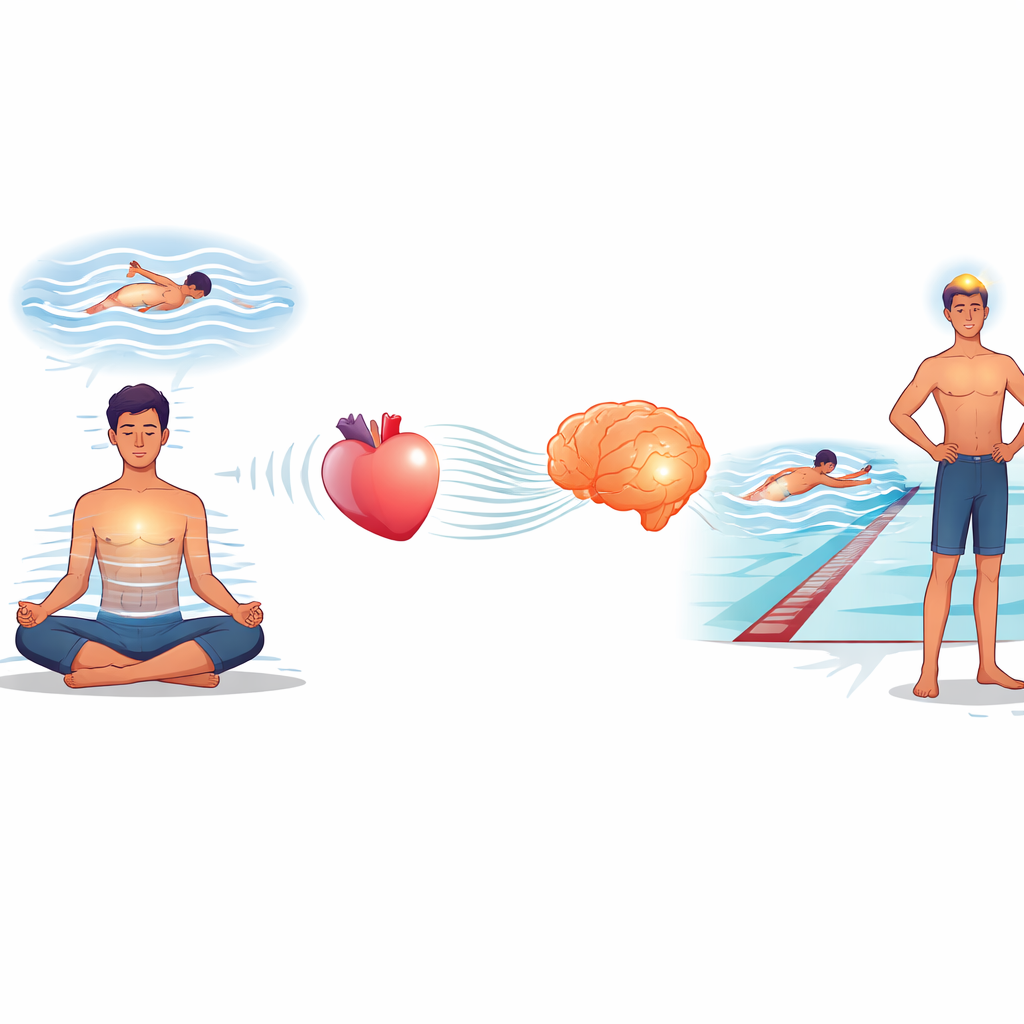
To see what changed, the researchers measured three things before and after the ten weeks. First, each swimmer raced a 200-meter freestyle in the same pool, with two timers recording how many seconds it took to finish. Second, swimmers filled out a short questionnaire that scores “mental toughness”—how confident, steady, and in control they feel in sport. Third, they wore a small sensor that tracked subtle beat-to-beat changes in heart rate for five minutes while they sat quietly. From this, the device produced a “coherence” score that reflects how smoothly the heart and brain appear to be working together, a state linked to emotional balance and clear thinking. By tracking these physical and psychological signals together, the team hoped to learn whether the nightly exercises produced changes that went beyond mere self-report.
What changed inside and outside the pool
By the end of the ten weeks, both groups of swimmers were faster in the 200-meter event, which is no surprise given that they were all training regularly. The mental-training group improved slightly more on average, but with such a small sample the difference in race times could not be confidently tied to the breathing and imagery routine. The more striking changes appeared in the inner measures. Swimmers who practiced the combined routine showed a clear rise in heart–mind coherence scores, while those who only trained physically improved only a little. Their mental toughness scores also climbed, whereas the control group’s scores actually dipped. Young athletes in the intervention reported feeling more confident, better able to picture success, and calmer thanks to the breathing—hinting that the routine helped them cope with everyday training stress even if the stopwatch gains were modest.
Why this small study still matters
This trial was intentionally small and serves as a pilot, so its results should be viewed as an early signal rather than final proof. With only 19 swimmers, the study could easily miss subtle performance effects, and neither the athletes nor the testers were blinded to who was doing the extra routine, which may have influenced expectations. The heart sensor also used a proprietary score, making it difficult to compare with more standard heart-rate measures. Even so, the consistent gains in inner calm and reported toughness suggest that short, structured mental routines may be a practical add-on to youth training programs. For parents and coaches, the take-home message is straightforward: helping young swimmers slow their breathing and picture their best race may not magically turn them into champions, but it can make them steadier, more resilient competitors—and that mental edge could matter when the race comes down to a single stroke.
Citation: Girginer, F.G., Besler, H.K., Seyhan, S. et al. Imagery and breathing exercises improve swimming performance, mental toughness, and coherence. Sci Rep 16, 9218 (2026). https://doi.org/10.1038/s41598-025-17977-0
Keywords: swimming, mental training, breathing exercises, heart rate variability, youth athletes