Clear Sky Science · en
Environmental and socio-economic impact comparison of solar and hydroelectric systems
Why this energy choice matters to everyday life
As the world searches for cleaner alternatives to coal, oil, and gas, many countries are deciding how much to invest in different renewable energy sources. Hydroelectric dams and solar farms are two of the leading options—but they do not affect nature, water, or our wallets in the same way. This study looks at a real-world comparison between one hydropower plant and one solar power plant in the same region of Turkey, helping us understand which option delivers cleaner, cheaper, and more reliable power over the long run.
Two power plants, same size, same place
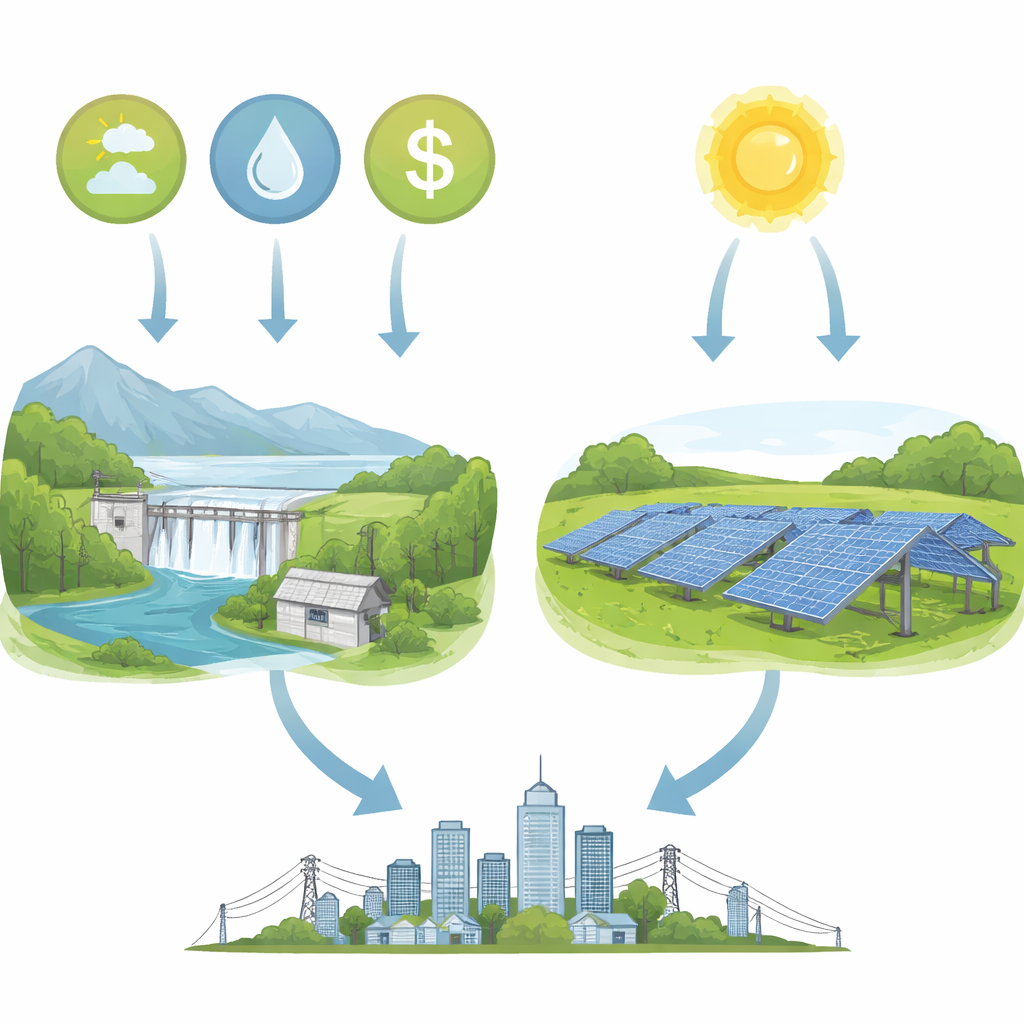
The research focuses on two 15-megawatt facilities in Elazig Province: the Cardakli hydroelectric plant on the Ulucay River and the Ekinozu solar farm built on flat, open land nearby. Because they share the same climate and have equal installed capacity, they form a rare “apples to apples” comparison. Using actual construction costs, operating records, and detailed simulations, the study weighs their economic returns, electricity production, environmental pressures, and local social effects. This real-case approach goes beyond theoretical models and offers concrete guidance for planners in emerging economies.
Power delivered versus money invested
On pure electricity output, the hydropower plant comes out ahead, producing about 38.6 gigawatt-hours (GWh) per year compared with 26.28 GWh for the solar farm. However, the hydro project costs roughly twice as much to build—about 19.5 million US dollars, versus 9.75 million for the solar plant. When guaranteed purchase prices for renewable electricity in Turkey are taken into account, the solar project earns more income each year and pays back its initial investment far faster: just 3.72 years compared with 9.22 years for hydropower. Over its life, the solar plant therefore offers a more attractive financial profile for investors, despite its lower annual energy output.
Hidden climate costs and the role of water
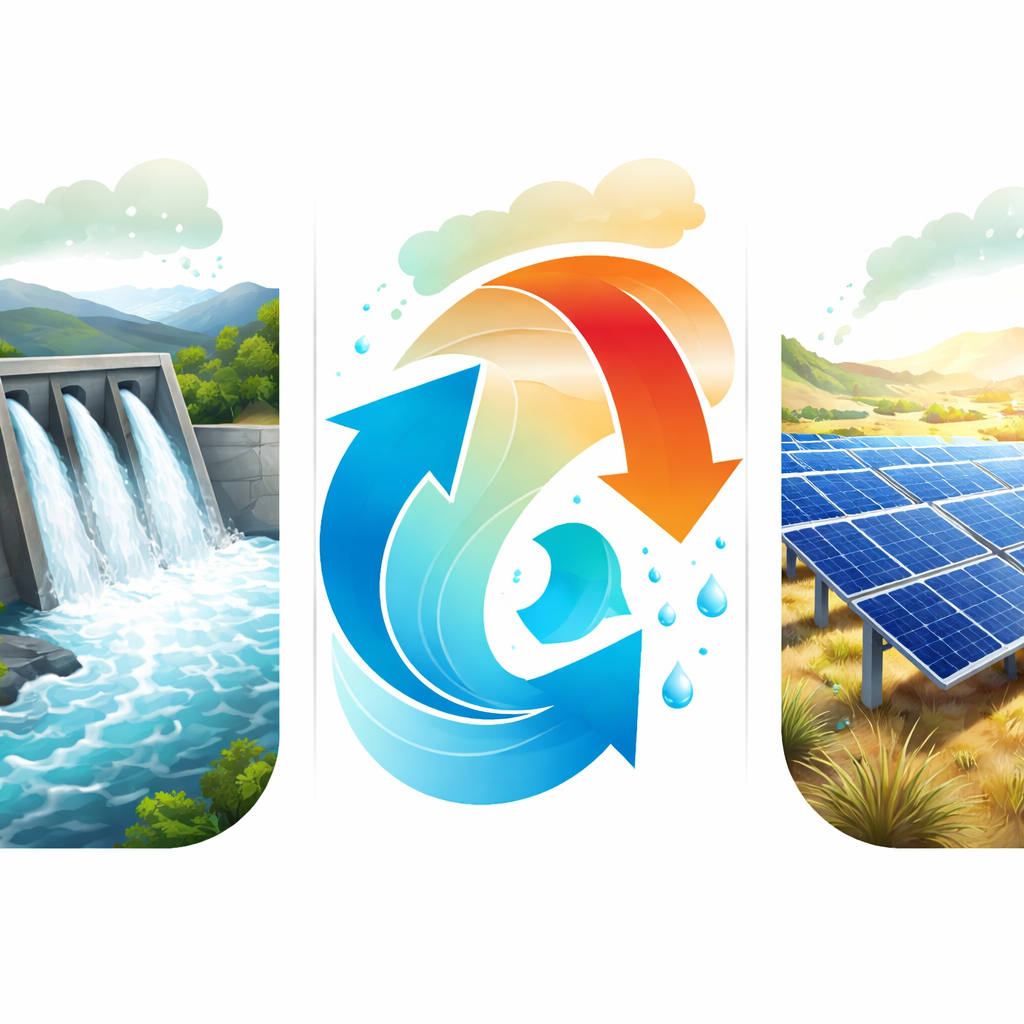
Both technologies are far cleaner than fossil fuels, but they leave different environmental footprints. Over a full life cycle, large hydropower is typically considered one of the lowest-carbon sources of electricity, and this case supports that view: the hydropower plant’s carbon intensity is about 9 grams of carbon dioxide per kilowatt-hour, while solar’s lies in the range of 98–167 grams. Most of the solar impact comes from manufacturing and materials rather than daily operation. At the same time, water tells a different story. Including construction and equipment, hydropower can use thousands of liters of water per megawatt-hour; in this project, the plant consumes about 191,544 cubic meters of water per year. The solar farm, by contrast, uses only about 8,672 cubic meters annually, mainly for occasional cleaning, making it far more compatible with a warming world where water scarcity is a growing concern.
Land, people, and ease of building
Beyond numbers, the two options affect communities and landscapes differently. Hydropower projects can disrupt river ecosystems, alter fish habitat, change flow patterns, and sometimes displace nearby residents. They also require long planning horizons, complex permits, and negotiations with local authorities; the pre-construction phase alone can stretch 5 to 10 years. Solar farms, on the other hand, can be placed on non-forested, low-slope land with minimal disturbance, and in this case were sited away from homes, roads, and airports. They are quicker to build—often within 1 to 2 years—and have low noise and visual impact. These factors make solar installations easier to finance and more flexible to deploy, especially in regions trying to catch up economically.
What this means for the energy future
When all aspects are considered together—cost, time to build, water use, climate impact, and local effects—the study concludes that solar power is the more advantageous choice for this region, even though hydropower delivers more electricity each year and has a lower carbon footprint per unit of energy. In a climate-changed world where river flows are increasingly uncertain but sunny days remain abundant, the authors argue that countries like Turkey will likely lean more heavily on solar farms as a backbone of their renewable supply. The message for non-specialists is clear: there is no single perfect green technology, but smart planning that weighs money, water, and carbon can steer us toward a cleaner and more resilient energy system.
Citation: Aytac, A. Environmental and socio-economic impact comparison of solar and hydroelectric systems. Sci Rep 16, 7822 (2026). https://doi.org/10.1038/s41598-025-10377-4
Keywords: renewable energy, solar power, hydropower, carbon emissions, water use