Clear Sky Science · en
Impact of the COVID-19 outbreak on work, life patterns, and coping behaviours of military personnel in Brunei Darussalam
Why this story about soldiers and a pandemic matters
The COVID-19 pandemic changed daily life for almost everyone, but for soldiers it brought a unique double burden: they had to protect their country and help fight the virus at the same time. This study looks at how military men and women in Brunei coped with heavier duties, disrupted sleep, and new worries, and what helped them stay steady under pressure. Understanding their experience offers clues for how any essential workers—health staff, police, or delivery crews—can be better protected in future crises. 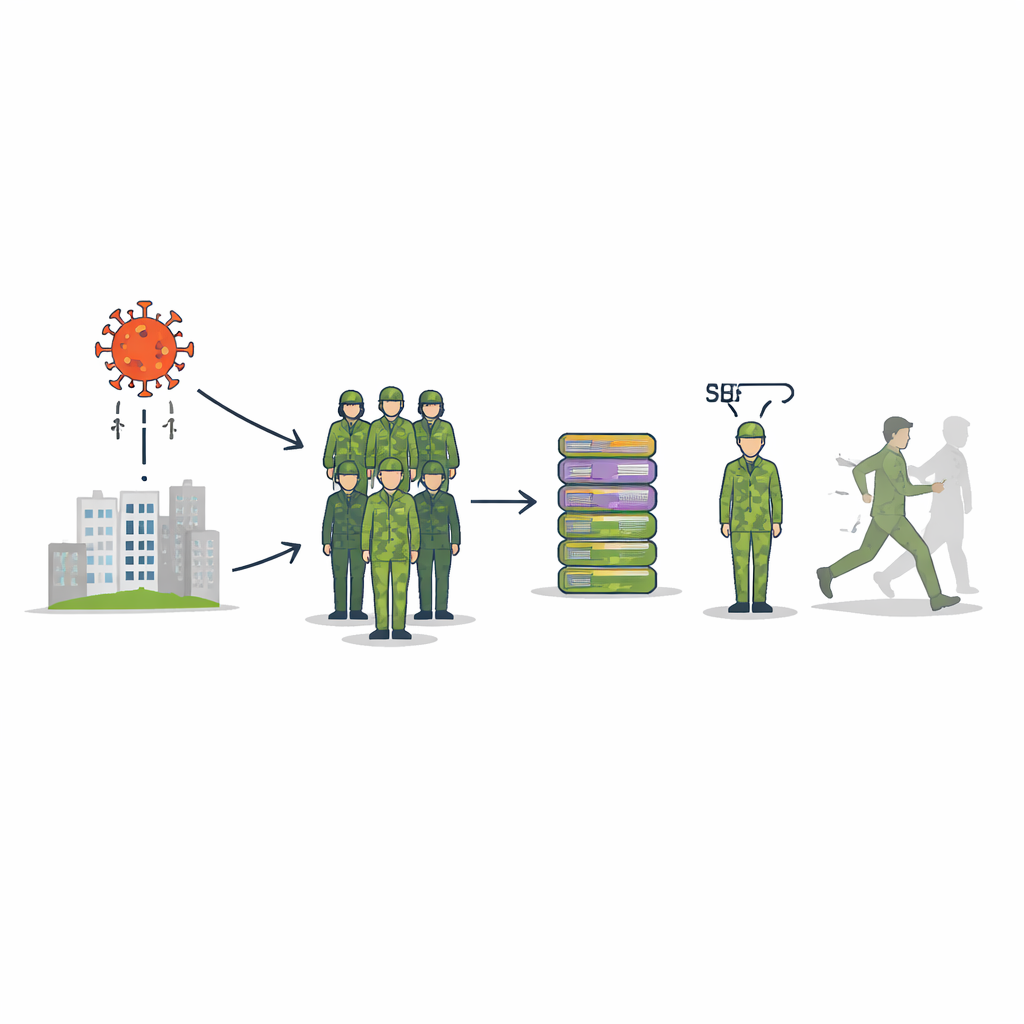
How the study was carried out
Researchers surveyed more than a thousand people serving in the Royal Brunei Armed Forces and the Ministry of Defence in early 2022, well into the pandemic. Some respondents had been deployed on the front lines, helping with tasks such as health checks, border control, food distribution, and vaccination drives. Others stayed in support roles, often shifting to remote office work. An online questionnaire asked about changes in working hours, sleep, exercise, mood, and family life compared with the time before COVID-19. It also asked what habits and supports they relied on to handle stress, and invited open comments with suggestions for easing pressure and fatigue.
What changed in everyday work and home life
The study paints a picture of lives that looked similar on the surface but felt more demanding underneath. Many soldiers said their official working hours did not change dramatically, but the intensity of their work did: almost half reported heavier workloads. Sleep patterns shifted in subtle but important ways. More than a third went to bed later than before, and over half stopped taking midday naps altogether. At the same time, about half said they exercised less, especially those in branches that normally train outdoors. These changes—more effort, less rest, and reduced movement—are a recipe for mounting tiredness, even if people do not immediately label themselves as exhausted.
How people tried to cope
Faced with these pressures, soldiers leaned heavily on a mix of information, habits, and beliefs. Almost everyone said they actively sought out news about the virus and how it spreads, used face masks and other protective gear, and took extra care with hygiene. In Brunei’s strongly religious society, spiritual practices also played a striking role: prayer and related rituals were among the most commonly reported ways of handling stress. Many respondents described using free time for simple pleasures—watching movies, chatting with family and friends, or hobbies—to switch off from constant demands. Some mentioned relaxation techniques or exercise, while a smaller group reported smoking or venting emotions, which may offer short-term relief but can be less healthy in the long run. 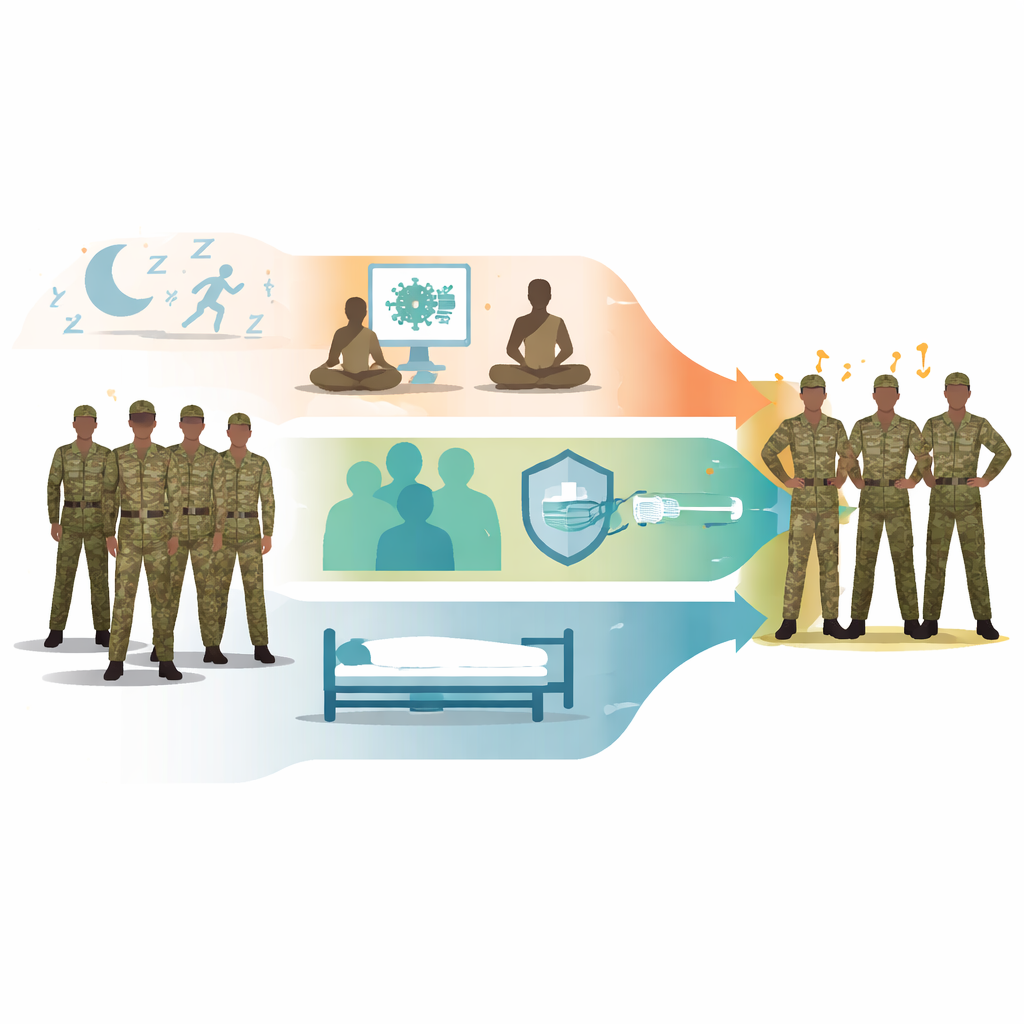
What kept stress from boiling over
Beyond personal habits, certain conditions made a big difference to how heavy the burden felt. Knowing that family members and co‑workers were healthy was one of the strongest protective factors; so was seeing COVID-19 case numbers fall and more patients recover. Inside the workplace, informal chats and shared humor with colleagues helped lighten the mood and strengthen a sense of “we’re in this together.” Soldiers also valued having enough protective equipment, clear safety training, decent meals, and places to rest. In their own words, many called for better planning of shifts, fairer sharing of tasks, more manpower, and leaders who pay attention, communicate clearly, and avoid unrealistic demands.
What this means for future crises
For a non‑specialist reader, the core message is straightforward: when crises hit, the strain on essential workers does not come only from long hours, but also from broken routines, worry for loved ones, and feeling unsupported. In Brunei’s armed forces, heavier workloads, poorer sleep, skipped naps, and less exercise were partly cushioned by strong family ties, close-knit teams, faith, and practical protections like masks and rest breaks. The study suggests that future emergency plans should not just count beds and vehicles, but also include mental health support, fair rotas, backup staff, safe sleeping spaces, and respect for workers’ coping traditions, including religious practices. Put simply, if we want soldiers to stay ready for the next crisis, we need to design systems that let them work hard without being worn down.
Citation: Talip, T. Impact of the COVID-19 outbreak on work, life patterns, and coping behaviours of military personnel in Brunei Darussalam. Sci Rep 16, 9563 (2026). https://doi.org/10.1038/s41598-025-09718-0
Keywords: COVID-19 and military, work and mental health, frontline workers, coping strategies, Brunei pandemic response