Clear Sky Science · en
Mechanism of quercetin in the treatment of endometriosis based on network pharmacology and transcriptome sequencing
Why a Common Plant Compound Matters for Women’s Health
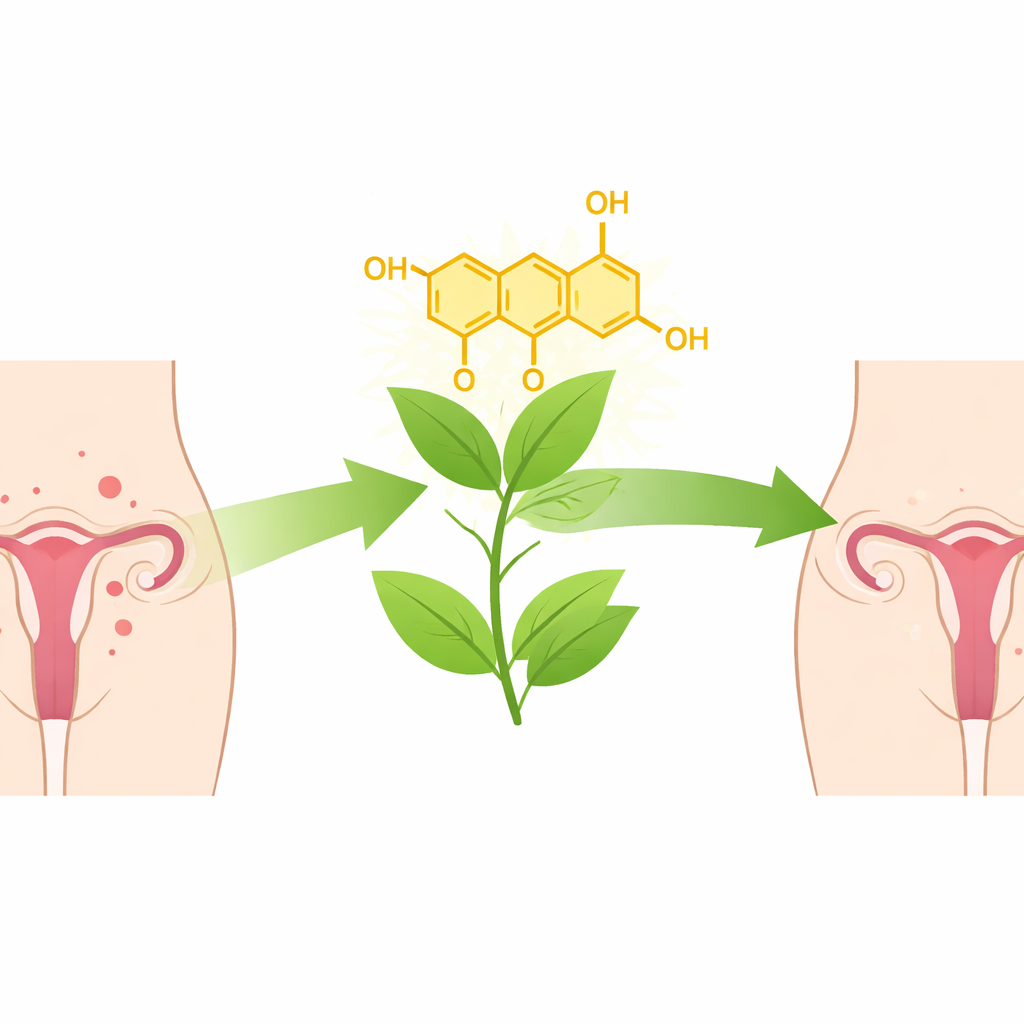
Endometriosis is a painful condition in which tissue similar to the uterine lining grows where it does not belong, often causing chronic pain and infertility. Many women must juggle repeated surgeries and hormone treatments that can bring difficult side effects. This study looks at quercetin—a natural substance found in many fruits and vegetables—as a gentler, long-term option. The researchers ask a simple question with big implications: can this everyday plant compound meaningfully slow the growth and spread of endometriosis lesions?
A Widespread Problem in Need of Better Options
Endometriosis affects an estimated 10% of women of reproductive age worldwide. The misplaced tissue can cling to organs in the pelvis, invade surrounding areas, and bleed repeatedly with each menstrual cycle. These changes often trigger inflammation, scarring, and adhesions—bands of tissue that can glue organs together—leading to pain and sometimes infertility. Surgery is still the main way to confirm the diagnosis and remove lesions, but the disease commonly comes back. Hormone-based drugs can help, yet they often suppress rather than cure the disease and may cause side effects that many patients find hard to tolerate. Because endometriosis tends to be long‑lasting, there is a pressing need for safe, affordable medicines that can be used over many years.
A Closer Look at Quercetin’s Healing Potential
Quercetin is a yellow pigment widely found in onions, apples, berries, and many other plant foods. It has attracted attention for its antioxidant and anti‑inflammatory actions, and has been studied for potential benefits against several cancers. Endometriosis lesions behave in some ways like tumor cells: they attach, invade, form new blood vessels, and spread locally. Earlier work showed that quercetin can slow the growth of endometriosis cells and trigger their death in laboratory dishes, but the exact routes it uses inside the body were not fully understood. The current study set out to map those routes in detail, combining large‑scale computer analyses with experiments in human tissue samples, mice, and cultured cells.
Finding the Molecular “Traffic Hub”
The team first used network pharmacology, a method that cross‑matches many potential drug targets with known disease‑related genes. They identified 132 molecular targets that link quercetin to endometriosis and found that several important cell‑signaling routes were involved, with one in particular standing out: the MAPK pathway, which helps control how cells grow, divide, and move. Within this network, a surface protein called PDGFRB emerged as a key hub. When the researchers examined tissue from women with endometriosis, they found that PDGFRB and several downstream signaling proteins in the MAPK chain were much more abundant in ectopic (out‑of‑place) lesions than in normal uterine lining, suggesting that this pathway is switched on in the disease.
Testing Quercetin in Mice and Cells
To see whether quercetin could actually calm this overactive system, the scientists created a mouse model of endometriosis by transplanting small pieces of uterine tissue into the abdomen. Mice then received low, medium, or high doses of quercetin by mouth, or a standard drug for comparison. Over three weeks, quercetin shrank the implanted lesions and reduced the degree of internal adhesions, with higher doses having stronger effects. Microscopic examination showed that treated lesions had fewer and more shrunken glands and looser supporting tissue. In parallel, protein tests revealed that quercetin lowered the levels of PDGFRB and the key MAPK‑related proteins RAS, RAF1, and ERK1/2 in these lesions.
How Quercetin Slows Rogue Cells
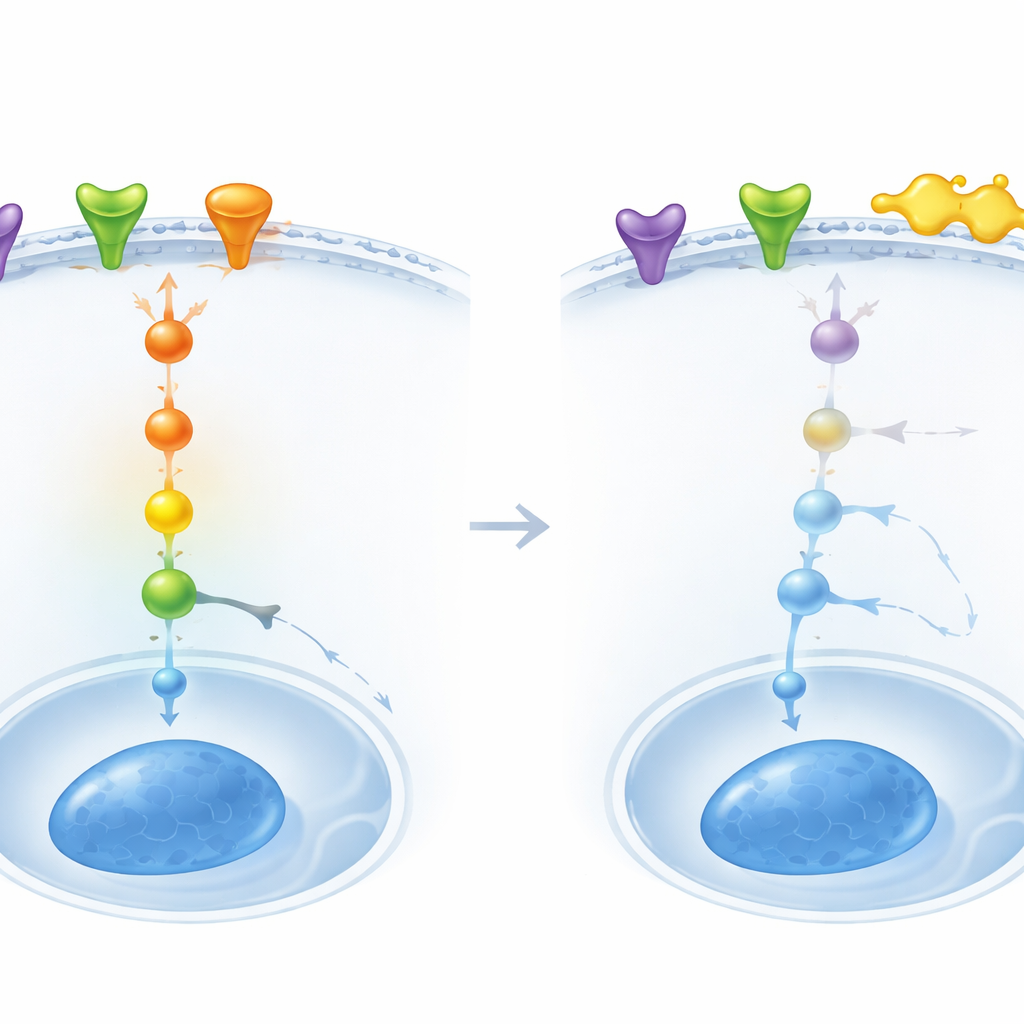
The researchers then moved to cell culture to probe the mechanism more deeply. They used 12Z cells, derived from endometriosis lesions, and deliberately reduced PDGFRB levels with genetic tools. When PDGFRB was knocked down, the cells showed less ability to grow, invade through membranes, and migrate across a dish—three behaviors that drive lesion formation and spread. Adding quercetin further weakened these traits. Detailed protein studies showed that both PDGFRB loss and quercetin treatment dampened the MAPK signaling cascade inside the cells, reducing the active forms of RAS, RAF1, and ERK1/2 that normally send strong “grow and move” signals.
What This Means for Future Treatment
Taken together, the findings suggest a clear story: in endometriosis, PDGFRB and its related signaling chain are turned up, encouraging cells to multiply and invade. Quercetin appears to turn that volume down, shrinking lesions in mice and taming aggressive cell behavior in the lab by reining in the PDGFRB–MAPK pathway. While this work is still at an experimental stage and does not yet prove that quercetin alone can treat endometriosis in humans, it provides a solid biological rationale for further clinical studies. For patients, it raises the possibility that a naturally occurring compound, already present in many foods, could one day become part of a safer, long‑term strategy to manage this chronic and often life‑disrupting disease.
Citation: Huang, J., Ding, J., Wang, J. et al. Mechanism of quercetin in the treatment of endometriosis based on network pharmacology and transcriptome sequencing. Sci Rep 16, 8503 (2026). https://doi.org/10.1038/s41598-025-07693-0
Keywords: endometriosis, quercetin, women’s health, cell signaling, natural compounds