Clear Sky Science · en
Involvement of AKT/β-catenin in Enhanced Osteogenesis by Cannabidiol in Bone Stromal Cells Harvested from Human Tori
Helping Bones Heal in the Mouth
Bone loss around teeth is a major reason adults develop loose teeth and need complex dental treatment. At the same time, cannabidiol (CBD), a non-intoxicating compound from cannabis, has become widely known for its possible health benefits. This study brings those two worlds together: it asks whether CBD can help the cells that build jawbone make stronger, better mineralized bone, and explores the inner cell signals that might explain how this happens.
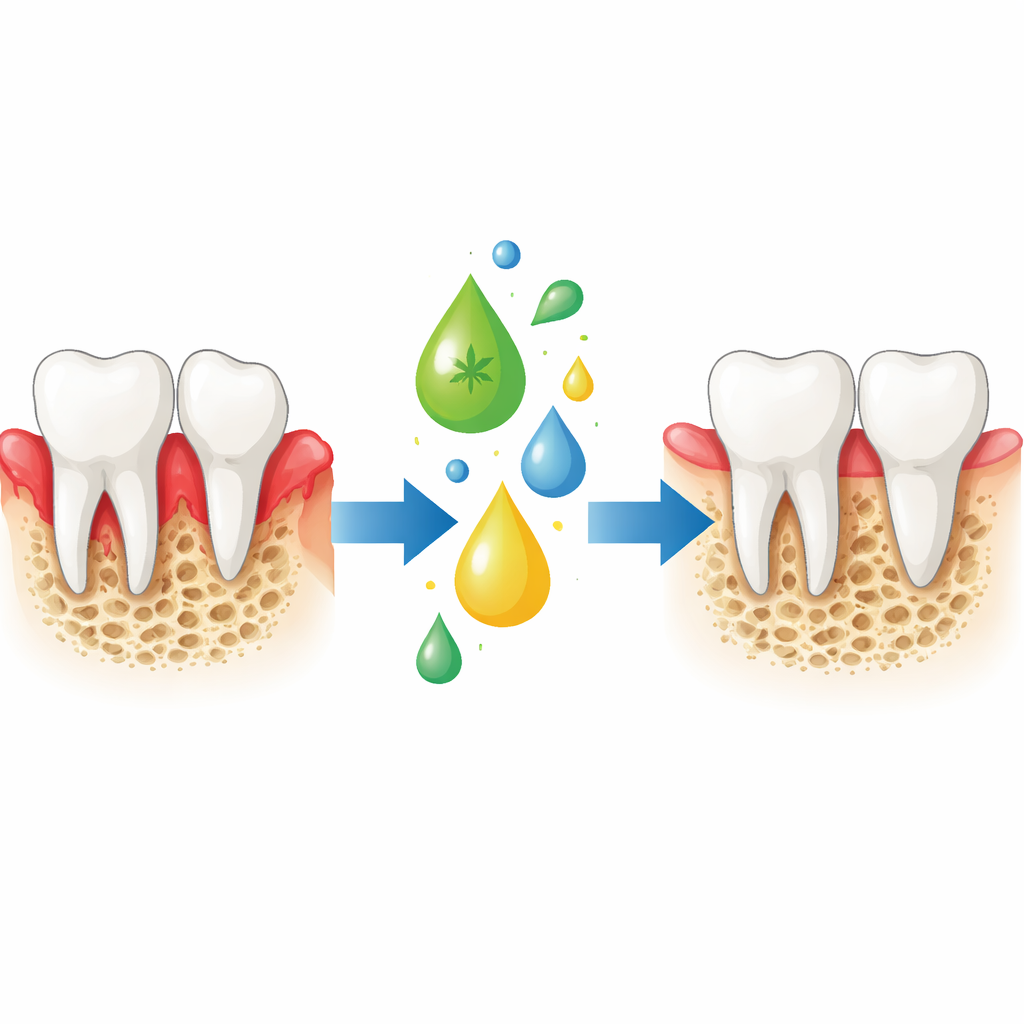
Why Jawbone Needs Extra Help
Periodontitis, a common gum disease, gradually destroys the bone that supports teeth. Normally, bone is constantly renewed by a balance between cells that remove old bone and cells that build new bone. In periodontitis, that balance tilts toward breakdown, so bone resorption outpaces bone formation. Because CBD is known to reduce bone loss and support fracture healing in animal studies, the researchers wondered if it could also encourage human jawbone cells to switch into a more bone-building mode, offering a future tool for rebuilding the bone lost in severe gum disease.
Studying Real Human Bone Cells
To keep the work close to real-life biology, the team used bone stromal cells taken from harmless bony growths in the mouth called tori, removed during routine dental surgery in older adults. These cells can mature into osteoblasts, the specialized cells that lay down new bone. First, the scientists confirmed that the cells behaved as bone precursors: in a standard “bone-inducing” culture medium, they showed stronger staining for bone-related enzymes and minerals, and turned on genes known to mark bone formation. This set the stage to test whether adding CBD would further boost their bone-building behavior.
CBD as a Bone-Building Boost
The researchers exposed the jawbone stromal cells to a range of CBD doses and confirmed that concentrations up to 10 micromolar did not harm cell survival. At these non-toxic levels, CBD clearly enhanced signs of osteogenesis—the process of forming new bone. In bone-inducing medium, CBD increased alkaline phosphatase activity, a hallmark of early bone-forming cells, and led to more intense deposits of calcium and phosphate minerals, revealed by Alizarin Red and von Kossa stains. At the genetic level, CBD raised the activity of key bone-related genes, including RUNX2, a master switch for bone cell identity, as well as bone sialoprotein (BSP) and osterix, which are associated with matrix mineralization and later stages of osteoblast maturation.
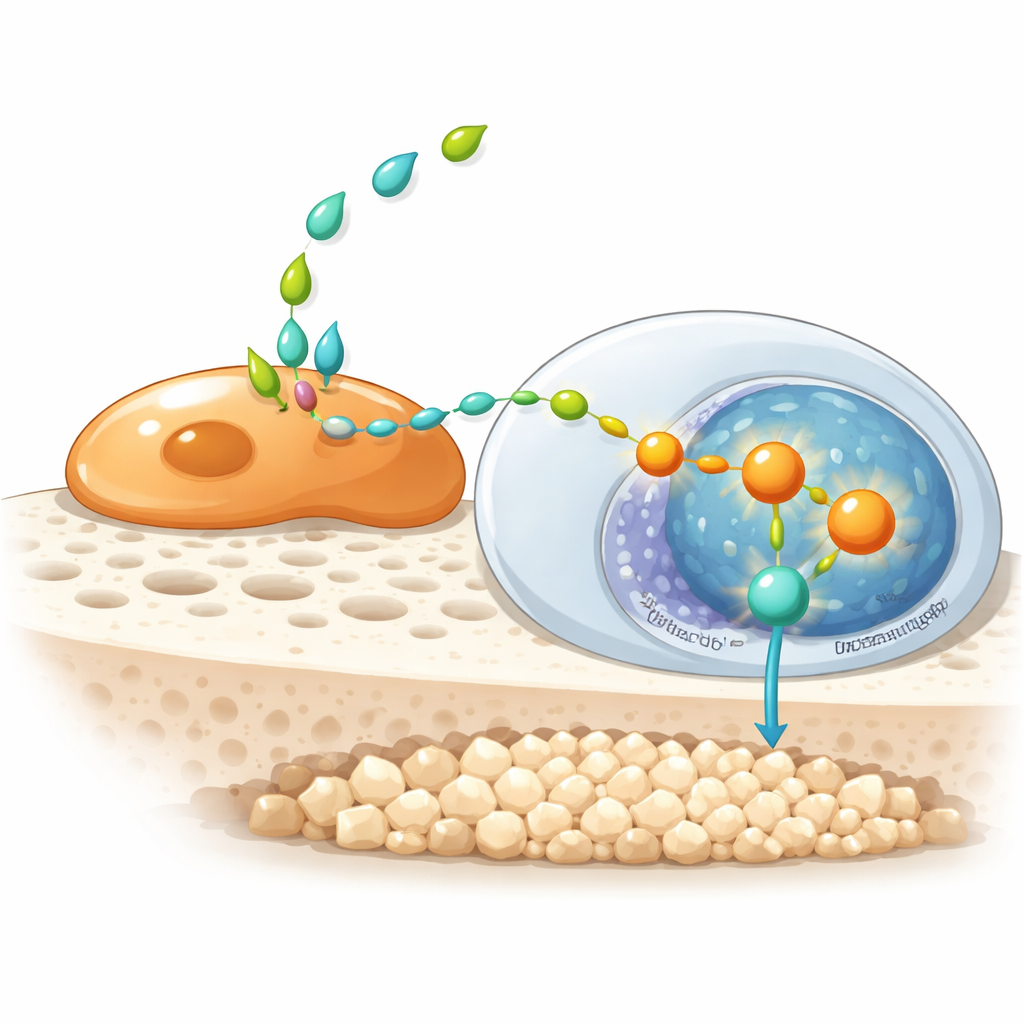
Signals Inside the Cell: Turning On the Bone Program
To understand how CBD sends this bone-building message inside the cell, the team looked at two important signaling players often linked to growth and development: AKT and β-catenin. CBD increased the activated, phosphorylated form of AKT and boosted β-catenin levels both in the fluid part of the cell and inside the nucleus, where genetic decisions are made. When the scientists used a drug that blocks AKT, or another that interferes with β-catenin’s function in the nucleus, the CBD-driven mineral staining and the rise in BSP and osterix gene activity were significantly reduced. Further experiments showed that blocking AKT also lessened the buildup of β-catenin in the nucleus, suggesting that CBD’s effect moves through an AKT–β-catenin chain of signals that ultimately encourages the cell to lay down mineral-rich bone matrix.
What This Could Mean for Future Dental Care
Overall, the study shows that CBD can safely push human jawbone stromal cells toward stronger bone formation in the lab, and that it does so, at least in part, by activating an internal AKT/β-catenin signaling route that supports late-stage mineralization. For everyday readers, this means CBD is emerging not just as a pain or inflammation remedy, but as a potential ally in rebuilding bone around teeth damaged by gum disease. The work is still at the cell-culture stage—animal studies, careful dosing, and long-term safety tests must come next—but it points toward future dental treatments in which controlled CBD delivery could help regenerate lost bone and improve the stability of teeth.
Citation: Makeudom, A., Taechukorn, M., Muenhong, K. et al. Involvement of AKT/β-catenin in Enhanced Osteogenesis by Cannabidiol in Bone Stromal Cells Harvested from Human Tori. Sci Rep 16, 9562 (2026). https://doi.org/10.1038/s41598-025-03763-5
Keywords: cannabidiol, bone regeneration, periodontitis, jawbone cells, cell signaling