Clear Sky Science · en
In-hospital outcomes and temporal analysis of paralyzed patients with acute myocardial infarction undergoing percutaneous coronary intervention
Why this study matters for everyday patients
People living with paralysis are surviving longer and, like everyone else, are at risk for heart attacks. Yet doctors know surprisingly little about how well standard life-saving procedures work for these patients. This study looks at what happens inside hospitals when paralyzed patients have a heart attack and receive an emergency artery-opening procedure, comparing their outcomes with those of non-paralyzed patients. The findings highlight an often-overlooked group that may need extra attention and tailored care when heart emergencies strike.
Three groups of heart attack patients
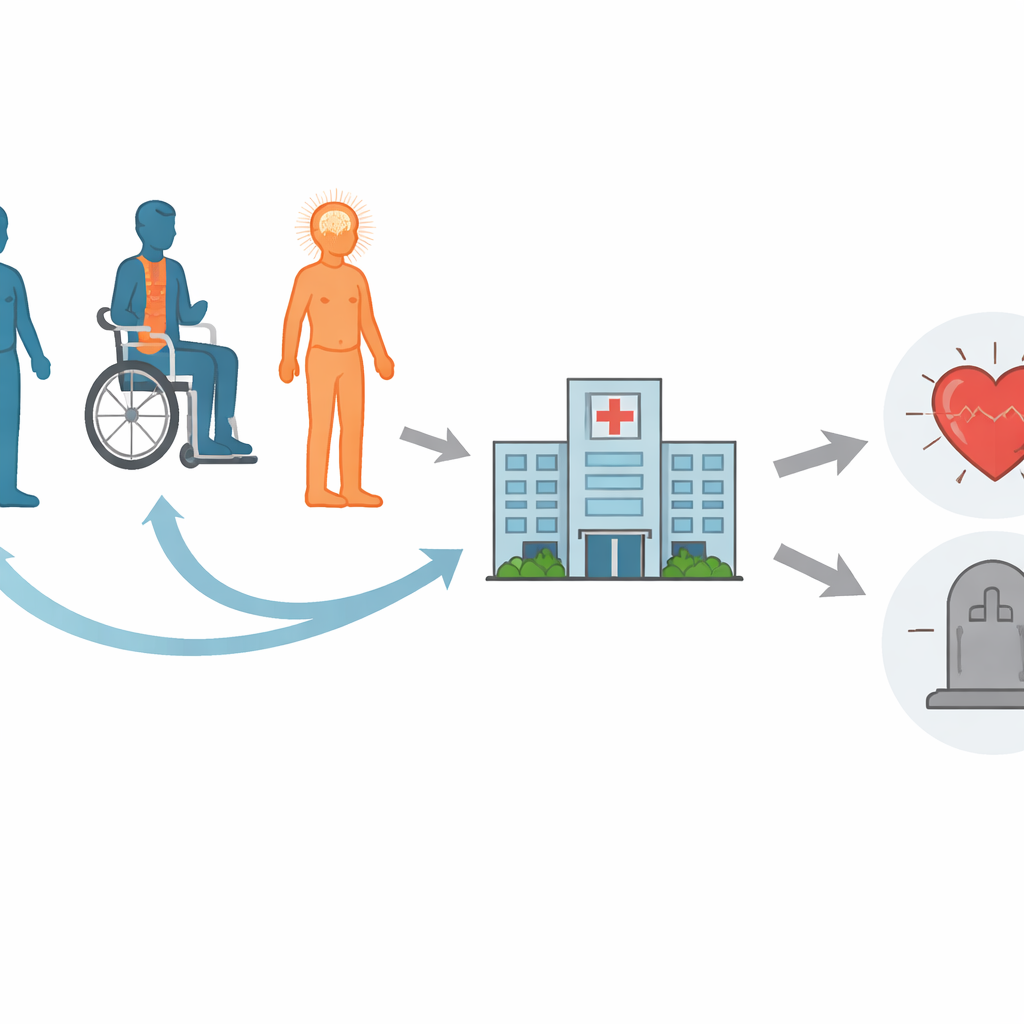
The researchers examined more than two million hospital stays in the United States between 2003 and 2015, focusing on adults admitted with a heart attack who underwent percutaneous coronary intervention (PCI) – the common procedure in which doctors thread a catheter into a blocked heart artery to restore blood flow. Within this enormous dataset, they compared three groups: patients without paralysis, patients paralyzed after a spinal cord injury, and patients who had paralysis due to a previous stroke. By separating paralysis into these two main causes, the team could see whether the type of paralysis made a difference in how patients fared during their hospital stay.
What the numbers revealed inside hospitals
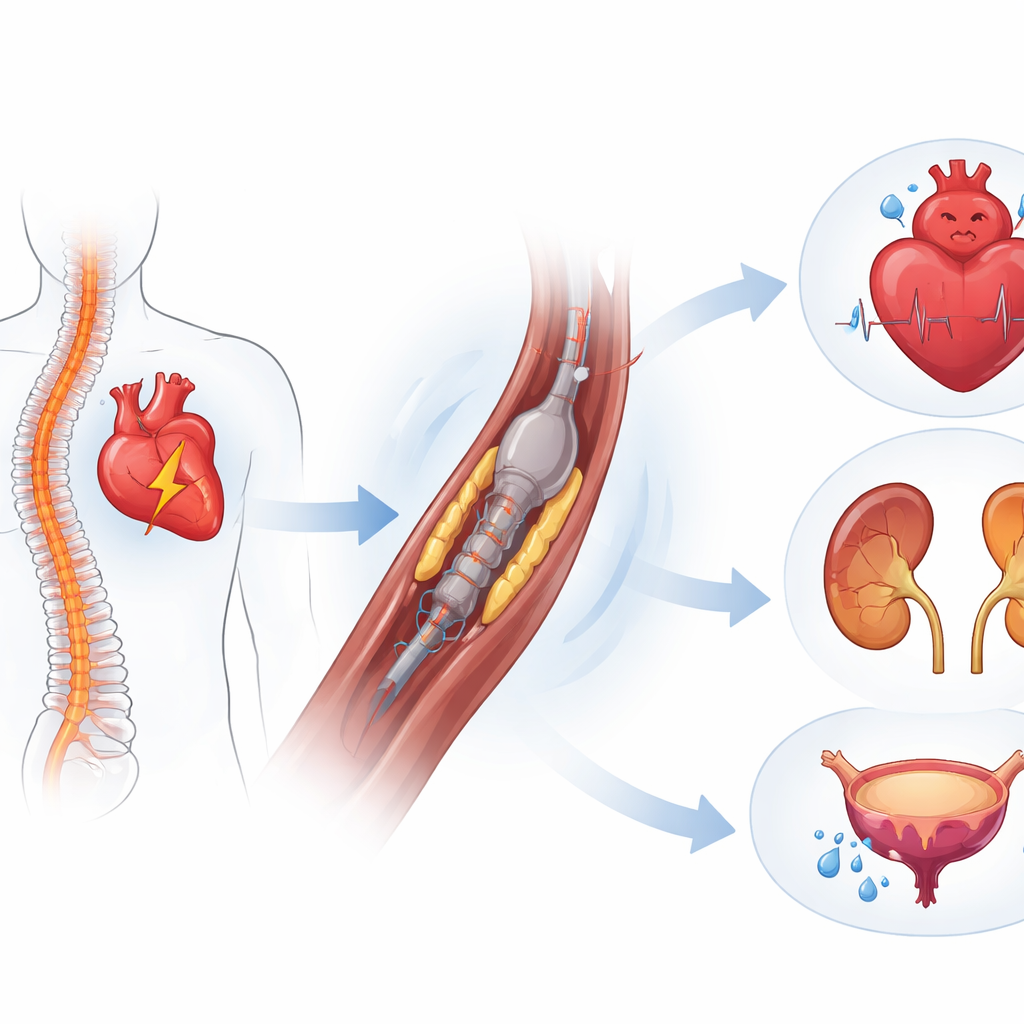
Even after accounting for age, other illnesses, and socioeconomic factors, patients with spinal cord injury paralysis had clearly worse in-hospital outcomes than patients without paralysis—and in many ways, even worse than those with stroke-related paralysis. Among all heart attack patients treated with PCI, those with spinal cord injury had about three times the odds of dying during their hospital stay compared with non-paralyzed patients. They also had more cardiogenic shock, a critical condition in which the weakened heart cannot pump enough blood to the body. On top of that, both paralysis groups had higher rates of acute kidney injury and urinary tract infections, and patients with spinal cord injury stayed in the hospital noticeably longer.
Hidden risks and sex differences
One of the most striking findings was the difference between men and women with spinal cord injury. When the researchers looked separately by sex, women with spinal cord injury who had a heart attack and underwent PCI had a much higher risk of dying in the hospital than women without paralysis, while the increased risk for men was smaller and not clearly significant. Women with paralysis were also generally older and had more additional health problems. These results suggest that the combination of female sex, paralysis, and heart attack may create a particularly vulnerable group, potentially influenced by hormonal changes, blood pressure instability, reduced physical activity, and long-term inflammation.
Trends over time and ongoing challenges
Across the 13-year study period, outcomes for paralyzed heart attack patients showed a worrying pattern. While in-hospital death rates for non-paralyzed patients stayed relatively low, those for patients with spinal cord injury paralysis remained higher throughout and showed an upward trend in serious complications such as cardiogenic shock and kidney injury. Urinary tract infections in this group were especially common and fluctuated over time, reflecting how bladder and urinary problems, frequent in spinal cord injury, can complicate recovery from major heart procedures.
What this means for patients and clinicians
Put simply, the study shows that when people with spinal cord injury paralysis have a heart attack, even the best standard emergency treatment does not level the playing field. They are more likely to die in the hospital, develop heart failure, damage their kidneys, or get serious infections, and this is especially true for women. These findings suggest that doctors should treat paralyzed patients with heart attacks as a high-risk group, planning closer monitoring, more aggressive prevention of infections, and careful management of blood pressure and other complications. For patients and families, the message is that heart health deserves extra attention after spinal cord injury, and that more tailored care pathways are needed to improve survival and recovery.
Citation: Qi, H., Cui, M., Zhang, T. et al. In-hospital outcomes and temporal analysis of paralyzed patients with acute myocardial infarction undergoing percutaneous coronary intervention. Sci Rep 16, 9554 (2026). https://doi.org/10.1038/s41598-024-78013-1
Keywords: spinal cord injury, acute myocardial infarction, percutaneous coronary intervention, in-hospital outcomes, paralysis