Clear Sky Science · en
A high-quality chromosome-level genome assembly of the low chilling requirement mulberry, Morus macroura
Why a special mulberry tree matters
Imagine a fruit that ripens early, tastes sweet, is packed with nutrients, and can be grown almost year-round even where winters are mild. That is the promise of a long-fruited mulberry called Morus macroura, already valued in parts of China and South Asia for fresh eating, processing, and traditional medicine. Until now, breeders and growers have had to improve this crop largely by trial and error, because its genetic blueprint was unknown. This study changes that by delivering a detailed, chromosome-level map of the mulberry’s DNA, opening the door to smarter breeding for better yield, flavor, and climate resilience.
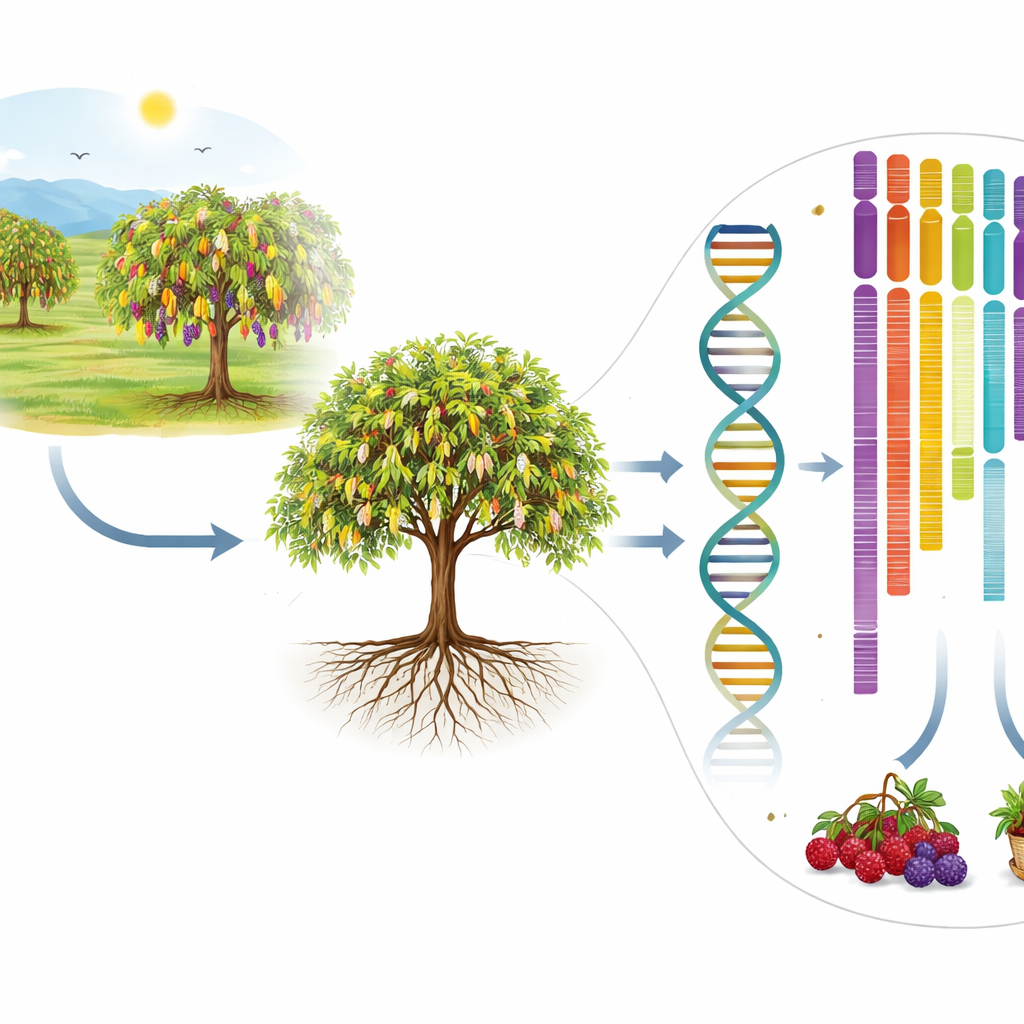
From orchard to DNA blueprint
The researchers focused on a cultivated variety named ‘Sijiguo 72C,’ known for its especially long fruits and low need for winter chill. They collected young leaves from a single healthy tree grown in Hainan, a tropical island in China, and extracted very pure, long strands of DNA. They also gathered RNA from leaves, stems, flowers, and fruits, which captures which genes are active in different parts of the plant. Using cutting-edge sequencing machines, they read the mulberry’s DNA and RNA in massive numbers of tiny snippets, generating enough information to cover the entire genome more than fifty times over.
Piecing together the genetic puzzle
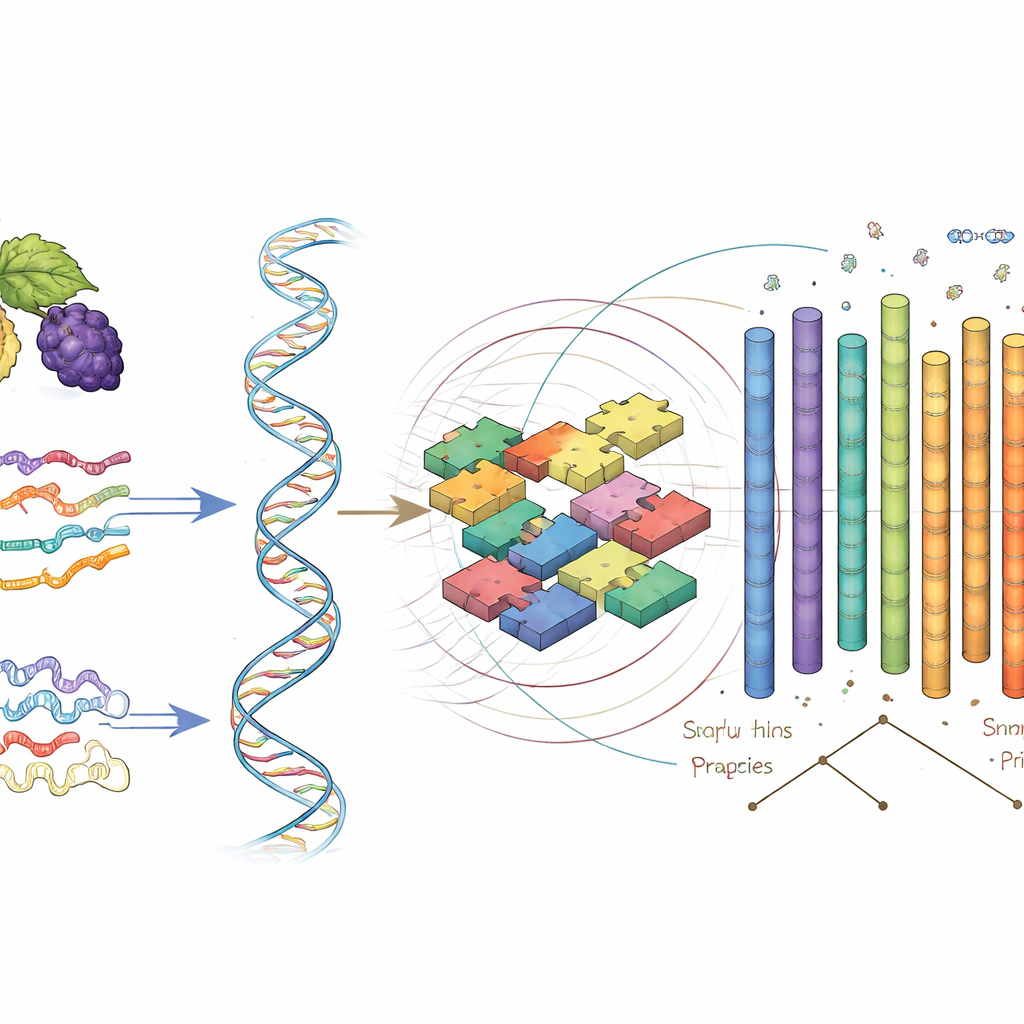
Turning billions of DNA letters into a usable genome is like assembling a giant jigsaw puzzle without the picture on the box. The team used long, high-accuracy DNA reads to build large continuous stretches of sequence, called contigs, minimizing gaps and errors. Then they applied a second method called Hi-C, which detects which pieces of DNA sit near each other inside the cell’s nucleus. These long-range contacts helped them arrange and orient the contigs into 14 large units, corresponding to the mulberry’s chromosomes. In the final product, over 99% of the genome was neatly placed on these chromosomes, and quality checks showed an error rate of less than one mistake per million DNA bases.
What the mulberry genome contains
With the physical map in hand, the scientists set out to identify the working parts of the genome. They found that just over half of the DNA consists of repeated elements, such as jumping genes and other repetitive sequences that shape genome size and structure. Within this landscape, they predicted 21,824 protein-coding genes and confirmed the functions of more than 97% of them by comparing to large public databases. They also cataloged nearly 3,000 non-coding RNAs—small pieces of RNA that do not make proteins but help control how genes turn on and off. Together, these features form the basis for understanding traits like fruit size, color, flavor, and the plant’s ability to flower and bear fruit with little winter chill.
Placing mulberry on the tree of life
To see how this species fits into the broader mulberry family, the team compared its genes with those of eight related plants, including other mulberry species and peach. They grouped genes into families shared across species and tracked which sets had expanded or shrunk over time. The results suggest that Morus macroura split from the common white mulberry, Morus alba, roughly four million years ago and is especially close to another cultivated type, Morus atropurpurea. The study also revealed stretches of chromosomes that have been rearranged during evolution, offering hints about how different mulberry species adapted to their environments and uses.
What this means for future fruits
To someone enjoying a bowl of mulberries, the fine details of DNA sequences may seem distant. But this high-quality genome gives breeders and scientists a powerful reference manual for the crop. It will help them uncover the networks of genes that control winter dormancy, flowering time, and continuous fruiting in warm climates. In practical terms, that could speed the development of new mulberry varieties that produce reliable harvests in a warming world, provide off-season fruit for markets, and maintain the nutritional and medicinal qualities that have made mulberries prized for centuries.
Citation: Wu, H., Wang, J., Geng, T. et al. A high-quality chromosome-level genome assembly of the low chilling requirement mulberry, Morus macroura. Sci Data 13, 458 (2026). https://doi.org/10.1038/s41597-026-07117-2
Keywords: mulberry genome, fruit breeding, climate adaptation, chromosome assembly, plant genetics