Clear Sky Science · en
Chromosome-level genome assembly of Neoseiulus longispinosus (Phytoseiidae)
Why a Tiny Farm Ally Matters
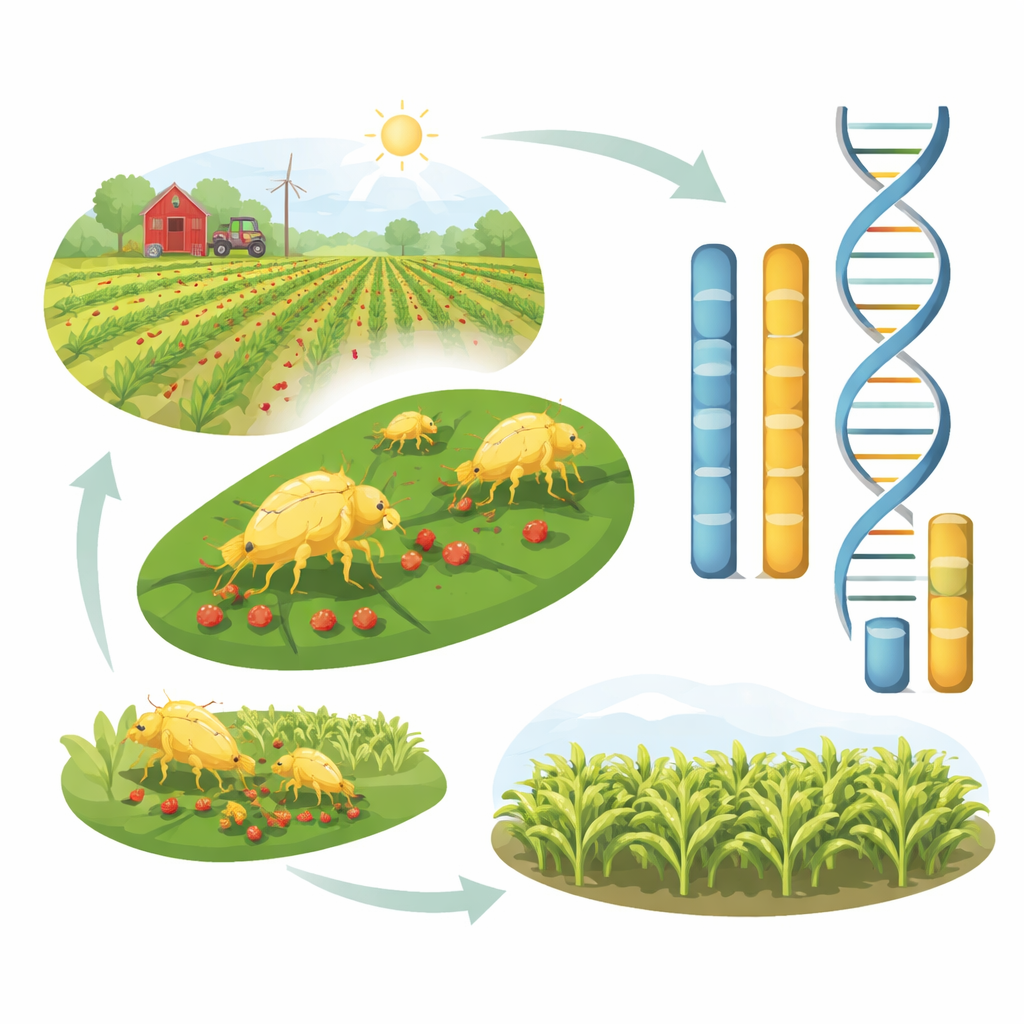
Farmers around the world battle microscopic pests that can devastate crops, often relying on chemical pesticides that may harm the environment and human health. One natural ally is a predatory mite called Neoseiulus longispinosus, which hunts crop-damaging spider mites in warm, tropical regions. This study decodes the mite’s DNA at high resolution, creating a detailed genetic blueprint that can help scientists understand why it thrives in hot climates and how to use it more effectively in eco‑friendly pest control.
A Helpful Hunter in the Greenhouse
Neoseiulus longispinosus is already used in papaya, citrus, and other crops to keep spider mites in check, reducing the need for chemical sprays. The mite is tiny, yellow or red, and shows clear differences between males and females, with females being larger and differently shaped. Its ability to perform well in tropical heat makes it especially valuable as global temperatures rise. Until now, however, almost all research focused on how well it eats pests in the lab, not on the genetic underpinnings that allow it to adapt, survive, and do its job in real farm conditions.
Turning Eggs into a Genetic Blueprint
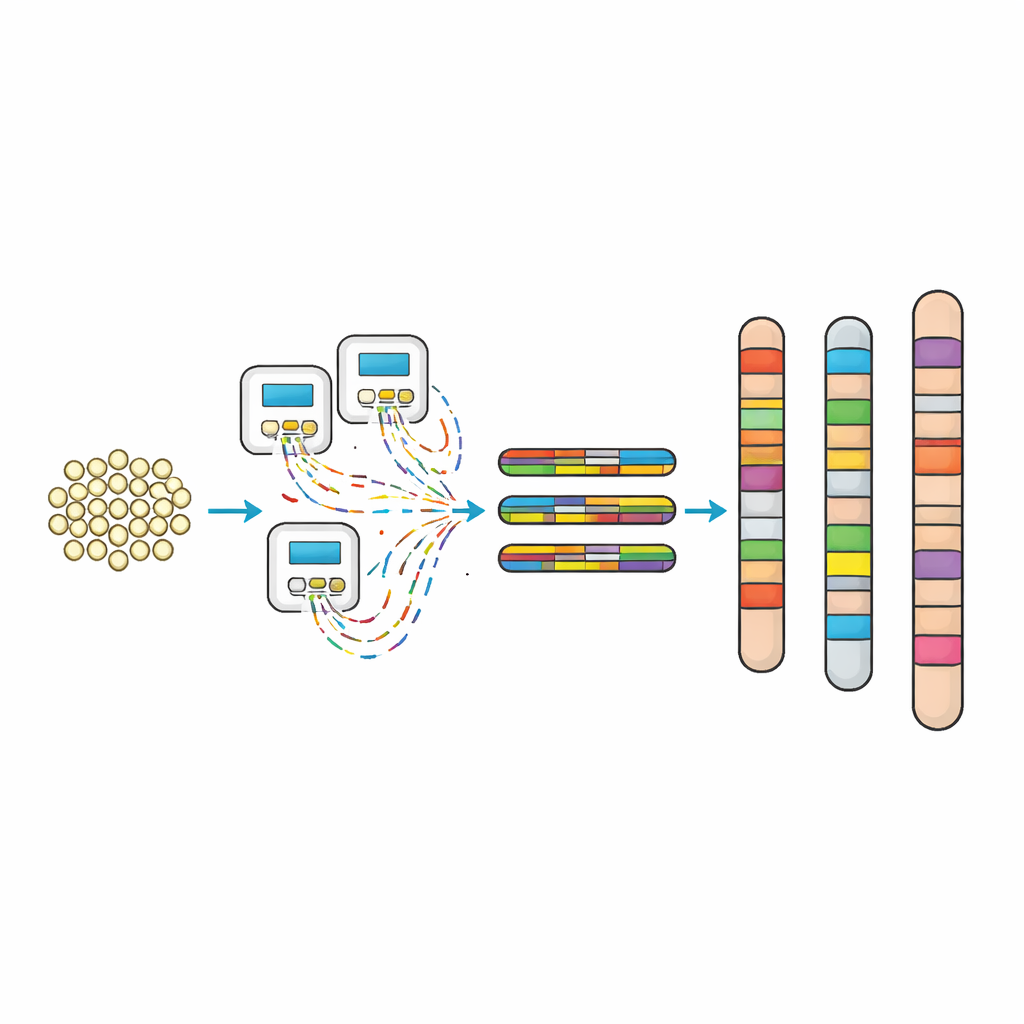
To reveal the mite’s genetic code, the researchers collected about 2,000 eggs from a long‑reared colony raised on spider mites. From these eggs they extracted high‑quality DNA and used several modern sequencing approaches in parallel. Long‑read technology provided extended stretches of DNA, while short‑read methods offered sharp accuracy for fine detail. Additional data captured how the DNA is folded and packaged inside the cell, helping to piece together entire chromosomes rather than scattered fragments. This multiplatform strategy produced a nearly complete, chromosome‑level assembly of the mite’s genome.
Building and Checking the Genome Map
Using specialized software, the team first estimated the total genome size and its complexity, then assembled the long DNA reads into continuous segments. They cleaned the draft to remove duplicated or low‑quality pieces and used three‑dimensional DNA contact data to link segments into four large pseudochromosomes—the mite’s main DNA carriers. The final genome spans about 199 million DNA letters and shows strong internal consistency: almost all the original sequencing data map back onto this reference, and widely used quality tests indicate that more than 96% of essential genes are present and intact. This means the genome map is both continuous and reliable enough for detailed biological studies.
What the Genome Reveals Inside
Once the genome was assembled, the researchers looked at its components. They found that roughly one‑fifth of the DNA consists of repeated sequences, including various mobile genetic elements, a pattern similar to that in many other arachnids. They then predicted nearly 13,000 protein‑coding genes and used large international databases to infer what many of these genes might do. The vast majority could be assigned to known families, molecular functions, or biological pathways, laying the groundwork to pinpoint genes involved in heat tolerance, reproduction, and interactions with pest species.
New Tools for Cleaner Pest Control
For non‑specialists, the key message is that we now have a high‑quality, chromosome‑scale genetic map of a tiny predator that helps protect crops. This reference genome turns Neoseiulus longispinosus from a practical but poorly understood helper into a genetically accessible model. With it, researchers can search for genes that make the mite resilient in hot climates, improve its mass rearing, and better predict how it will perform in fields and orchards. In the long run, such insights could make biological control more reliable and widespread, supporting farming methods that depend less on chemical pesticides and more on the quiet work of microscopic allies.
Citation: Han, ZR., Zheng, LJ., Liang, L. et al. Chromosome-level genome assembly of Neoseiulus longispinosus (Phytoseiidae). Sci Data 13, 341 (2026). https://doi.org/10.1038/s41597-026-06992-z
Keywords: biological pest control, predatory mite genome, agricultural sustainability, spider mite management, tropical crop protection