Clear Sky Science · en
A curated and integrated dataset for exploring global bee-plant interactions
Why Bees and Flowers Matter to Everyone
From the fruit in our breakfast bowls to the wildflowers along our favorite trails, much of the living world depends on bees visiting flowers. Yet scientists still know surprisingly little about which bee species visit which plants across the globe. This article describes a major effort to pull together and clean nearly a million records of bee–plant encounters, creating a single, well-organized resource that anyone can use to study pollination, biodiversity, and conservation at large scales.
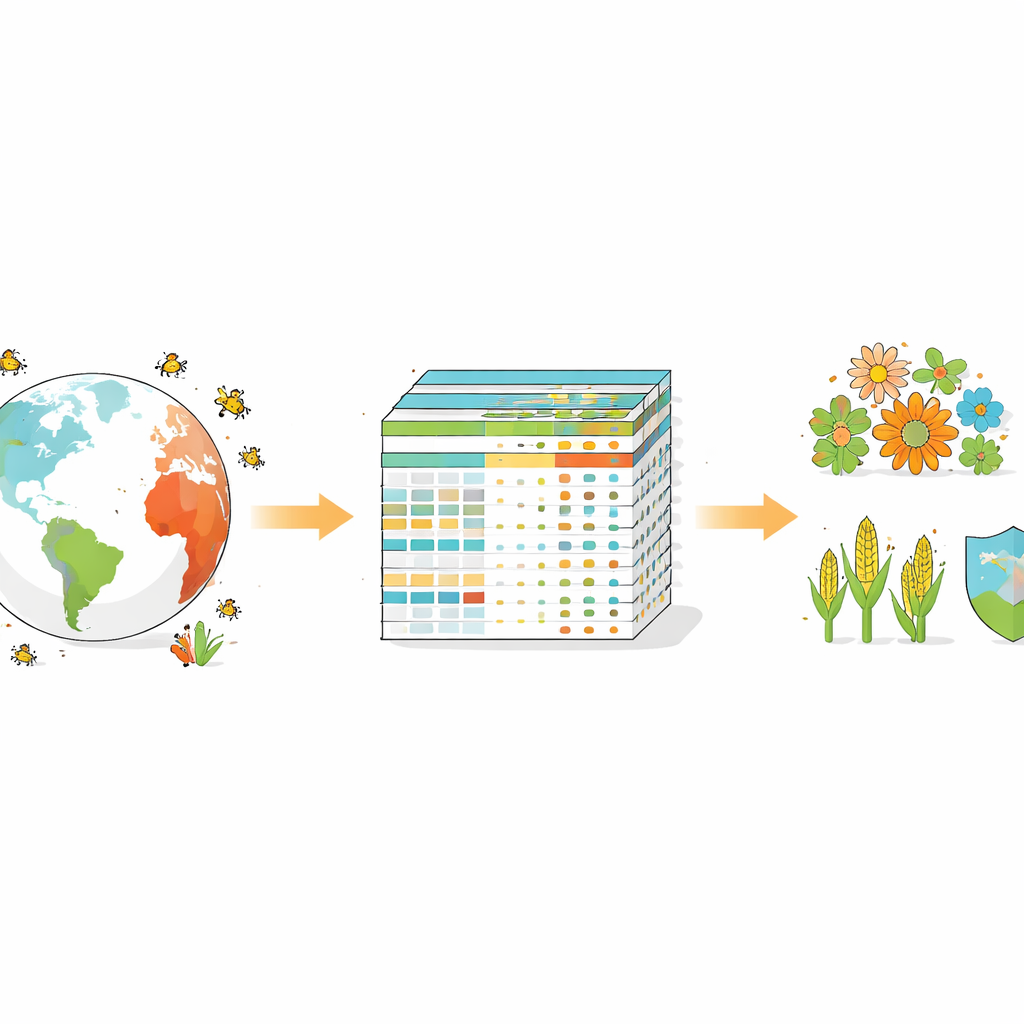
Bringing Scattered Clues into One Big Picture
Information about bee–plant relationships has long been scattered across museum drawers, field notebooks, online platforms, and research papers. The authors focused on Global Biotic Interactions (GloBI), an open database that already gathers many kinds of species interactions. They filtered it for records where bees visit or pollinate plants, then standardized the naming of both bees and plants using the latest global checklists. After removing incomplete or duplicate entries, they produced a curated dataset with 981,982 unique records linking 5,537 bee species to 12,699 kinds of plants, most identified down to species.
What the New Dataset Reveals—and What It Misses
Although the numbers sound huge, the dataset still represents only a slice of global life. It covers about a quarter of all described bee species and just a few percent of animal‑pollinated flowering plants. Most records come from North America and Western Europe, mirroring broader biases in biodiversity data. North America, which holds roughly one quarter of the world’s bee species, accounts for more than 80% of the bee–plant records. In contrast, regions with rich but less studied bee faunas—such as much of Africa, Asia, and South America—remain poorly represented, sometimes with only a handful of species recorded.
Patterns in Pollinators, Plants, and Places
By layering extra information onto the raw interaction records, the authors were able to explore broad patterns. They mapped where each bee species is known to occur and checked which ones appear to be restricted to a single country, providing a first pass at national endemism for both bees and plants. They also examined how well different branches of the bee family tree are covered, finding that familiar groups such as honey bees and bumble bees dominate the records. A few highly visible species, including the western honey bee and several common bumble bees, have thousands of documented plant partners, while many other bee and plant species appear only once or a few times. About half of the plant species involved are also used by people as foods, animal feeds, or medicines, suggesting a strong tilt toward plants that attract human attention as well as bees.
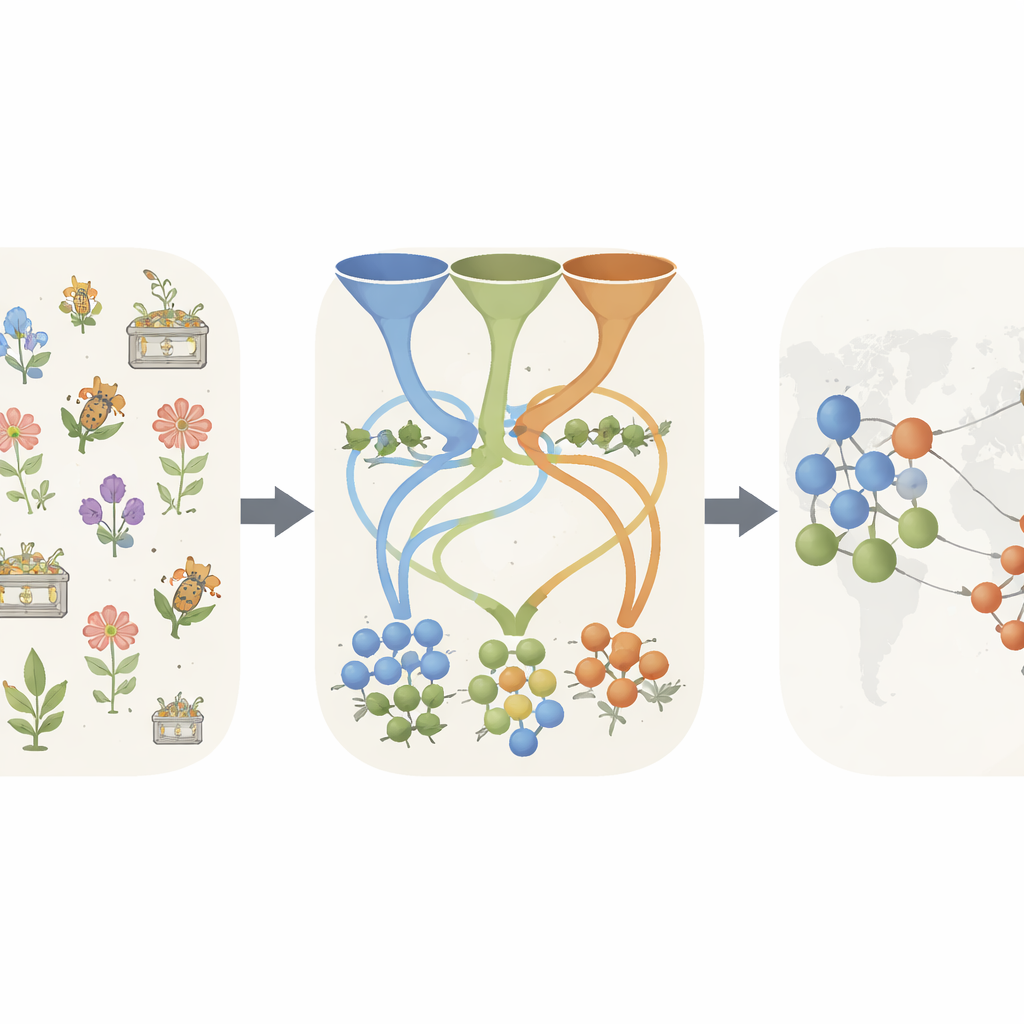
How Scientists Can Use This New Resource
Despite its gaps, the cleaned dataset is now structured so that researchers can link it with other large biodiversity resources. For instance, scientists can combine these bee–plant links with maps of where species have been observed to study how pollination networks change across climates, countries, or land‑use types. They can ask which bees tend to specialize on only a few plants and which are generalists, or test how robust local pollination systems might be to the loss of certain species. The dataset also helps highlight specific regions, bee groups, and plant lineages where information is especially scarce, guiding future surveys and digitization efforts.
Why This Work Matters for Nature and People
In everyday life, we see bees visiting flowers without realizing that each visit is part of a vast, intricate network that supports ecosystems and food supplies. This article shows that it is now possible to view that network at a global scale, even if the picture is still incomplete. By carefully cleaning and organizing nearly a million records, the authors provide a shared foundation for answering practical questions about where pollination is most at risk, which species deserve urgent attention, and how human activities reshape the living ties between bees and plants. As more data are added and under‑studied regions are better sampled, this evolving resource will help scientists and decision‑makers protect both wild biodiversity and the crops on which people depend.
Citation: Noori, S., Hughes, A.C., Vasconcelos, T.N.C. et al. A curated and integrated dataset for exploring global bee-plant interactions. Sci Data 13, 390 (2026). https://doi.org/10.1038/s41597-026-06970-5
Keywords: bee pollination, plant–pollinator networks, biodiversity data, global conservation, species interactions