Clear Sky Science · en
High-resolution energy data from a sustainable industrial production area in Karlsruhe
Why factory energy data matters
Behind every smartphone, car, or solar panel lies a maze of machines that quietly gulp electricity. Factories use roughly two-fifths of the world’s power, yet we rarely see how that energy is spent second by second. This paper introduces an unusually detailed public dataset that lets researchers and engineers peer inside the electrical heartbeat of real industrial machines over several years. With it, they can explore how to make production cleaner, cheaper, and more reliable.
A close look inside two real factories
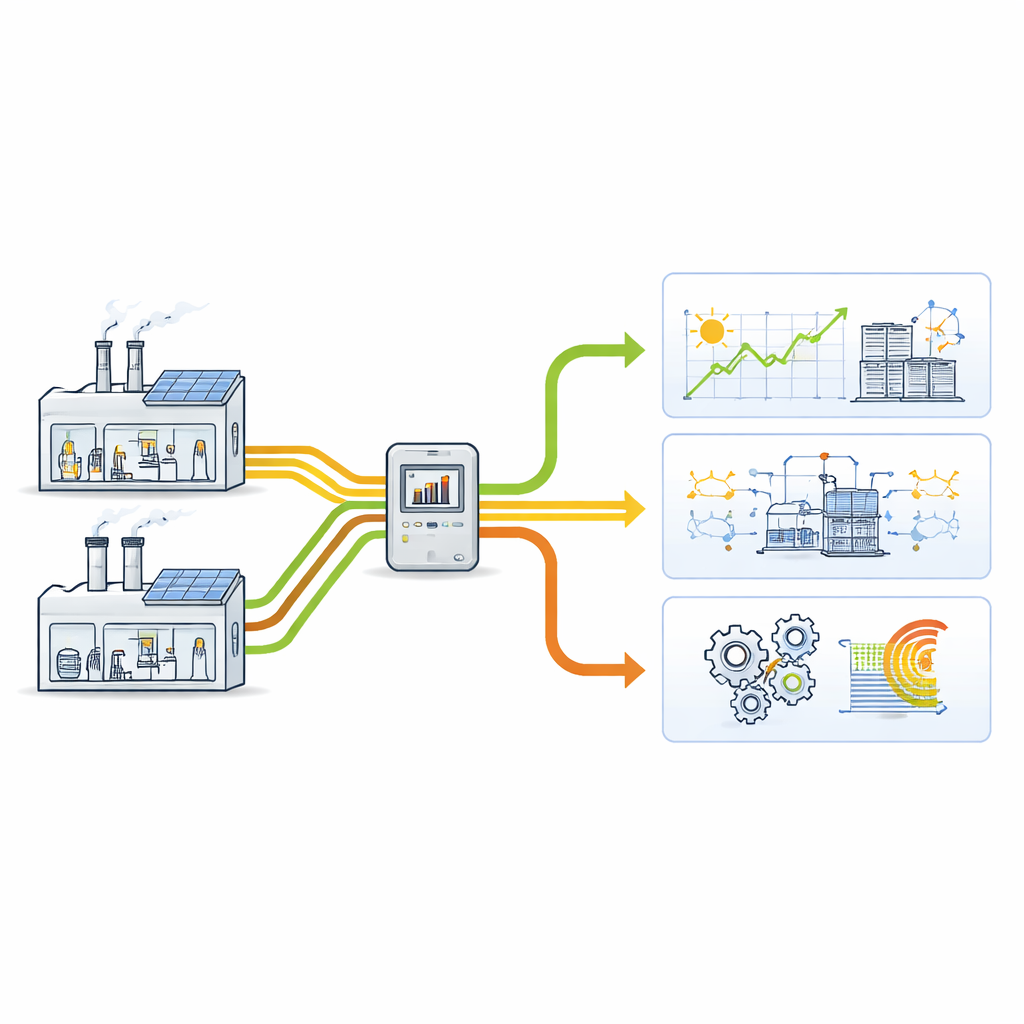
The dataset comes from two industrial research facilities near Karlsruhe in Germany. One focuses on electronics and power electronics, with chip presses, solder ovens, screen printers, and a rooftop solar array. The other is a precision workshop packed with advanced computer-controlled milling machines, lathes, and a wire-cutting system. Together they form a small but realistic industrial neighborhood, where dozens of different processes switch on and off according to changing production needs.
Following electricity in fine detail
To track energy use, the team connected 22 individual machines and one solar system to industrial-grade meters. Every five seconds, around the clock, these meters record how much power flows, how strong the voltages and currents are, and how much their shapes deviate from a perfect sine wave. Over up to seven years, this adds up to more than 74 billion measurements, capturing both calm operating days and irregular events such as maintenance shutdowns or power disturbances. Some devices record nearly 200 different electrical quantities, providing a rich fingerprint of how each machine behaves.
Beyond simple consumption numbers
Unlike most public energy datasets, which report only total usage for homes or entire buildings, this collection drills down to individual factory machines and includes indicators of power quality. These describe how “clean” the electricity is and reveal distortions caused by modern electronics, such as drives and inverters. The dataset also links machine behavior to outside factors. Separate files track local weather, wholesale electricity prices, grid carbon emissions, and public holidays. This combination lets users ask questions like how sunshine and electricity prices affect when the rooftop solar system feeds power to the grid, or how production might be shifted to times when electricity is cleaner or cheaper.
From raw readings to ready-to-use data
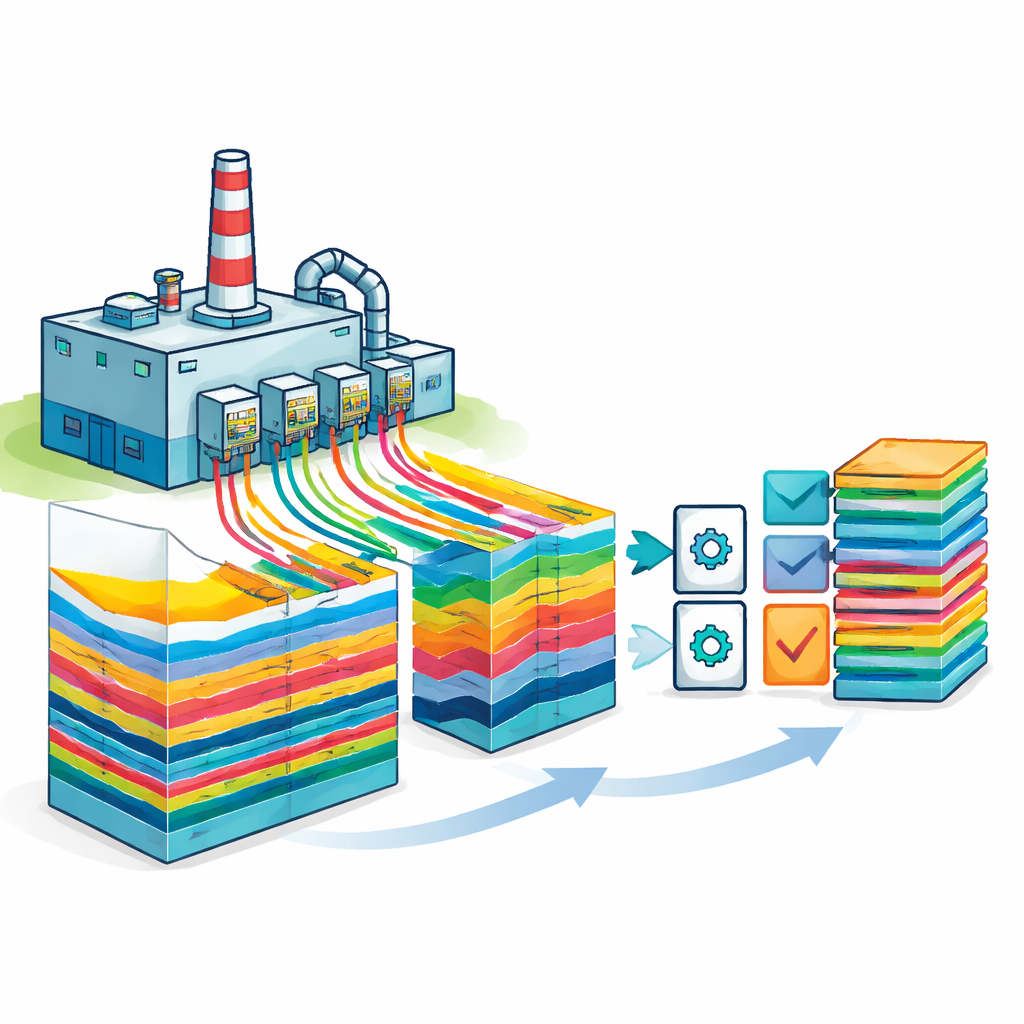
Because such a large collection can easily become unwieldy, the authors invested heavily in careful organization and checking. Measurements are stored in compressed files grouped by machine, type of quantity, and year, so users can download only what they need. Every time series is aligned to a precise five-second calendar grid, and companion files summarize basic statistics and list any gaps in the data. The team applied strict quality checks, removing values that violate basic physical limits and verifying that relationships between power, voltage, and current make sense. Structurally empty channels and unreliable machines are clearly flagged or excluded from the cleaned version, while still being available in a separate raw release for full transparency.
A foundation for smarter, cleaner factories
In essence, this work does not propose a new algorithm but builds the kind of data foundation that modern algorithms need. With long, detailed, and well-documented records at the machine level, researchers can test forecasting methods, train digital twins, and develop tools that detect faults before they cause downtime. By combining energy use with prices and emissions, they can also explore how to schedule machines in ways that cut both costs and carbon. For anyone interested in the future of efficient manufacturing, this dataset turns a once-hidden world of factory electricity into something that can be studied, shared, and improved.
Citation: Sievers, J., Bischof, S., Blank, T. et al. High-resolution energy data from a sustainable industrial production area in Karlsruhe. Sci Data 13, 310 (2026). https://doi.org/10.1038/s41597-026-06955-4
Keywords: industrial energy data, power quality, smart manufacturing, digital twins, energy forecasting