Clear Sky Science · en
Chromosome-level genome assembly of the alpine extremophyte Tibetan snow lotus, Saussurea hypsipeta Diels
Why a mountain flower’s DNA matters
High on the wind-scoured slopes of the Qinghai–Tibet Plateau grows the Tibetan snow lotus, a woolly alpine flower treasured in traditional medicine and famed for surviving intense cold and strong sunlight. Until now, scientists lacked a complete picture of this plant’s genetic blueprint, limiting efforts to understand how it thrives in such extremes or to safeguard it as climate and human pressures mount. This study delivers a full, chromosome-level map of the Tibetan snow lotus genome, opening a window onto the biology of high-altitude life and the genetic roots of its healing compounds. 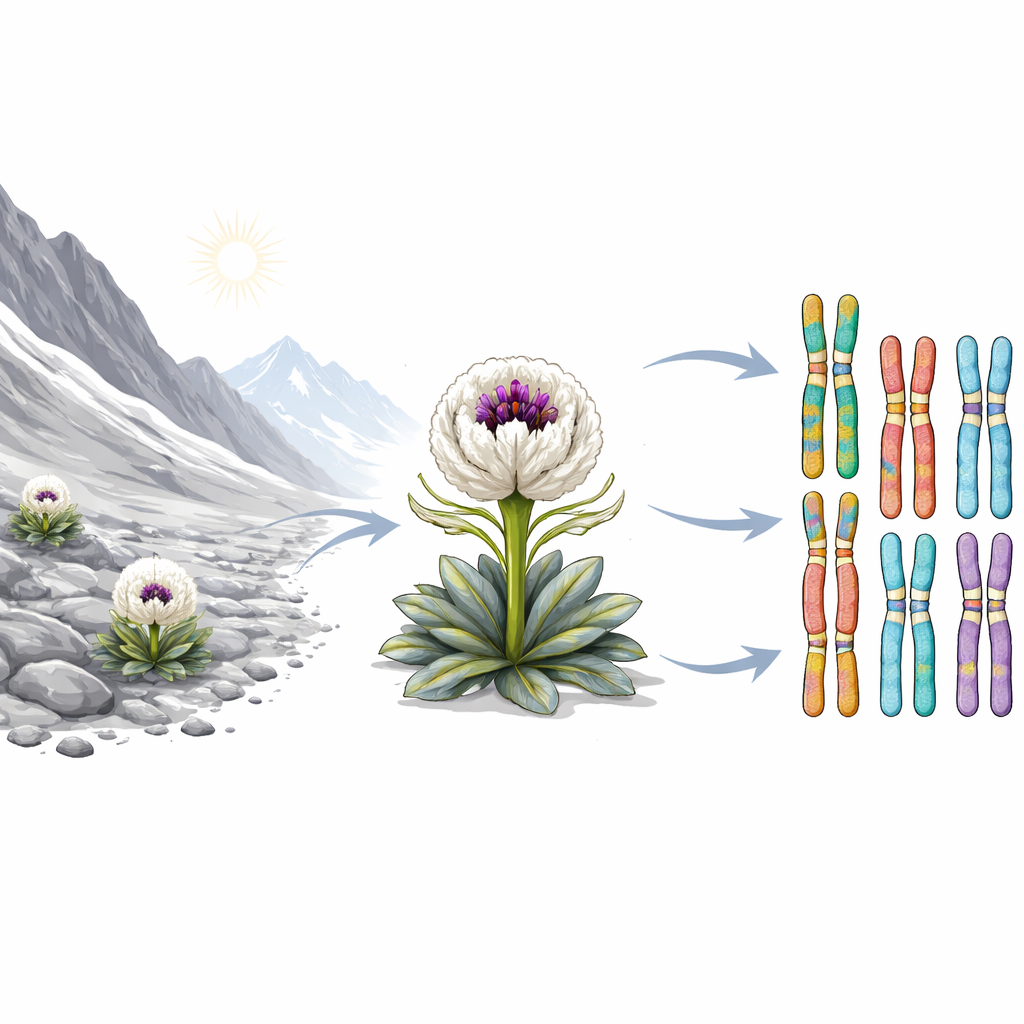
A tough plant on the rooftop of the world
Saussurea hypsipeta, one of the plants known as Tibetan snow lotus, grows between roughly 4,000 and 6,000 meters above sea level, where thin air, low temperatures, and intense ultraviolet radiation pose constant threats. The plant’s thick, wool-like hairs help shield it from this harsh environment by insulating against cold and reducing water loss. It also plays an important role in fragile alpine ecosystems and has long been used in Tibetan medicine for conditions such as joint pain and gynecological disorders. Yet, despite its ecological and cultural importance, only its small chloroplast and mitochondrial genomes had been decoded; the much larger nuclear genome that controls most traits remained a black box.
Reading a giant, complex genome
To tackle this challenge, the researchers collected fresh leaves from wild plants on a rocky slope of the Qilian Mountain range, then extracted very pure DNA and RNA in the lab. They combined several cutting-edge sequencing strategies: short, highly accurate DNA fragments; long, high-fidelity reads that span difficult regions; and Hi-C, a method that captures how pieces of DNA sit next to each other inside the cell nucleus. This blend of technologies allowed them to not only read the DNA letters but also piece them together into long, continuous stretches and finally organize them into full chromosomes, much like assembling pages and chapters into a complete book.
Building chromosomes from scattered pieces
The snow lotus turned out to have a very large and unusually variable genome. The team estimated its size at over three billion DNA bases, comparable to or larger than the human genome, and found that neighboring plants differ from one another at many positions, a feature known as high heterozygosity. Such variation can confuse assembly software, which may accidentally mix different versions of the same region. To overcome this, the scientists used a specialized program that separates the two parental copies of the genome and focused on the cleaner, higher-quality version as a reference. They then used statistical tools to detect and remove redundant or misjoined segments. Finally, Hi-C data were used to order and orient the assembled pieces into 16 pairs of chromosomes, covering more than 92% of the genome with very few gaps, and independent quality checks confirmed that errors are rare. 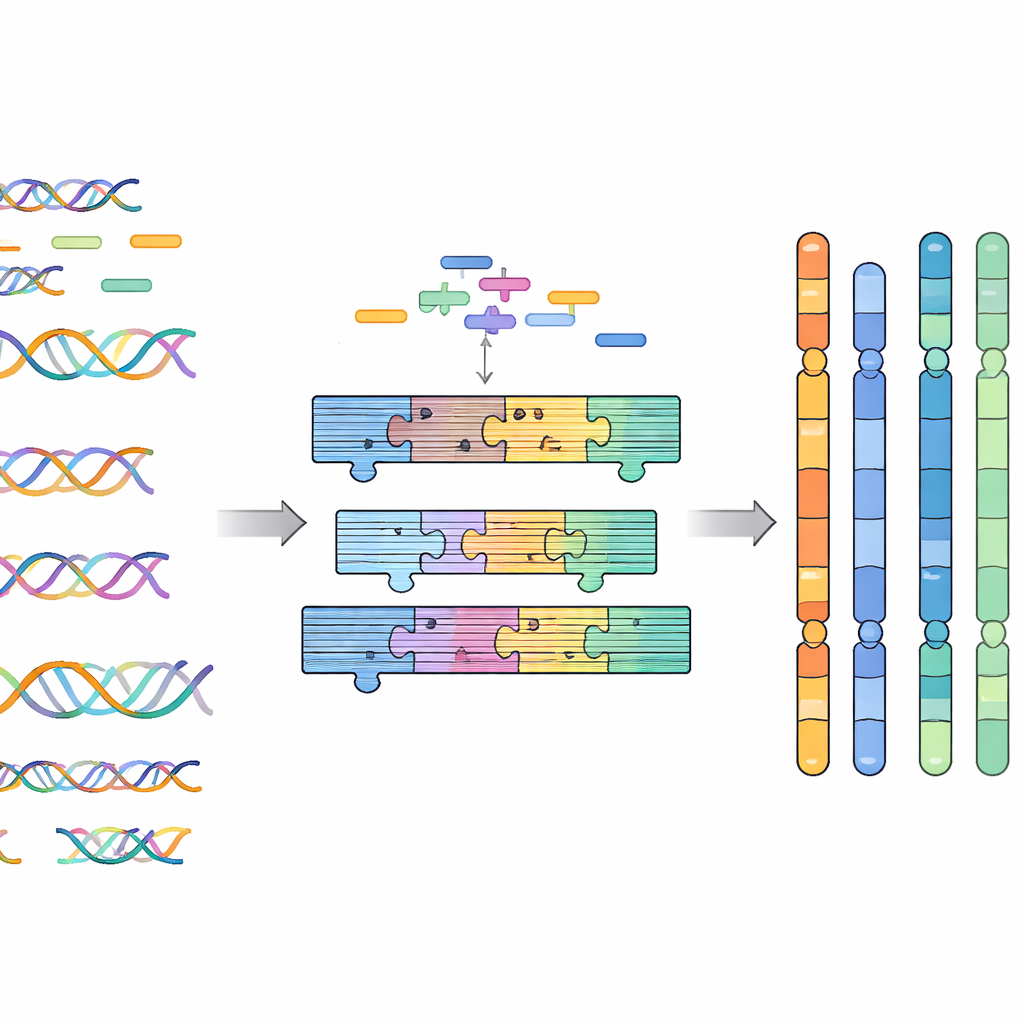
What the genome reveals about the plant
Once the basic framework was built, the team searched it for important features. They found that about 87% of the genome is made of repeated sequences, especially a class of mobile DNA elements called long terminal repeats, which can copy and paste themselves and often drive genome expansion in plants. Within this repetitive landscape they identified more than 70,000 genes, including about 41,600 that encode proteins and nearly 29,000 that produce various non-coding RNAs involved in regulating cell activity. Over 94% of the protein-coding genes matched entries in major biological databases, and their sizes and structures resembled those of related species in the daisy family, increasing confidence that the genome map is both complete and accurate.
New paths for medicine and conservation
By delivering a detailed, chromosome-level genome for the Tibetan snow lotus, this work provides a crucial foundation for future discoveries. Researchers can now search for gene networks that help the plant withstand cold, drought, and intense sunlight, improving our understanding of how life adapts to high altitudes and perhaps guiding breeding of hardier crops. At the same time, the genome offers a roadmap for pinpointing the genes and pathways that produce its anti-inflammatory and antioxidant compounds, which may inform the development of new medicines and support more sustainable use of this valued alpine herb.
Citation: Wang, M., Hu, G., Yangjin, L. et al. Chromosome-level genome assembly of the alpine extremophyte Tibetan snow lotus, Saussurea hypsipeta Diels. Sci Data 13, 508 (2026). https://doi.org/10.1038/s41597-026-06931-y
Keywords: Tibetan snow lotus, high-altitude adaptation, plant genome assembly, medicinal plants, Asteraceae genetics