Clear Sky Science · en
Proteomic dataset of MECP2-deficient and wild-type human brain organoids under spaceflight and ground conditions
Why Growing Tiny Brains in Space Matters
As human space travel stretches from quick visits to plans for long stays on the Moon and Mars, a basic question looms: what does space do to the human brain? At the same time, disorders of brain development, such as Rett syndrome, still lack cures because scientists struggle to watch early brain changes as they unfold. This study brings these two frontiers together by sending tiny lab-grown "mini-brains" to the International Space Station and measuring thousands of their proteins, offering a new window into how space affects brain tissue and a rare genetic disorder.
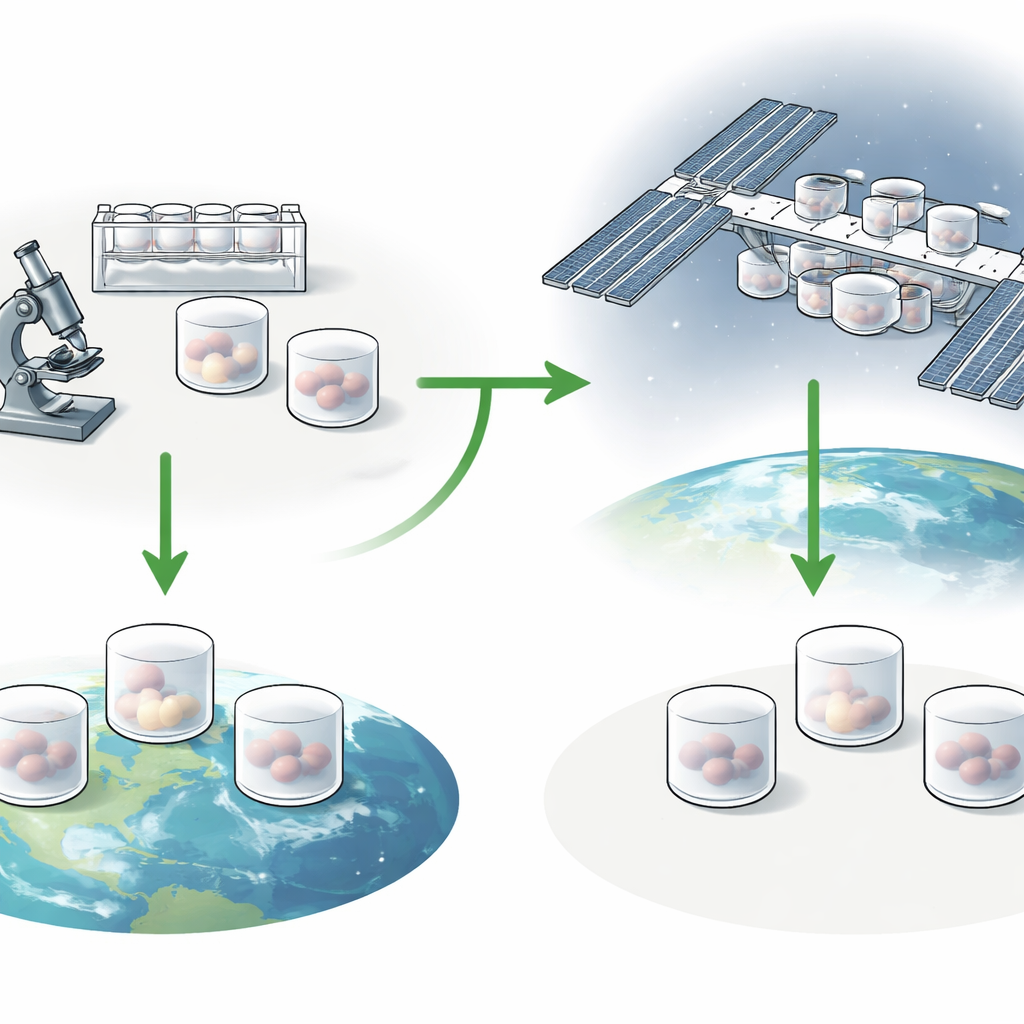
Tiny Brain Models Built from Human Cells
The researchers began with skin cells from a male patient with Rett syndrome and from an unaffected close relative. They reprogrammed these cells into induced pluripotent stem cells, which can be turned into many different cell types, and then coaxed them into forming three-dimensional brain organoids—small, self-organizing clumps of nerve cells that mimic key features of a developing human brain. In the Rett line, a single DNA change in the MECP2 gene introduces an early stop signal, preventing production of the full MeCP2 protein, a vital controller of gene activity. The control line shares the same genetic background but has a normal MECP2 gene, making it ideal for side-by-side comparison.
A Month on Earth, a Month in Orbit
All organoids first matured for 30 days on Earth. The team then divided them into two groups: one stayed on the ground, and the other was launched to the International Space Station for another 30 days. To withstand the harsh logistical limits of spaceflight, each tiny brain was sealed in a one-milliliter cryovial, kept warm with controlled levels of carbon dioxide, and supplied with air through a special gas-permeable cap. Ground controls were housed in identical hardware so that the only major difference between groups was exposure to microgravity and the broader space environment.
Reading the Protein Fingerprints
After the mission, the scientists did not simply look at the organoids under a microscope—they measured their internal machinery at the molecular level. Using high-end mass spectrometry, they broke down the organoids into peptides and reconstructed which proteins were present and in what amounts. Across all samples, they confidently identified 56,639 peptides that mapped to nearly 6,000 distinct protein groups. Quality checks showed that the measurements were highly reproducible: most proteins formed a large shared "core" set across all conditions, and chromatograms—time-based traces of peptide signals—were strongly correlated from sample to sample.
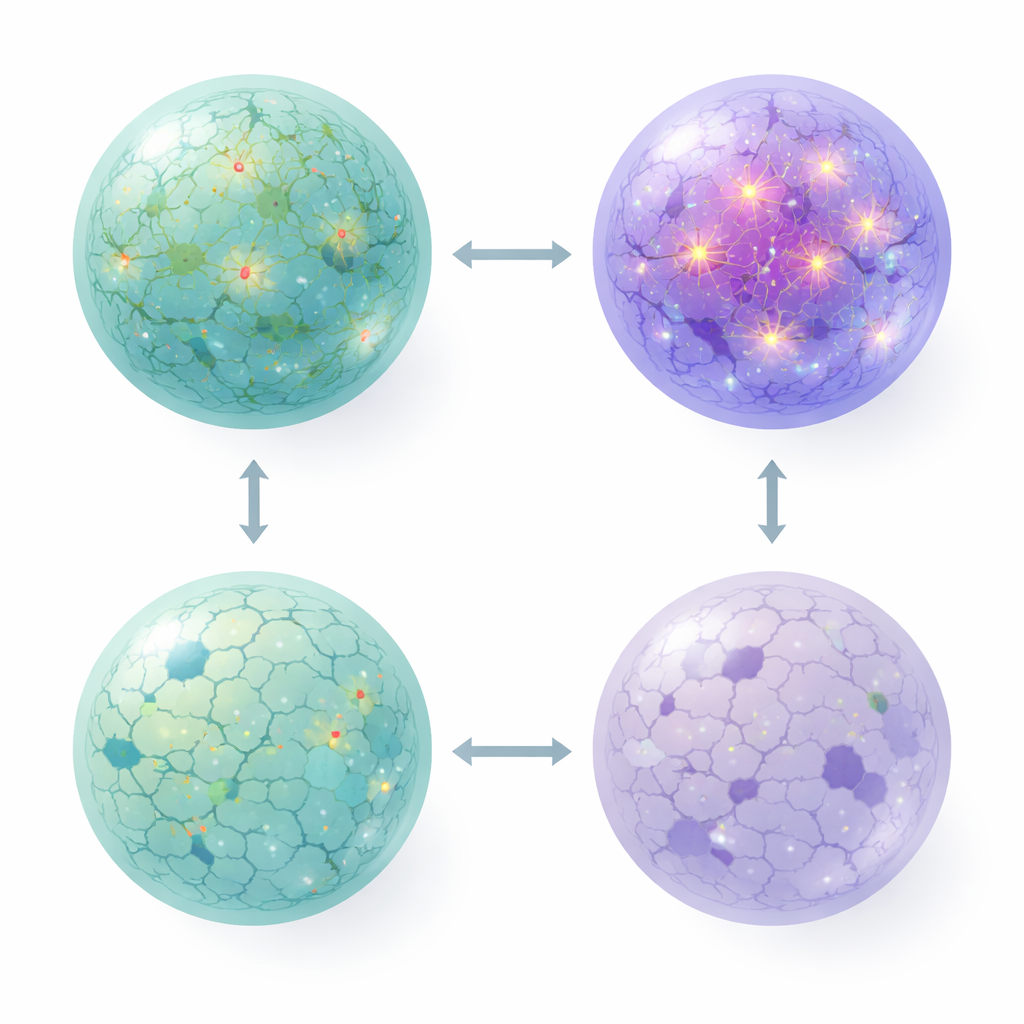
Confirming the Disease Model and Space Effects
One key test was whether the Rett syndrome mutation truly wiped out the MeCP2 protein. In organoids from the healthy relative, protein fragments covered the full length of MeCP2 under both ground and space conditions, confirming normal expression. In contrast, organoids from the Rett patient line showed no detectable MeCP2 peptides at all, consistent with the mutant message being destroyed before a usable protein can be made. This clear on–off pattern validates the model as a true loss-of-function system. At the same time, the rich protein catalog—about 6,000 protein groups across ground and space for both genetic backgrounds—offers a starting point for exploring which molecular pathways respond to space conditions and how those responses differ when MeCP2 is missing.
What This Means for Space Travelers and Patients
Although this paper focuses on describing the dataset rather than delivering final biological answers, its message is straightforward for non-specialists: scientists now have a detailed protein map of human mini-brains grown in space, both with and without a key gene linked to Rett syndrome. Because space appears to speed up certain cellular changes, these data can help researchers more quickly spot early warning signs of brain stress, discover which molecular systems are most vulnerable during long missions, and identify targets for future medicines. In the long run, the same information that helps protect astronauts’ brains may also guide new strategies to treat children with Rett syndrome and related developmental disorders back on Earth.
Citation: Martins, A.M.A., Biagi, D.G., Tsu, B.L. et al. Proteomic dataset of MECP2-deficient and wild-type human brain organoids under spaceflight and ground conditions. Sci Data 13, 486 (2026). https://doi.org/10.1038/s41597-026-06881-5
Keywords: brain organoids, Rett syndrome, spaceflight, proteomics, MECP2