Clear Sky Science · en
NEVi: Negative Emotional Video dataset – categorizing stimulus intensity ratings based on valence and arousal
Why feelings from short videos matter
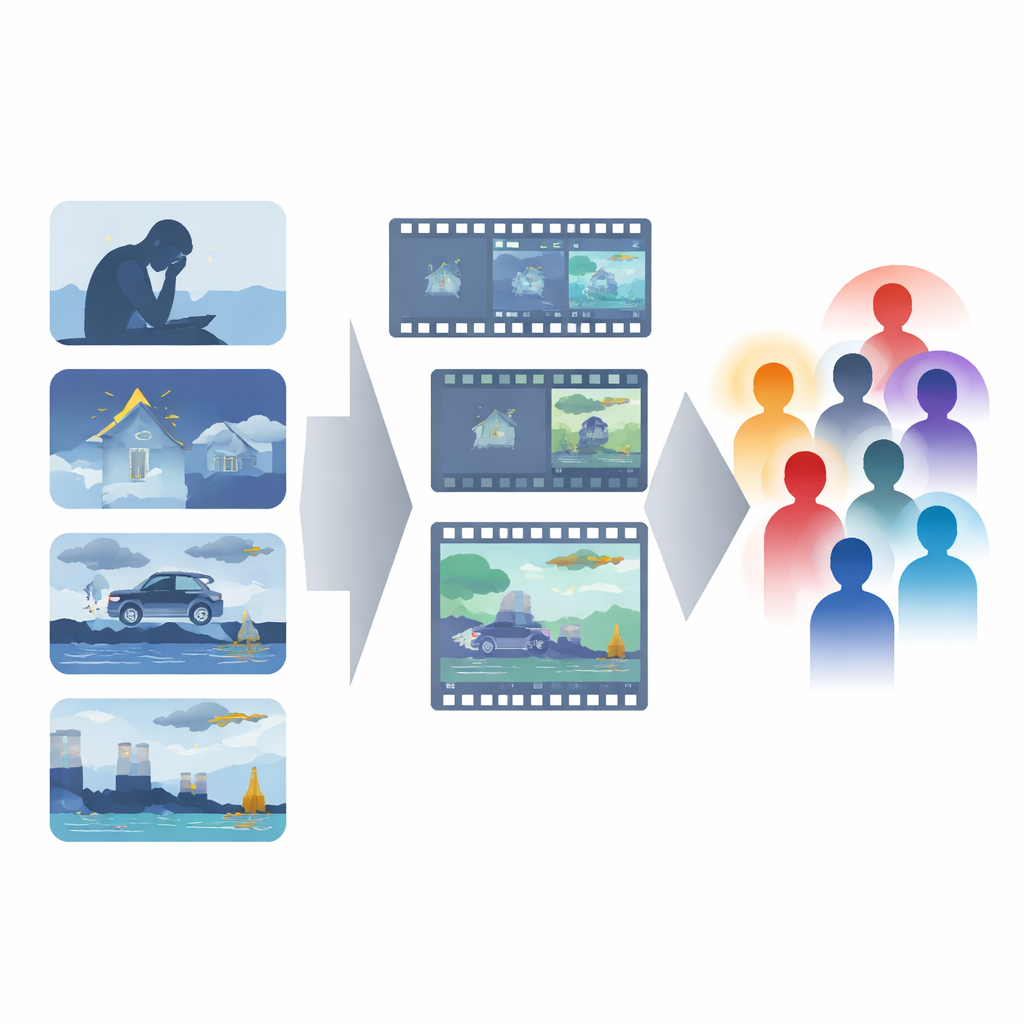
When we think about how scientists study emotions, we might picture people looking at still photographs of smiling or frightened faces. But in everyday life, our feelings are usually stirred by moving scenes: a sudden car crash on the news, a tense argument in a movie, or footage of an environmental disaster. This article introduces NEVi, a carefully built collection of short, soundless video clips designed to trigger negative feelings in a safe, controlled way. It gives researchers a modern tool to study how people react to upsetting events and how they manage those feelings, especially in younger or more vulnerable groups.
From single snapshots to moving moments
For decades, emotion research has relied heavily on static pictures. These are easy to control, but they strip away much of what makes real-life emotions so powerful: movement, changing expressions, and context. Earlier work has shown that videos grab our attention more, hold our emotional engagement longer, and produce stronger changes in brain activity, heart rate, and sweating than still images. Yet standardized, well-tested video sets have been rare, which has slowed down research that aims to mimic real-world emotional situations more closely.
Building a carefully screened video library
To fill this gap, the authors assembled NEVi (Negative Emotional Video dataset) from three existing emotion video collections. They started by handpicking 152 clips that showed a wide range of real-world negative scenes—such as injuries, accidents, pollution, and crying—while deliberately avoiding extremely graphic violence or abuse so the material would be suitable for adolescents and people with mental health concerns. The clips were trimmed and standardized into silent, color videos with the same picture size and shape. After an internal review by a team of experts, 39 videos were removed for low quality or questionable suitability, leaving 113 clips to move forward.
Short shocks and longer looks
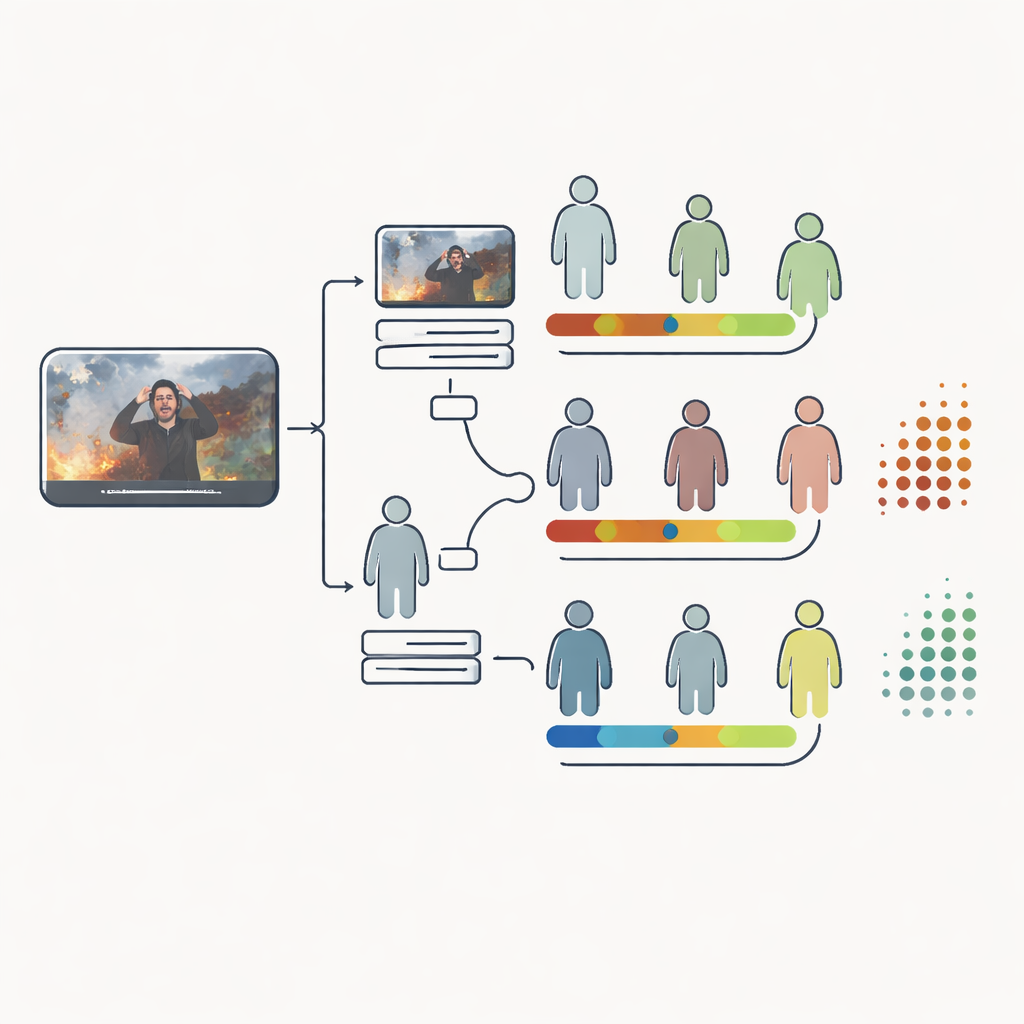
For each remaining video, the team created two versions: a brief 1‑second fragment and a 5‑second clip that showed a fuller moment. The short segment was chosen around the point of peak emotional impact, while still making the scene understandable. This pairing serves a specific purpose: the 1‑second clips can act as quick “emotional sparks” to prime people, and the 5‑second clips can provide a more sustained emotional experience. In an online study, 650 English-speaking adults from several countries were recruited to watch and rate the videos; after strict quality checks, data from 589 people were analyzed. Each participant saw a subset of 50 videos, first the short version and then the long version, and rated how pleasant or unpleasant they felt (valence) and how calm or stirred up they felt (arousal) on simple 9‑point scales supported by cartoon figures.
How people reacted to the clips
The ratings showed clear and consistent patterns. When the same scene was shown, the 5‑second version generally produced stronger emotional reactions—more negative and more arousing—than the 1‑second version. However, the short clips still preserved the basic emotional “direction”: videos judged as highly intense in their longer form were also judged as more negative and more arousing in their shorter form. Using these ratings, the team grouped 40 clips as high-intensity and 40 as low-intensity negative videos, while the remaining clips fell in between. The researchers also checked whether the pattern of responses made sense given people’s mental health and media habits. For example, people with more psychological symptoms tended to report feeling more stirred up, and those who frequently consumed violent media tended to give slightly less negative ratings, hinting at emotional desensitization.
A new tool for studying difficult feelings
For the broader scientific community, NEVi offers more than just a list of videos: it comes with open, well-documented data files, analysis scripts, and clear instructions on how to reconstruct the clips from the original sources. Compared with older collections of highly graphic photographs, NEVi’s dynamic but ethically screened scenes strike a balance between emotional impact and participant safety, making them suitable for adolescents and people with mental health vulnerabilities. Researchers can now use these clips to study how negative feelings arise, how long they last, how people choose to regulate them, and how these processes differ across individuals and groups. In simple terms, NEVi turns upsetting moments on screen into a carefully measured, reusable tool for understanding how we cope with life’s darker emotions.
Citation: Schurig, H., Stender, E.M., Hennig, J. et al. NEVi: Negative Emotional Video dataset – categorizing stimulus intensity ratings based on valence and arousal. Sci Data 13, 322 (2026). https://doi.org/10.1038/s41597-026-06870-8
Keywords: emotion regulation, negative emotions, video stimuli, valence and arousal, adolescent mental health