Clear Sky Science · en
A dataset of paired blood mRNA and microRNA sequencing across acute septic shock and recovery
Why this matters for patients with severe infections
When a serious infection spirals out of control, the body’s own defenses can turn harmful, leading to sepsis and septic shock, conditions that kill hundreds of thousands of people worldwide each year. Doctors at the bedside see patients who can suddenly worsen or slowly recover, but they cannot easily see what is happening inside blood cells as the immune system shifts from crisis to stability. This study presents a detailed dataset that tracks changes in gene activity in the blood of the same patients during the most dangerous phase of septic shock and again after they have improved, offering a new window into how the body fights its way back to balance.
A closer look inside the blood during sepsis
The immune system usually walks a tightrope: it must attack invading bacteria, viruses, or fungi without causing lasting damage to the body’s own tissues. In sepsis, that balance breaks down. Signals that drive inflammation and signals that calm it no longer coordinate properly, and organs can begin to fail. Clinicians urgently need fast, reliable markers in the blood that reveal which patients are in real danger, how their disease is evolving, and whether treatments are working. Traditional measures, such as levels of the infection marker procalcitonin, can vary greatly between people and do not fully explain who recovers and who does not. That is why researchers are increasingly turning to the body’s full pattern of gene activity—its “transcriptome”—as a more informative readout.
What this study adds to earlier work
Previous large studies have already shown that patterns of messenger RNA (mRNA), the molecules that carry genetic instructions to make proteins, and microRNA, tiny regulators that fine-tune those instructions, can distinguish people with sepsis from healthy volunteers, and even separate sepsis from other forms of severe inflammation. Some investigations have also used these patterns to estimate a person’s future risk of developing sepsis after major surgery. However, many of those comparisons were made between different groups of people—patients versus healthy controls, or sepsis versus non-sepsis—which makes it hard to tell whether the differences arise from the disease itself or from natural variation between individuals.
Following the same patients from crisis to recovery
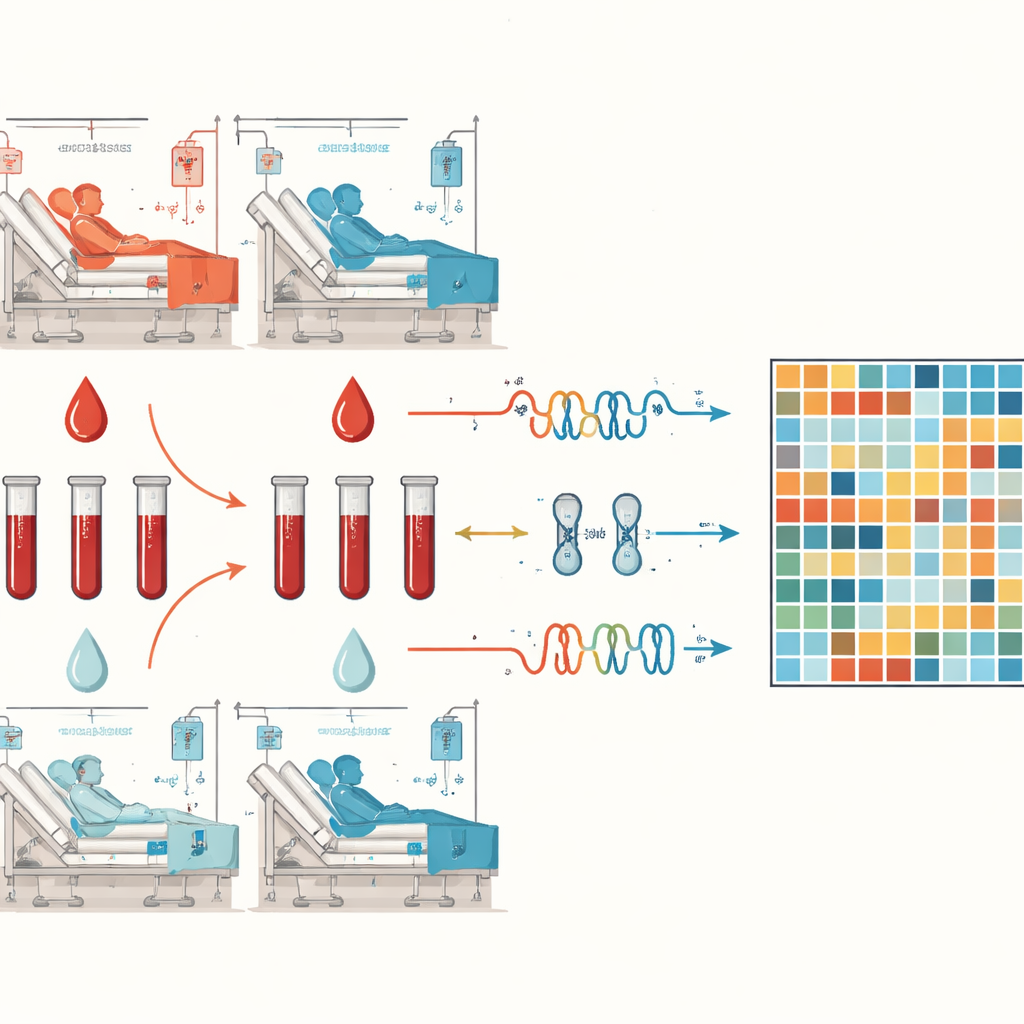
The new dataset focuses instead on change within each person. Six adults treated in an intensive care unit in Budapest for septic shock—three with lung infections and three with urinary tract infections—each provided two blood samples. One was drawn at the height of septic shock, when organ function was severely impaired and drugs to support blood pressure were required. The second was taken days later, at the time of discharge from intensive care, when patients were judged clinically stable and no longer needed blood pressure–raising drugs. Standard clinical scores, such as the SOFA score that summarizes organ function, clearly improved between the two time points, confirming the shift from crisis to recovery.
How the genetic activity map was created
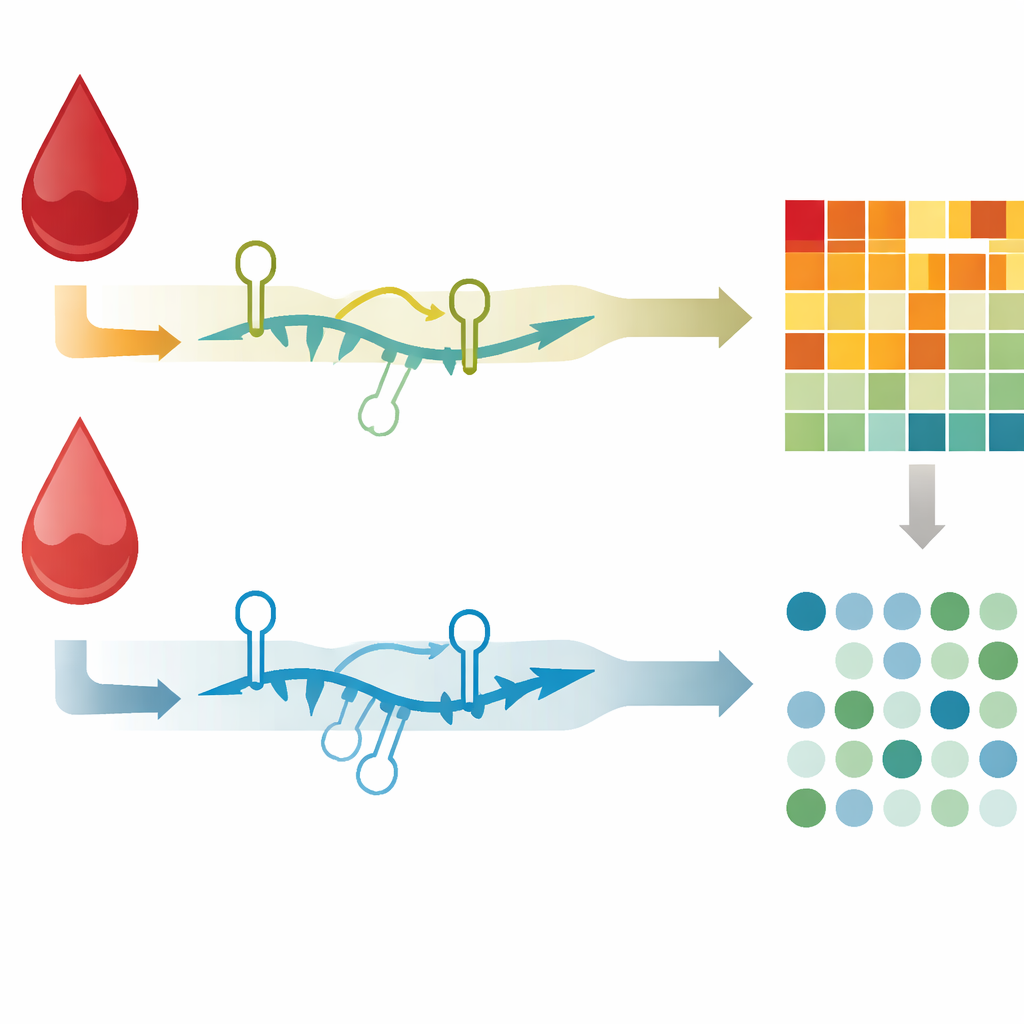
From each blood sample, the team extracted total RNA and prepared two types of sequencing libraries: one capturing mRNA and the other capturing small RNAs, including microRNAs. Using next-generation sequencing machines, they obtained on average 15 million mRNA reads and 10 million microRNA reads per sample, enough to build a detailed picture of which genes were active and how strongly. Extensive quality checks ensured that the RNA was intact and that sequencing libraries met strict standards. The reads were then aligned to the current reference human genome, and counts of how many reads mapped to each gene were produced, resulting in paired gene-activity profiles for every patient in both shock and recovery states. All raw sequencing files, count tables, and linked clinical information have been deposited in a public database for other scientists to analyze.
What this resource means for future care
Because each patient serves as his or her own control, differences in gene activity between the two time points are more likely to reflect the shift from life-threatening shock toward recovery, rather than unrelated genetic or lifestyle differences between people. The dataset is small, so it is not by itself sufficient to define definitive diagnostic tests or fully explain sepsis biology. Still, it offers a rare paired view of both mRNA and microRNA across the most critical phase of illness. Researchers can use it to explore trends, generate new ideas about how immune responses go awry, and search for early warning signals of improvement or decline. Over time, integrating such detailed molecular maps with larger patient cohorts may help clinicians recognize dangerous immune patterns sooner and guide more personalized treatment for people with severe infections.
Citation: Molnár, K., Maricza, K., Elek, Z. et al. A dataset of paired blood mRNA and microRNA sequencing across acute septic shock and recovery. Sci Data 13, 453 (2026). https://doi.org/10.1038/s41597-026-06844-w
Keywords: sepsis, septic shock, gene expression, blood RNA sequencing, biomarkers