Clear Sky Science · en
Full-elevational gradient dataset on moth diversity and abundance in a temperate mountain range
Watching the Nightlife of Mountains
High mountain meadows may look timeless, but the tiny creatures that fill their night skies are changing fast. Around the world, insects are declining, yet we often lack solid, long-term records to show what is happening and why. This article introduces a rich new dataset tracking thousands of moths over nearly a decade in a Central European national park. For anyone interested in climate change, wildlife, or how scientists actually measure nature’s hidden shifts, this work opens a detailed window into the secret lives of night-flying insects.
Moths as Silent Storytellers
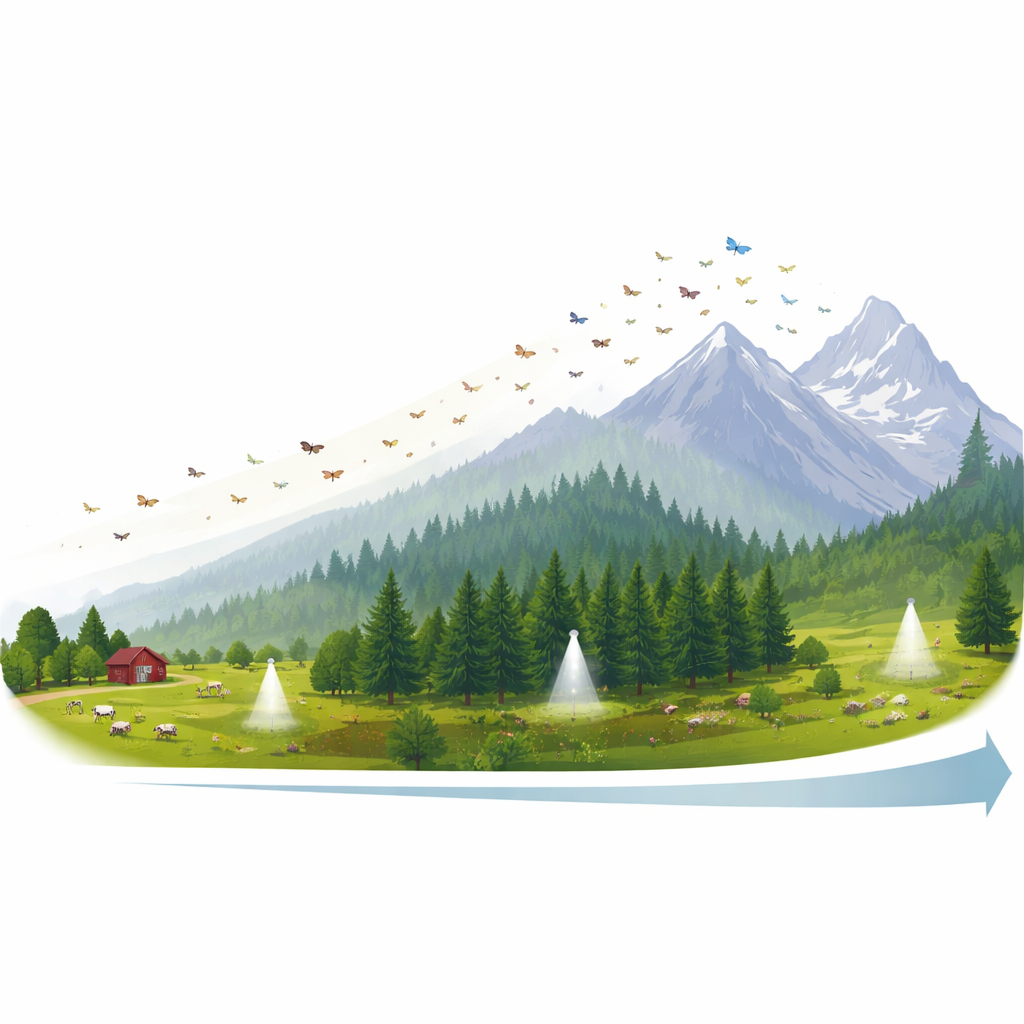
Moths might seem like modest insects, but they are workhorses of many ecosystems. They pollinate plants, feed birds and bats, and include hundreds of species that each prefer different foods and habitats. Because their life cycles and seasonal patterns are well documented in Europe, changes in moth communities can reveal shifts in climate, land use, and habitat quality. The researchers behind this dataset focused on nocturnal moths in the Giant Mountains of the Czech Republic, a range fully protected as Krkonoše National Park. These mountains contain everything from low rural meadows to windswept alpine grasslands, creating a natural staircase of environments where sensitive species can either find refuge or slowly lose ground as temperatures rise.
A Decade of Nights in the Field
From 2012 to 2021, the team systematically sampled moths at 982 locations spread across 550 square kilometers of open and semi-open habitats, from valley bottoms at 400 meters up to treeless ridges at 1,600 meters. They used standardized automatic light traps—portable devices that attract moths with blue and ultraviolet light during the night. Over the years, these traps captured 64,776 individual moths from 439 species. To make sense of these catches, the authors distinguished between “stable monitoring plots,” visited several times within one season, and “complementary plots,” visited fewer times to fill in gaps and cover more habitat types. This careful design ensured that the full range of mountain environments and management styles—such as mown meadows, grazed pastures, and unmanaged grasslands—were represented.
Linking Insects to Their Homes
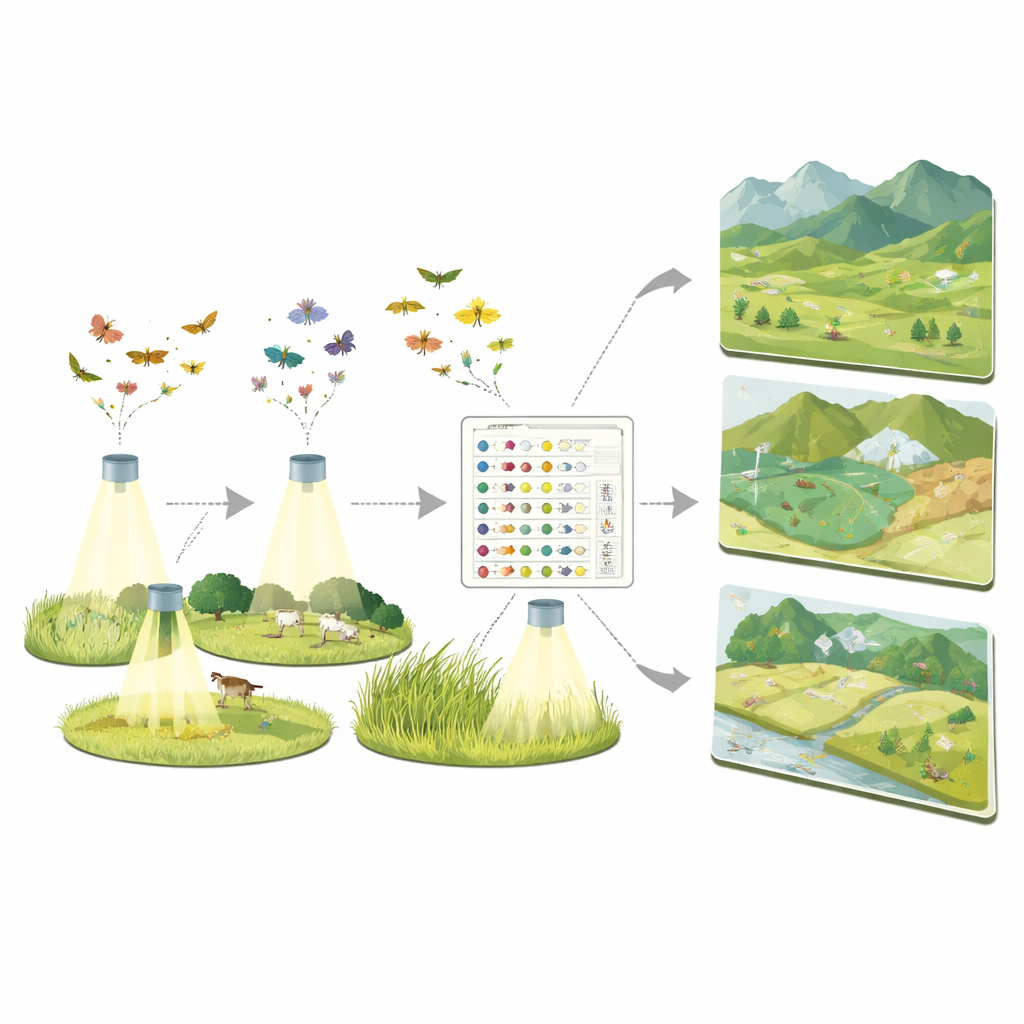
Counting moths alone is not enough; what matters is where they live and under what conditions. At each long-term plot, the researchers recorded the structure of nearby vegetation within a short walking radius of each trap. They measured how tall the plants were, how sparse or dense the vegetation appeared, how many wildflower species were blooming, and how much nectar was available. They also noted how the land was managed—whether it was left alone, cut for hay, or grazed by cattle, horses, or sheep. In addition, they tapped into national geographic data to describe the terrain and ecosystems around every site, using laser-based elevation models to calculate slope, aspect, and how rugged or sun-exposed each location was. This allowed them to connect moth communities not just to local plants, but also to broader features like steepness, exposure to sunlight, and the layout of habitat patches.
Turning Mountain Nights into Open Data
The final product is a public dataset, hosted online, consisting of two main tables and supporting notes. One table lists every moth species recorded at each site, along with the number of individuals caught, when they were sampled, and how threatened each species is nationally. The second table stores environmental details for each location, from exact coordinates to vegetation, management, terrain features, and ecosystem types. A separate metadata file explains every column and documents the exact dates and sampling periods. The authors also share computer code that reproduces the spatial processing steps, making it easier for other scientists to reuse and expand on their work. Careful training of field workers, expert identification of all specimens, and detailed technical checks on the terrain data help ensure that these records are trustworthy.
Why This Record Matters
This dataset does not claim to solve insect decline on its own, but it offers a powerful foundation for others to build upon. Researchers can now explore how moth diversity changes from low valleys to high ridges, how species with narrow habitat needs respond to warming conditions, and which combinations of mowing, grazing, and protection best support rich insect communities. The data can also help track the timing of moth activity through the seasons, assess the influence of light pollution, and inform national and European conservation lists. For a world worried about vanishing insects, this long-term, open record of mountain moths provides both an alarm bell and a measuring stick, helping us see clearly how nature’s night shift is coping with a rapidly changing climate.
Citation: Čížek, O., Marhoul, P., Kadlec, T. et al. Full-elevational gradient dataset on moth diversity and abundance in a temperate mountain range. Sci Data 13, 430 (2026). https://doi.org/10.1038/s41597-026-06837-9
Keywords: moth diversity, mountain ecosystems, elevational gradients, climate change impacts, biodiversity monitoring