Clear Sky Science · en
A time-series transcriptomic dataset of the mouse olfactory bulb across pregnancy and lactation
Why the brain’s sense of smell changes with motherhood
For many new mothers, the smell of their baby seems uniquely powerful. In mice, this bond goes even deeper: scent is the main guide for recognizing pups and caring for them. This study explores how a mother mouse’s brain reorganizes its sense of smell from before pregnancy to the end of nursing, creating a detailed molecular map that other scientists can now use to probe how motherhood reshapes the brain.
A closer look at the brain’s smell center
The focus of the work is the olfactory bulb, the first brain station for smells. In rodents, this structure is crucial for survival-related behaviors such as parenting, mating, and social interaction. Earlier research showed that new nerve cells can continue to be added to this region throughout adult life, and that pregnancy hormones can boost this process. Yet puzzling results suggested that simply blocking new neuron production does not erase basic maternal behaviors. This hinted that deeper, more widespread molecular changes in the olfactory bulb might support the transition to motherhood.
Following motherhood across key stages
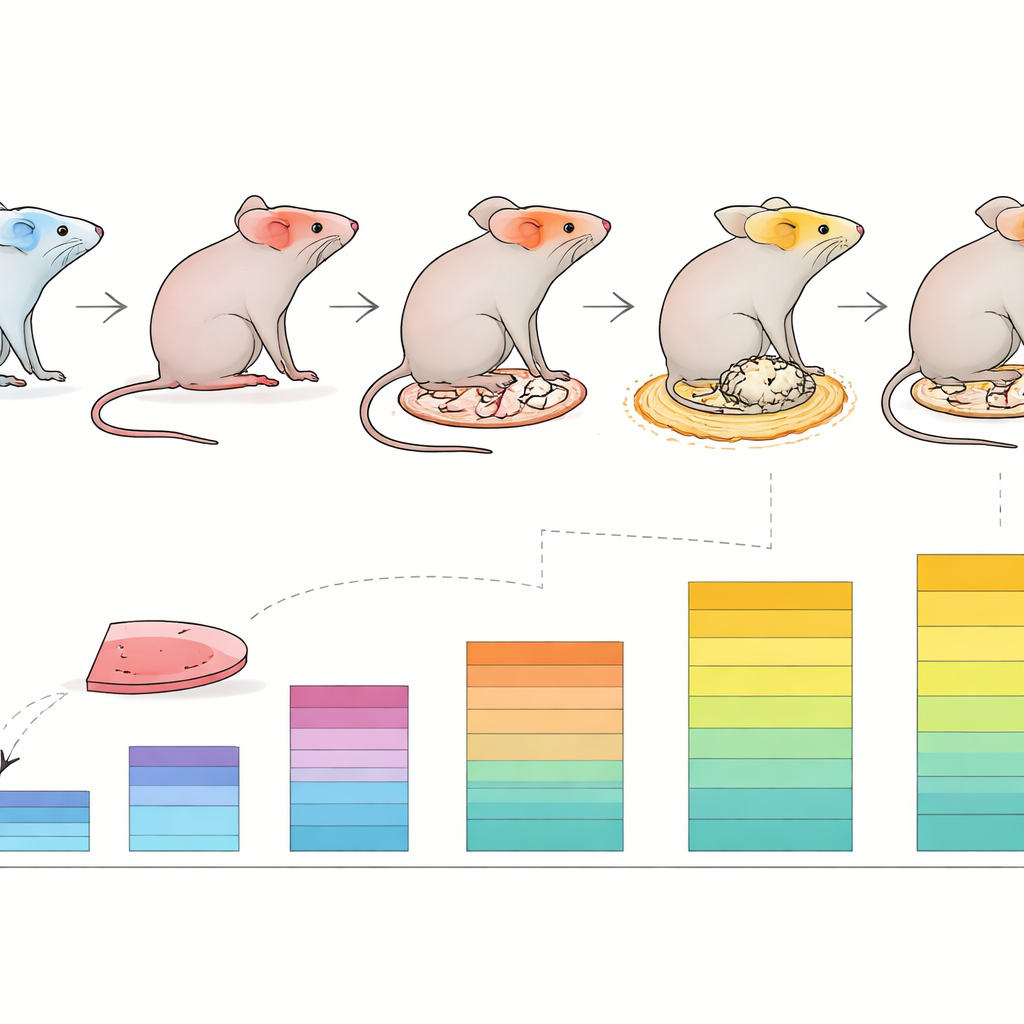
To capture these changes, the researchers designed a time-series study that followed female mice across five key stages: before mating, mid-pregnancy, the day of birth, one week after birth, and the weaning of the litter. At each stage, they dissected the olfactory bulbs from several animals, quickly froze the tissue, and extracted RNA—the messenger molecules that reflect which genes are turned on or off. They then used bulk RNA sequencing, a technique that reads out the activity of thousands of genes at once across all cell types in the tissue, to build a dynamic atlas of gene expression through the entire reproductive cycle.
Turning raw sequences into a clean molecular atlas
The team put strong emphasis on data quality. They carefully isolated intact RNA, confirmed that it was not degraded, and built sequencing libraries for all samples at the same time to avoid technical differences. Advanced software filtered out low-quality reads and possible contaminants before aligning the remaining sequences to the mouse genome. The resulting datasets showed very high mapping rates and excellent accuracy scores, indicating that nearly all of the sequencing information came from the intended brain tissue. Statistical checks, including correlation analyses and principal component analysis, confirmed that samples from the same reproductive stage clustered together and that different stages were clearly separated at the molecular level.
What changes in the olfactory bulb during motherhood
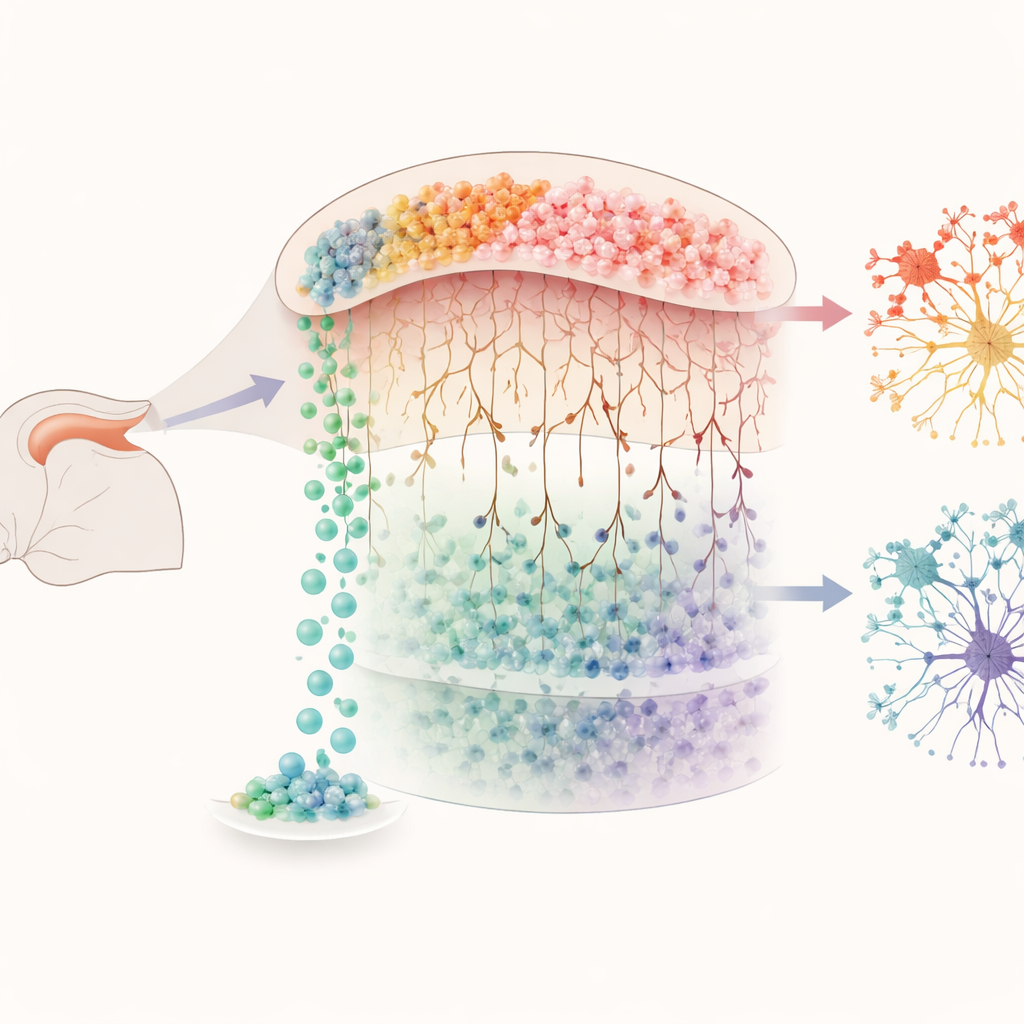
With this solid foundation, the authors compared each maternal stage to the virgin baseline to identify genes whose activity rose or fell. They found large sets of differentially expressed genes linked to nerve-cell birth, wiring of connections, synaptic strength, and chemical signaling. Special attention was paid to genes for odor and pheromone receptors, as well as genes involved in building and reshaping neural circuits. Patterns of gene changes matched known hormonal and behavioral shifts during pregnancy and lactation, suggesting that the olfactory bulb is extensively retuned to better detect and interpret social and offspring-related smells during motherhood.
A lasting resource for studying the maternal brain
All raw and processed data, along with analysis code, have been made publicly available so other researchers can explore them freely. While the method averages signals across many cell types and does not separate different smell subsystems, the time-series design and high quality make this dataset a valuable starting point for more detailed work. Future studies can combine it with single-cell approaches or finer anatomical sampling to uncover exactly which cell types drive specific behaviors.
What this means for understanding maternal behavior
In simple terms, this study shows that motherhood does not just add a few new nerve cells to the mouse’s smell center—it rewrites the molecular settings of the whole network over time. By charting how gene activity in the olfactory bulb shifts from before pregnancy through weaning, the authors provide a reference map for how the maternal brain adapts to sense, recognize, and respond to offspring. This resource will help scientists probe how hormones, stress, or disease might alter this delicate remodeling, with possible insights into parental behavior and mental health in other mammals, including humans.
Citation: Song, X., Zhang, G., Zhang, F. et al. A time-series transcriptomic dataset of the mouse olfactory bulb across pregnancy and lactation. Sci Data 13, 437 (2026). https://doi.org/10.1038/s41597-026-06833-z
Keywords: maternal brain, olfactory bulb, pregnancy, gene expression, RNA sequencing